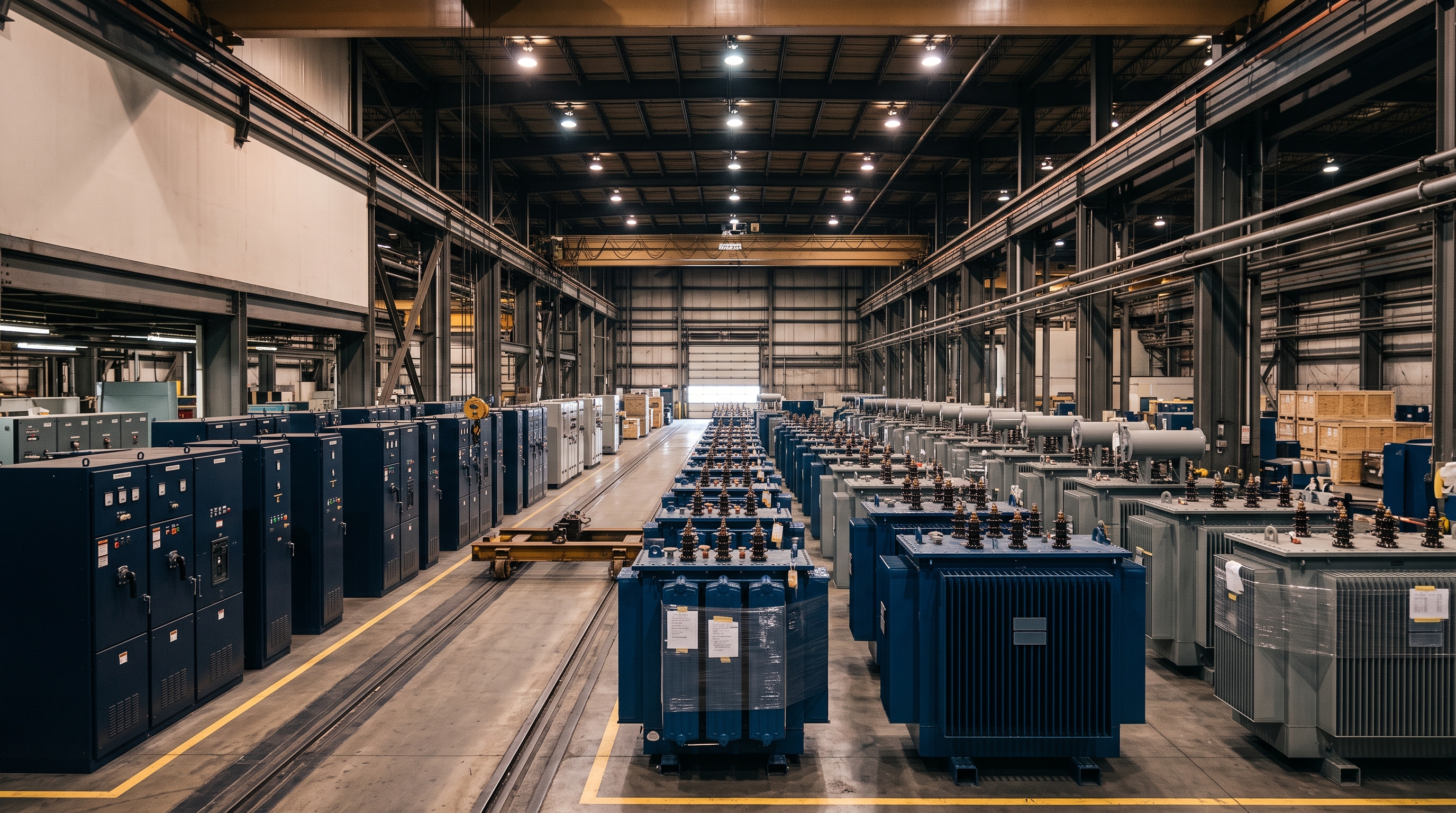
Equipment Production Slot Reservation Replaces the Order
GE Vernova signed 18 GW of slot reservations against 2 GW of orders last quarter. What the equipment production slot reservation means for utility buyers.
In the second quarter of 2026, GE Vernova signed 20 gigawatts of new gas equipment contracts. Two of those gigawatts were orders. The other 18 were slot reservation agreements. That nine to one split, disclosed in the company’s own July 22 earnings release, is the clearest published evidence that the binding transaction in heavy electrical equipment is no longer the purchase order. It is the equipment production slot reservation, and most municipal and cooperative buyers have never been offered one.
The distinction matters because the two instruments do different work. An order is a commitment to buy a specific unit. A reservation is a commitment to a position in a factory’s calendar, which becomes an order later. GE Vernova published both halves of that conversion in the same quarter: alongside the 18 gigawatts newly reserved, it converted 10 gigawatts of existing slot reservation agreements into orders and shipped 3 gigawatts of equipment. Gas equipment backlog moved from 44 to 53 gigawatts. Reservations moved from 56 to 63 gigawatts.
Read those numbers in sequence and the shape of the market becomes hard to miss. The reservation book is growing faster than the order book it feeds, which means the queue is being claimed further out than it is being consumed.
Eighteen Gigawatts Reserved, Two Gigawatts Ordered
The headline figure most coverage carried was the combined total: gas equipment backlog plus slot reservation agreements grew from 100 to 116 gigawatts, with the company now expecting at least 125 gigawatts under contract by year end. We covered that number when it landed. The composition underneath it is the more useful disclosure, because it tells a buyer what kind of paper the OEM is actually writing.
Ninety percent of new gas capacity commitments last quarter were reservations rather than orders. A seller only writes that mix when demand for future capacity exceeds what the seller can quote as deliverable product. GE Vernova is not hiding the constraint. It plans to reach 20 gigawatts of annualized gas turbine output in the third quarter of 2026, 24 gigawatts in 2028, and is taking steps toward 30 gigawatts by 2030. The supply response is real, and it arrives years after the reservations already booked.
None of our readers buy heavy-duty gas turbines. The reason this belongs in a procurement conversation is that the same corporate parent, the same capital budget, and in several cases the same plants and crews serve the grid equipment those readers do buy.
The Slot Reservation Agreement Utility Equipment Buyers Have Not Been Offered
Here is the honest boundary on that comparison, and it is worth stating plainly because it is where this analysis could go wrong. GE Vernova discloses a slot reservation mechanism for its gas franchise. It does not publish an equivalent reservation figure for transformers or switchgear. Anyone who tells you the 18 to 2 ratio applies to distribution transformers is extending a gas number past its evidence, and no equipment production slot reservation figure has been published for grid hardware.
What the company does disclose on the grid side points the same direction through different figures. Electrification orders reached $6.3 billion in the quarter, up 66 percent organically, producing a book to bill ratio of roughly 1.7. Revenue in that segment was $3.6 billion, up 68 percent on a GAAP basis inclusive of the Prolec GE consolidation and up 29 percent organically. The company attributes the growth to higher volume in switchgear and transformers at Power Transmission, and to alternating current substation and high voltage direct current work at Grid Systems Integration.
A book to bill near 1.7 means the segment took in orders at roughly one and seven tenths times the rate it shipped revenue. Whatever the contract is called, capacity is being claimed faster than it is being delivered. That is the same condition the gas reservations describe, measured with a different instrument.
The OEM Order Book and 2026 Backlog on the Grid Side
The Electrification equipment backlog now stands at $40.6 billion, up $16.6 billion or 69 percent year over year, including $5 billion from Prolec GE. That last clause is the first public quantification of something we have been tracking since February. When Prolec GE was fully consolidated, two separately qualified North American transformer suppliers became one corporate parent, and until this release nobody outside the company could size how much of the grid components order book sat inside that consolidation. Now we can: five billion dollars of a $40.6 billion equipment backlog.
Separately, and this is a different figure that happens to carry the same number, CEO Scott Strazik reported that data center orders in Electrification passed $5 billion year to date, more than double the 2025 total. Company wide, orders reached $24.2 billion, up 88 percent organically, with backlog growing $13.0 billion sequentially against a total backlog of $176 billion.
For a municipal utility writing a specification this month, the practical translation is that the queue you are joining was largely formed by counterparties who committed before you did, at a scale that makes your order a rounding error in the same plant’s schedule. The two source strategy we argued for after the Prolec consolidation gets harder to execute every quarter that backlog compounds at 69 percent.
A Second Tier of the Supply Base Reports the Same Thing
Flex, a contract manufacturer sitting upstream of the power train components data centers buy, reported its own quarter in the same window. Its Cloud and Power Infrastructure segment grew 35 percent year over year, with the power sub segment growing above 70 percent, roughly double the segment containing it. More than 90 percent of that segment’s business for the next three quarters is already booked.
Carry the right caution with that figure. Flex is a contract manufacturer, so its order book is evidence about component level contention, not a lead time statement about distribution transformers or switchgear. It belongs in a forward buy conversation as corroboration that tightening is real across tiers, not as a delivery date. Two companies at different levels of the supply base, an OEM and a contract manufacturer, both reported in the same month that forward capacity is committed rather than available.
Transformer Production Capacity Booking: What to Ask Your Supplier
The single question worth carrying into your next supplier conversation is whether you are buying a unit or buying a position, and what converts one into the other.
A quote you can accept is an offer against capacity the seller believes it has. An equipment production slot reservation is a claim on capacity the seller has not yet promised to anyone else. Those are different instruments with different cancellation terms, different deposit structures, and very different consequences if your project slips. If your supplier is writing reservations for its largest accounts and quotes for everyone else, you want to know which document you are holding before your in service date depends on it.
Start by asking whether an equipment production slot reservation exists at all for your equipment class. If the answer is yes and nobody has offered you one, that is useful information about where you sit in the account hierarchy, and it is a better opening than arguing about weeks. The follow up question is what converts a reservation into a firm order. GE Vernova converted 10 gigawatts of them last quarter, so the mechanics are real and someone in that sales organization can describe them.
Then read the quarterly disclosures of the manufacturers you actually buy from. A book to bill above one, published by the company itself under securities law, tells you more about your delivery risk than any lead time table a salesperson will hand you.
Our transformer procurement guide tracks lead times, supplier qualification, and the manufacturing capacity picture behind the 2026 buying window.
The Feeder is our free monthly read on the regulatory and manufacturing signals that move equipment demand. We cover what each earnings disclosure and commission order means for buyers before it reaches your lead times. Subscribe to The Feeder and start the next month ahead of the buying cycle.
Related Reading
- GE Vernova’s Q1: $42.4B Electrification Backlog, Prolec Fully Absorbed
- Transformer Procurement in 2026
- How to Evaluate Transformer Bids When Lead Times Run Long
Track this beat without paying per report
Free Member tier. Pick your topics. Get a weekly digest filtered to what you actually buy.