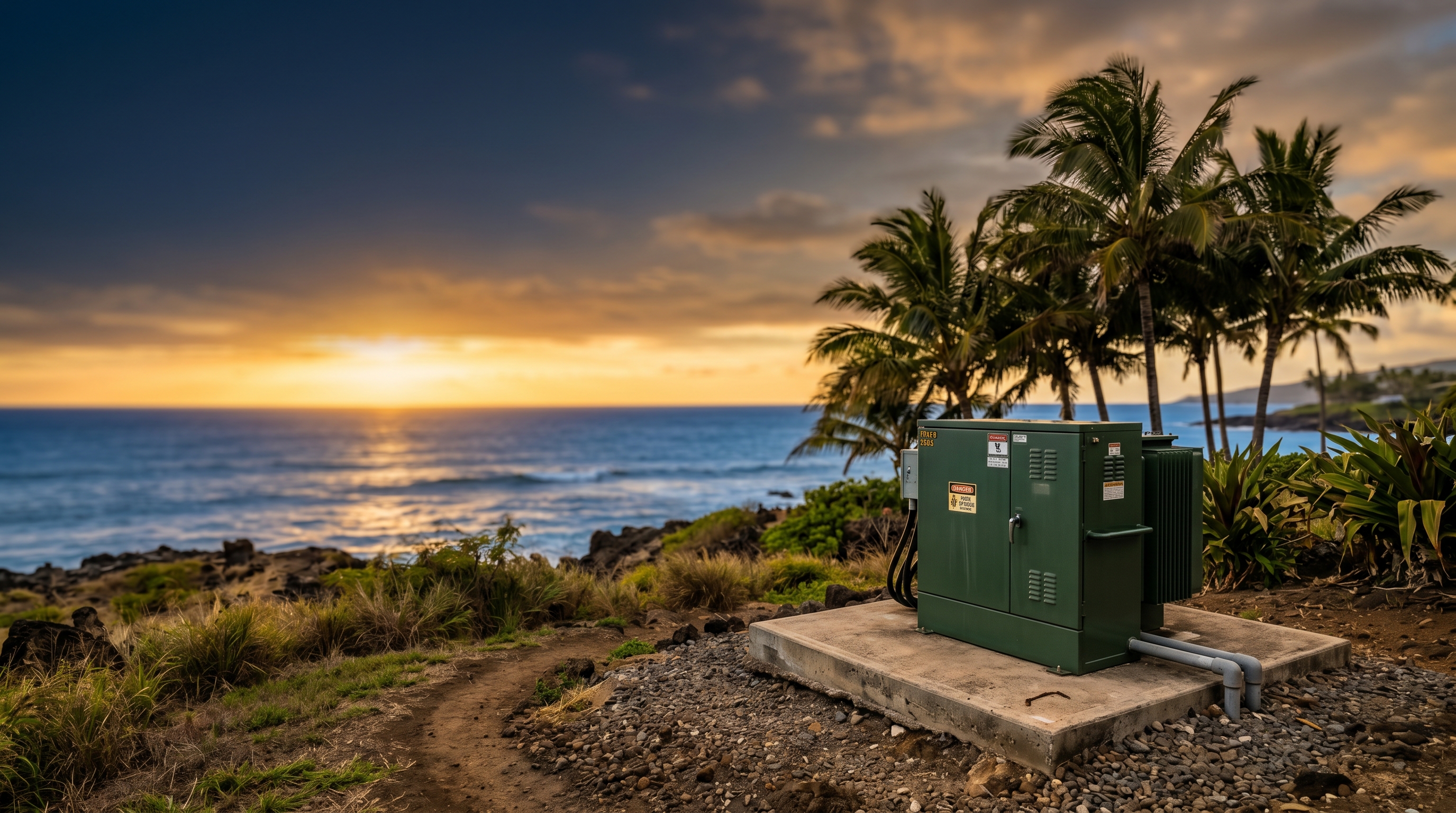
Hawaiian Electric: A $7,879 Transformer Is the New Baseline
Hawaiian Electric's 2026 rate filing says a transformer that cost $3,730 in 2020 now runs $7,879. The number every procurement team needs to check against their budget.
Hawaiian Electric just put a hard number on something every procurement manager has been feeling for five years. In its March 9, 2026 rate case filing, the utility disclosed that a transformer that cost $3,730 in 2020 now costs $7,879 (Honolulu Star-Advertiser, March 2026). That is a 111 percent transformer cost increase in roughly five years. For a utility whose base rates have been frozen since 2021, the gap between budgeted capex and actual replacement cost has quietly become a balance-sheet problem.
The HECO filing is not a Hawaii story. It is a preview of what every rate-frozen utility in the country is about to run into. Procurement teams building 2027 budgets against 2022 price books are going to miss badly.
What HECO Actually Reported
Hawaiian Electric filed with the Hawaii Public Utilities Commission on March 9, 2026, seeking $170 million in additional annual revenue spread over the next two years (Honolulu Star-Advertiser, March 2026). The requested revenue components break down as follows:
- Inflation adjustment: $83 million
- Insurance premium increases: $47 million
- Accelerated depreciation: $45 million
- Customer discount offset: -$5 million
The inflation line item is the one procurement professionals should read twice. It is not payroll. It is not financing cost. It is the cost of physical equipment and labor that has outrun the utility’s 2021 rate base.
HECO’s disclosure includes specifics most utilities do not publish. The $3,730 to $7,879 transformer is the headline number. The utility also cites a 25 percent surge in operating costs from 2020 to 2025, which it calls the highest sustained increase in 40 years. Base rates on Oahu have not been reset since 2011, Hawaii Island since 2016, and Maui County since 2018.
That stale rate base is the structural issue. When a utility has not reset rates in a decade-plus, every piece of equipment it replaces at 2026 prices lands against an asset base valued at 2011, 2016, or 2018 cost assumptions. The gap becomes a deferred liability. Eventually the filing happens and the number hits the docket.
Why $7,879 Matches What We’re Seeing Elsewhere
HECO’s transformer figure tracks with what the broader market data shows. Power transformer demand is up 119 percent since 2019, and distribution transformer demand is up 34 percent over the same period (POWER Magazine, January 2026). Wood Mackenzie models a 30 percent supply deficit for power transformers and 10 percent for distribution transformers through 2026 (Wood Mackenzie, June 2025).
Three inputs drive the pricing:
Grain-oriented electrical steel (GOES). The United States has effectively one domestic GOES producer. Import prices have roughly doubled since 2020. Core steel is 15 to 20 percent of a distribution transformer’s bill of materials.
Copper. Copper prices are up more than 70 percent since 2020. Copper windings are 20 to 30 percent of a distribution transformer’s material cost. Section 232 tariffs layered on top have added to landed cost.
Labor and specialty manufacturing capacity. Winding labor is specialized and constrained. Every major OEM has announced capacity expansions, but production start dates for most of them fall in 2027 and 2028.
An 111 percent price increase for pad-mount and small distribution transformers over five years is consistent with a 40 to 60 percent increase in raw material and labor inputs, compounded by capacity-constrained pricing power. It is not anomalous. It is the new baseline.
The Rate-Case Lag Is the Procurement Story
The real procurement lesson in the HECO filing is about the lag between equipment pricing reality and rate-base reality. Three gaps matter:
Gap 1: The rate-freeze gap. HECO’s last Oahu rate reset was 2011. Every utility whose last general rate case predates 2022 is sitting on a rate base that assumes 2010s equipment pricing. When those utilities come to the market to replace storm-damaged or end-of-life distribution equipment, they are spending 2026 dollars against 2018 revenue assumptions. The deferred-revenue math only works while replacement volumes stay low.
Gap 2: The storm-cycle gap. Distribution utilities typically plan replacement spend on actuarial timelines. A wildfire season, winter storm, or single derecho can blow through a year of budget in a weekend. Hawaiian Electric’s 2023 Maui wildfires and the ongoing litigation footprint are part of why this filing is so urgent. For mainland utilities, Winter Storm Fern in February 2026 did the same thing to Entergy, which replaced 2,210 transformers in a single event.
Gap 3: The capex-guidance gap. Publicly traded utilities that disclose five-year capex plans are updating those numbers mid-cycle. PSEG raised its five-year capital plan from $22.9B to $25.5B. Southern Company disclosed $26.5B in DOE loan commitments for 16 GW of generation. Each of those plans embeds transformer, switchgear, and substation spend at current market pricing. Municipal and cooperative utilities without the same disclosure discipline often have not marked their numbers to market.
For distributors and reps selling into utility procurement, this means the price sheet conversation is going to come up more often. A utility that has not purchased large-frame distribution transformers in two years is going to be genuinely surprised by quotes. The gap between expected price and quoted price is what freezes deals and delays projects.
What To Do With the Number
If you are responsible for a procurement budget in 2026, use the HECO disclosure as a benchmark:
-
Re-mark your unit-cost assumptions against 2025-2026 vendor quotes, not against historical budget figures. If your last RFP was pre-2023, assume everything has moved at least 60 to 100 percent.
-
Flag any utility customer whose general rate case is more than four years old. They are more likely to push back on quoted prices and more likely to delay. Qualify the approved capex before you commit factory slots.
-
Distinguish list-price inflation from tariff-driven inflation in your quote conversations. Section 232 copper, steel, and aluminum tariffs restructured in April 2026 to a tiered system that puts distribution transformers and switchgear at 25 percent on full customs value, despite the widely reported 15 percent figure (Triple Squeeze analysis). Some of the current quoted pricing is structural, and some is passthrough that could unwind on policy change.
-
Confirm BABA eligibility on anything federally funded. The BABA compliance rules shifted again in early 2026 and federally funded utility equipment has a narrower qualified supplier list than commercial equipment.
-
Track your rate-case lag on the top 20 utility customers. Know which ones have open rate cases and which have filings scheduled in 2026-2027. That calendar predicts when your price conversations get easier.
The Bigger Signal
Hawaiian Electric disclosed a specific transformer price because it had to. To justify $83 million in inflation revenue, HECO needed a number the PUC could cross-check. Most utilities do not disclose unit-level equipment pricing in their rate filings. But the underlying inflation is the same.
The Pad-Mount Transformer Procurement Crisis analysis we published earlier this month put pad-mount lead times at 40 to 60 weeks and prices at 12 to 18 percent above 2023 levels for distribution-class units. HECO’s 111 percent figure over five years works out to a 16 percent compound annual rate, which tracks. Different math, same trendline.
Procurement teams that reset their price assumptions in 2024 are in reasonable shape. Teams that budgeted 2026 against a 2022 bill of materials are going to miss by 40 percent or more. That is not an insurance problem or a hedging problem. It is a planning problem, and it is structural.
The current edition, by equipment category
Hawaiian Electric’s rate filing put a public number on distribution transformer cost inflation, but the harder question for a 2026 budget is lead times and supplier capacity, not the unit cost a rate case happened to disclose. The Monthly Market Tracker pulls the lead times, supplier capacity, and federal program activity for one equipment category into a single report, rebuilt every month from public data and checked before it ships. It runs $79 and downloads the moment you check out.
See the current Monthly Market Tracker
Related Reading
- The Pad-Mount Transformer Procurement Crisis
- Transformer Procurement 2026: What the Market Actually Looks Like
- Utility Distribution and Transmission Cost Surge 2026
DistroForge Research tracks rate filings and capacity announcements across U.S. utility distribution. Our reports go deeper than this post, with manufacturer lead-time tracking, rate-case calendars for top utilities, and procurement strategy recommendations for 2027 budget cycles. Learn more about our reports.
Track this beat without paying per report
Free Member tier. Pick your topics. Get a weekly digest filtered to what you actually buy.