BPA Strategic Plan: 3-5 Year High-Voltage Lead Times
The BPA strategic plan puts lead times for high-voltage transformers, breakers and conductors at 3 to 5 years. What that means for Northwest utility buyers.
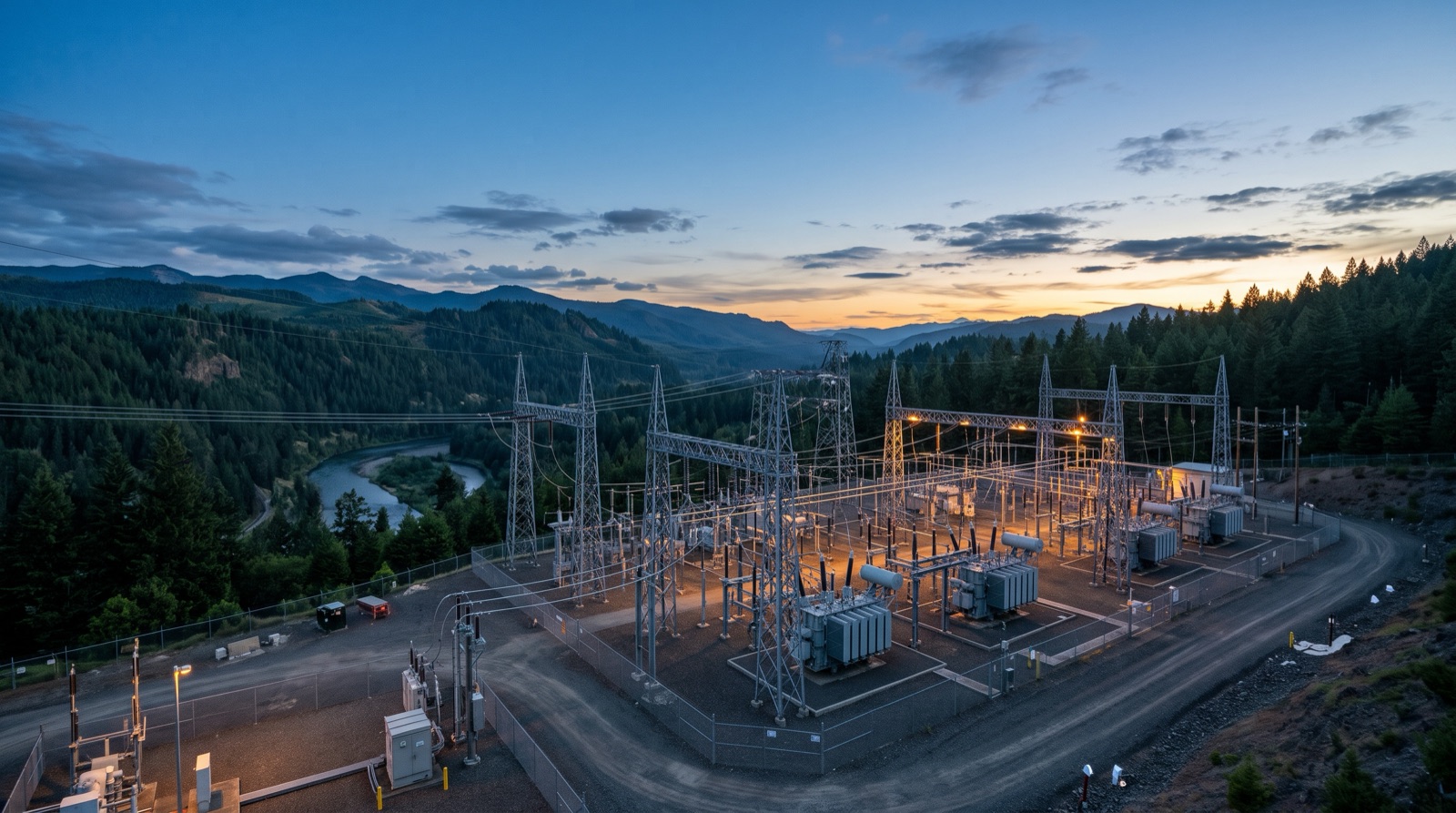
The Bonneville Power Administration’s new strategic plan says lead times for high-voltage transformers, circuit breakers and specialized conductors now run 3 to 5 years. The BPA strategic plan for 2026 to 2030 (DOE/BP-5494, August 2026) lists that bottleneck, which it says is delaying project execution, among its transmission challenges alongside staffing, financing and outdated study tools.
For the public power utilities that buy wholesale power and transmission service from BPA, that is a planning input worth reading closely. It is also easy to overread. The plan is a federal agency’s statement about its own high-voltage program. It is not a quote, a distribution equipment forecast, or a promise about any single project’s date.
BPA supplies about one-third of the power consumed in the Pacific Northwest and owns 15,000 circuit miles of high-voltage transmission, which the plan describes as a vast majority of the region’s transmission system. When BPA says its own projects are waiting on equipment, every utility whose new load or substation depends on a BPA upgrade inherits part of that wait.
What the BPA Strategic Plan Says About High-Voltage Transformer Lead Times
The statement sits in the plan’s “Context and Challenges” section, under the priority to expand and expedite access to the transmission grid. BPA lists three kinds of challenge there:
- People. Experienced transmission planners, civil engineers, project managers, line workers and substation technicians are in high demand, and BPA competes with employers that often offer more flexible pay and benefits. Processing interconnection requests is described as highly labor-intensive.
- Financial. Transmission expansion requires massive capital spending, balanced against near-term rate impacts and BPA’s finite access to U.S. Treasury borrowing.
- Technology. Here the plan says: “Global supply chains face severe bottlenecks, with lead times of 3 to 5 years for high-voltage transformers, circuit breakers and specialized conductors, delaying project execution.” It adds that BPA’s queue-processing methods are outdated and that it needs automated study software and better grid modeling tools.
Two things follow. First, equipment is one constraint among four: staff, money, study capacity and supply. A buyer who assumes a BPA upgrade date is set by equipment alone will miss the other three. Second, the plan gives the 3-to-5-year range without a sample or product breakdown. Treat it as BPA’s dated, attributed characterization of its own procurement environment, not as a measured benchmark you can apply to a specific transformer rating.
BPA’s Interconnection Queues: Two Numbers, Not One
The plan reports two queues, and they measure different things.
Large loads. BPA says it is managing “an interconnection queue exceeding 40 gigawatts of large-load interconnection requests from customers,” driven by data centers and other large loads. It has also prioritized more than $6 billion in high-voltage transmission investments intended to enable load growth and additional generation.
Generators. As of August 25, 2026, the large generator interconnection queue held 191 requests totaling 56 GW. That splits into 104 requests (34 GW) in the Transition Cluster Study and 87 legacy serial requests (22 GW). The Transition Cluster began in 2025 with 167 requests totaling 65 GW, and BPA notes the totals reflect withdrawals and will keep changing. Solar is the largest category in both groups, at 15.8 GW in the cluster and 12.7 GW among legacy requests.
These are requests, not commitments. Do not add the load queue and the generator queue into one demand number, and do not divide the $6 billion into an equipment budget. The plan supports neither. We made the same point about what each queue gigawatt counts in PJM and ERCOT.
How BPA Plans to Bridge the Gap
The plan pairs the supply constraint with service changes that matter more to a customer’s calendar than the lead time itself:
- Executing the Grid Expansion and Reinforcement Portfolio (GERP 1.0 and 2.0) and designing a subsequent open season to allocate new capacity.
- Offering defined interim and non-firm service options as immediate access pathways while construction is underway, using non-wires alternatives and advanced grid technologies.
- Evaluating dynamic, congestion-based transmission products and curtailment risk-sharing frameworks.
- Actively enabling customer-led transmission builds and restructuring long-term transmission and interconnection queue processes.
These are stated directions in a strategic plan. None of them is a tariff, a product you can order today, or a guarantee of service. They do tell a buyer which questions to ask.
What Northwest Munis and Co-ops Can Do Now
- Separate your own equipment schedule from BPA’s. If your project needs a new BPA point of delivery or transmission upgrade, the high-voltage side may carry a multi-year equipment wait on BPA’s books. Your own substation and distribution equipment has its own lead times; quote those directly rather than borrowing BPA’s range. Our guide to evaluating transformer bids when lead times run long covers how to score delivery dates in a bid.
- Ask BPA what interim or non-firm service would look like for your load. The plan names these options as a bridge during construction. Get the terms in writing before you size a project around them.
- Ask whether a customer-led build is on the table, and who would own, procure and pay for each piece. The plan says BPA is enabling these builds; it does not say how costs or equipment responsibility will be allocated.
- Track the next open season. The plan says BPA will design a subsequent open season to allocate new capacity. That allocation, together with construction and equipment schedules, will shape when new capacity reaches specific customers.
- Read it alongside the regional resource plan. Our summary of the draft Ninth Northwest Power Plan covers the region’s resource recommendations for 2027 to 2032.
Related Reading
- Ninth Northwest Power Plan: What the Draft Recommends
- How to Evaluate Transformer Bids When Lead Times Exceed Two Years
- Transformer Bushing Lead Times: The Longest-Lead Component
All BPA figures and quotations are from the Bonneville Power Administration’s Strategic Plan 2026-2030 (DOE/BP-5494, August 2026), pages 5, 7, 13, 18 and 19, opened November 5, 2026. Queue totals are as of the dates BPA states and change as requests withdraw.
BPA says its queue totals will keep changing as requests withdraw. The Feeder is our free weekly digest of the supply and regulatory signals that change what utility buyers spec.
Frequently Asked Questions
What lead times does the BPA strategic plan cite?
The plan says global supply chains face lead times of 3 to 5 years for high-voltage transformers, circuit breakers and specialized conductors, delaying project execution. It gives no sample, per-product breakdown or delivery guarantee behind the range.
Does the 3-5 year figure apply to distribution transformers?
No. BPA's statement, made among the challenges facing its transmission program, covers high-voltage transformers, circuit breakers and specialized conductors. It does not address pole-mounted or pad-mounted distribution transformers, which have their own market and lead times.
How large are BPA's interconnection queues?
The plan reports a queue exceeding 40 gigawatts of large-load interconnection requests and, separately, 191 large generator interconnection requests totaling 56 gigawatts as of August 25, 2026. These are requests, not committed projects, and the two queues should not be added together.
Track this beat without paying per report
Free Member tier. Pick your topics. Get a weekly digest filtered to what you actually buy.