IONATE Hybrid Transformer: When to Qualify a New Supplier
IONATE and GM are collaborating to deploy hybrid transformer units at a Michigan plant. A qualification framework for new transformer suppliers.
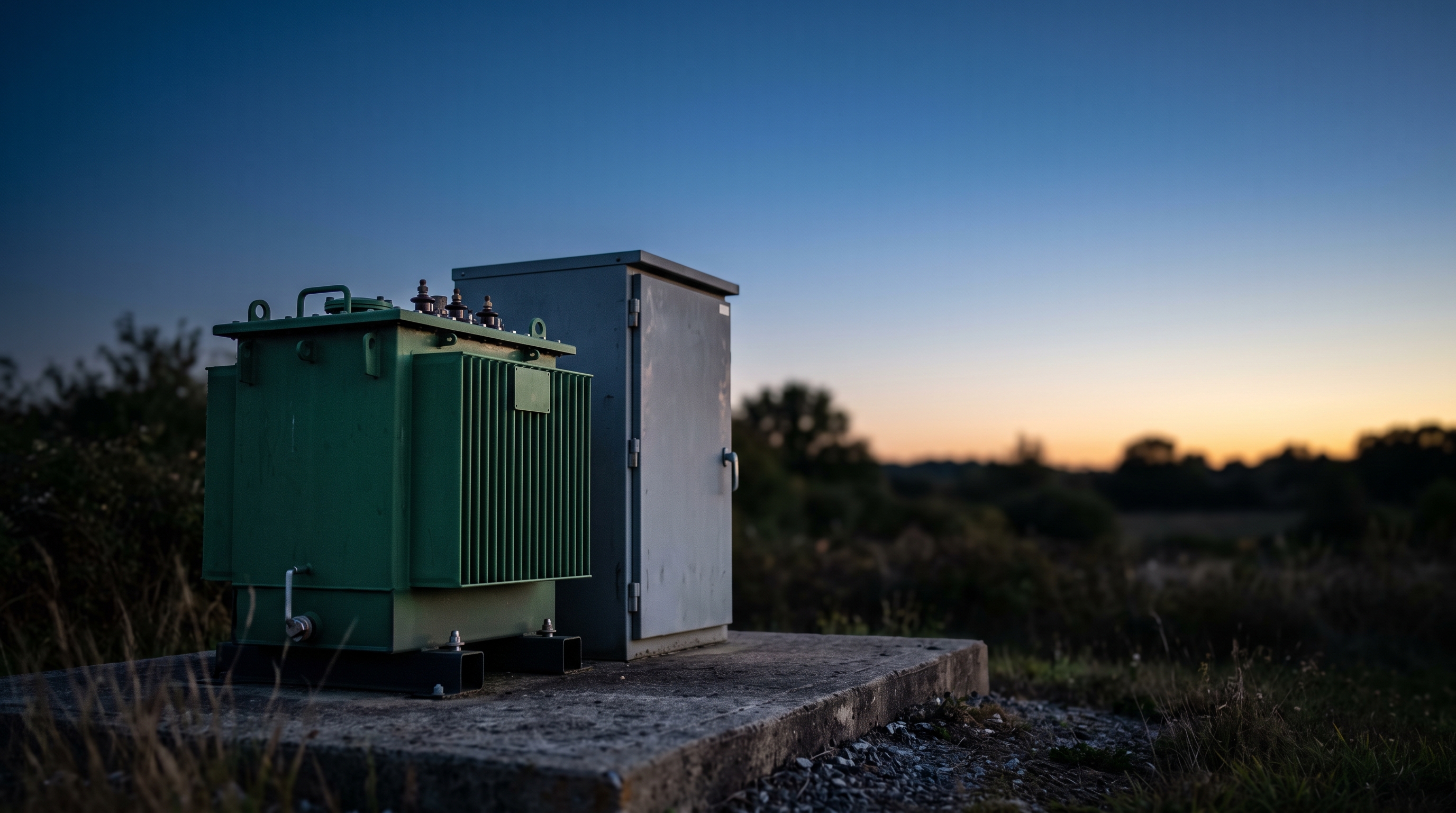
A UK company most American utilities have never heard of is entering the US market through a Michigan plant. IONATE and General Motors are collaborating to deploy its intelligent hybrid transformer units at the Romulus Propulsion Systems plant, with integration underway and the rollout still being finalized (T&D World, 2026-07-24) — IONATE’s first announced US deployment after a run of European utility projects. The IONATE hybrid transformer is a conventional magnetic core wrapped in power electronics, and it does things a passive unit cannot: regulate voltage actively, absorb disturbance, and give an operator a control surface where there used to be a fixed piece of iron.
That is interesting on its own. It is more interesting as a test of a question our readers keep running into and have no framework for: when is it rational to qualify a supplier nobody in your cooperative has ever bought from?
What an intelligent hybrid transformer actually does
The company calls the product a Hybrid Intelligent Transformer. The units T&D World reports the two engineering teams have worked with are 3 MVA and built to IEEE standards, which matters more than it sounds. A European vendor shipping IEC-only equipment into a US utility is a non-starter before the technical conversation begins. Building to the American standard is the first thing a serious entrant does.
IONATE’s European track record is real but short. The company worked with EDP in 2023 on measuring voltage spikes from distributed generation, and with National Grid Electricity Distribution and Cardiff University in 2024 on removing a congestion constraint. Both are utility engagements. Both are pilot scale.
The company publishes performance claims that are worth stating as the company’s claims and not as findings: roughly 25 percent more power through existing poles and wires without upgrading them, about 33 percent more hosting capacity for distributed generation, a 6 percent reduction in losses, and efficiency above 99 percent. We have not verified those independently and neither, so far as the public record shows, has a US utility. Treat them as the starting point of a qualification conversation rather than the conclusion of one.
What IONATE is really selling is deferral, not iron
Here is the framing that makes the rest of this decision tractable.
If you evaluate the IONATE hybrid transformer as a transformer, you will compare it against a transformer and it will lose on the things passive equipment is good at: simplicity, service life, and a maintenance profile the industry has fifty years of data on. That is the wrong comparison.
What a unit like this actually sells is deferral. The relevant question is not whether it beats a conventional transformer. It is whether installing one now beats waiting until 2029 for a conventional unit plus the pole and wire upgrades that would otherwise go with it. When lead times on the conventional path run roughly 30 months on average and up to 60 months at the top of the voltage range, the alternative you are pricing against is not another vendor. It is time.
That reframing is the entire commercial case, and it is also why the category is drawing entrants. The same pressure is producing solid-state transformer programs from established manufacturers. The product category is diversifying under load, not just adding capacity.
The four caveats that decide whether this is real
Any procurement officer who reads a vendor story without these will dismiss the whole thing, correctly. Four things bound what the IONATE hybrid transformer deployment actually proves.
It does not touch the bottleneck everyone is actually stuck behind. Three MVA is distribution and industrial class equipment. The shortage that gates substation and interconnection projects lives at 345 kV and above, in a market where a DOE-funded federal lab report counts four American plants capable of building the largest ratings at all. Nothing about this deployment shortens that queue, and anyone who implies otherwise is selling something.
General Motors is a load, not a utility. An industrial customer chose this for its own plant. That is a reference, but it is not a utility operating a unit under utility duty cycles, utility fault conditions, and utility restoration practice. The European work is the only utility-grade evidence and it is pilot scale.
The service-life question is genuinely open. Power electronics and oil-filled passive equipment age differently. A conventional transformer’s failure modes are documented across decades and its maintenance is a known discipline. A power-electronics-augmented unit introduces components with their own replacement intervals and their own obsolescence risk. Nobody has forty years of field data because the product has not existed for forty years.
There is no disclosed US manufacturing footprint. That is a domestic-content problem, and it bites hardest on exactly the buyers most likely to be schedule-desperate. If your project touches federal funding, domestic content thresholds are already rising and an imported unit with no US assembly is an eligibility question before it is an engineering question.
A qualification framework for alternative transformer suppliers
None of the above is a reason to refuse to look. It is a reason to look properly. Here is the framework, and it generalizes to any equipment category, not just this one.
Reference sites under like-for-like duty. Not “they have installations.” Installations doing what you would ask the unit to do, at your voltage class, in your climate, switched the way you switch. A pilot that measured something is not a reference for equipment that must carry load through a fault.
Service footprint, measured in drive time. Who physically shows up when it fails at two in the morning, where are they based, and what is the contractual response time? A vendor with no continental service presence is asking you to become their field service organization.
Spare-parts commitment in writing. For power electronics specifically, ask what the parts availability commitment is in years, what happens if a semiconductor line goes obsolete, and whether they will stock critical spares locally. Get the number of years in the contract.
Standards conformance, documented. IEEE conformance claimed in marketing is not conformance demonstrated in a test report. Ask for the report.
Who carries the warranty risk, and who carries it if the company is gone. A startup warranty is worth what the startup is worth. Ask whether the obligation is backed by anyone else, and price the possibility that it is not.
The exit cost. If the unit underperforms in year three, what does it cost to rip it out and put conventional equipment back? If that number is small, the qualification risk is small and you can afford to run the experiment. If it is large, you need proportionally more evidence up front.
That last one is the most useful and the least used. Most qualification arguments stall on trying to prove a new supplier is safe. The faster path is to size the downside and then decide how much proof that downside actually requires.
What would make a new transformer manufacturer shortlist-ready
Two things would move this from watch to qualify, and both are observable from outside.
The first is a US utility pilot. Not an industrial site, a utility, operating the equipment on its own distribution system under its own standards. The second is a US assembly footprint, which resolves the domestic-content exposure and usually arrives with the service organization attached.
Until one of those lands, the honest posture for a municipal utility or a cooperative is to open a file, not a purchase order. Ask for the test reports. Ask for the European utility contacts and actually call them. Put the vendor on the list you review annually. That costs you a few hours and it means that on the day the constraint gets bad enough to justify the risk, you are making a decision with evidence instead of a decision under pressure.
What to do now
The broader point outlasts this particular company. Multi-year lead times on conventional equipment are changing what counts as a reasonable supplier. Buyers who kept a rigid approved-vendor list through a comfortable market are discovering that the list was a luxury of short lead times. The list is not wrong, but it needs a documented path for adding to it, and most utilities do not have one.
Write that path down before you need it. Decide in advance what evidence would satisfy you, who signs off, and what the trial installation looks like. A qualification process built calmly in August is a different document from one improvised in a February outage. The same discipline applies to how you score bids once lead time is the binding constraint.
We track supplier entries, capacity announcements, and standards activity across the equipment categories our readers buy, and send the signals worth knowing about once a month. That is The Feeder, free, no pitch attached. If a new name showing up in your category is the kind of thing you would rather hear early, it is the right list.
Related reading
- The State of Transformer Procurement in 2026
- How to Evaluate Transformer Bids When Lead Times Exceed Two Years
- Solid-State Transformers and What Utilities Should Do About Them
Frequently Asked Questions
What is the IONATE hybrid transformer?
It is a distribution-class transformer augmented with power electronics, built by a UK company called IONATE. The added electronics give the unit voltage regulation and controllability that a conventional passive transformer does not have. Its first announced US deployment is a collaboration with General Motors at the Romulus Propulsion Systems plant in Michigan, where T&D World reports engineering teams have worked with US-standard 3 MVA IEEE units while the rollout is being finalized.
Does the IONATE hybrid transformer help with large power transformer lead times?
No. The announced US deployment is 3 MVA distribution and industrial class equipment. The lead-time crisis that gates substation and interconnection projects sits at 345 kV and above, where a DOE-funded federal lab report puts order-to-receipt at roughly 30 months on average and up to 60 months for extra-high-voltage units. These are different product categories and different factories.
When should a utility qualify a transformer supplier it has never heard of?
When the incumbent's delivery date is genuinely unacceptable, when the new supplier has a reference site running like-for-like duty, when a service footprint and spare-parts commitment exist in writing, and when you have priced the exit. Absent those, a shorter quoted lead time is a schedule risk that has been moved rather than removed.
Free RFQ templates. Weekly digest. Yours.
Free Member tier. Pick your topics. Get a weekly digest filtered to what you actually buy.