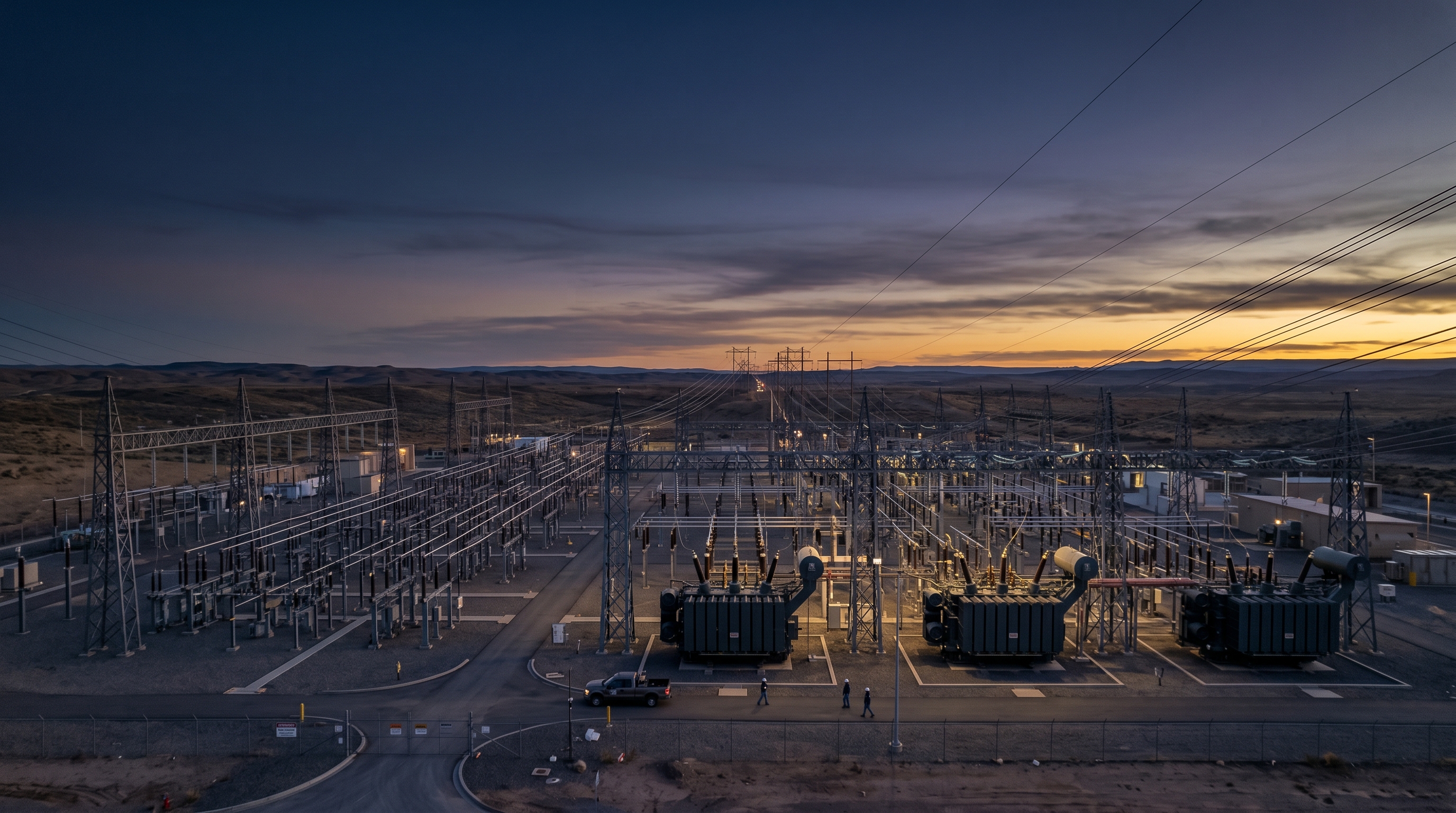
NextEra Dominion Merger: A $66.8B Procurement Reset
NextEra's $66.8B Dominion acquisition creates the world's largest regulated utility. Three procurement shifts for AML, capacity, and tariff design.
The NextEra Dominion merger, announced May 18, 2026, is a $66.8B all-stock combination that will create the largest regulated electric utility in the world. NextEra Energy shareholders end up holding roughly 75% of the combined entity; Dominion shareholders receive the balance plus $360M in cash. The combined footprint covers about 10 million customers across Florida, Virginia, North Carolina, and South Carolina, with 110 GW of generation and a $2.25B customer bill credit committed at close. The deal is expected to close in 12 to 18 months pending FERC, NRC, Hart-Scott-Rodino, and state PUC approvals in FL, VA, NC, and SC (NextEra Energy newsroom, May 18, 2026; Reuters).
That headline number is the part that will get the coverage. The number that will rewire procurement plans across the country is 130 GW. That is the combined large-load interconnection pipeline the two utilities bring to the deal, anchored by Loudoun County, Virginia, the largest single concentration of data centers on the planet. One regulated holding company is about to control a slice of U.S. data-center power demand that no single buyer has ever controlled before.
Three procurement shifts follow from that, and they apply whether you sit inside the combined AML or outside it.
What the NextEra Dominion Merger Actually Combines
The combined entity rests on two regulated franchise utilities and one unregulated renewables platform. Florida Power & Light is the largest electric utility in the U.S. by customer count and runs a state-permitted rate-base structure that has been the gold standard for storm-hardening and grid-resilience capex through the last decade. Dominion Energy Virginia is the principal transmission owner for the PJM Mid-Atlantic region and is currently building the 2.6 GW Coastal Virginia Offshore Wind project. NextEra Energy Resources is the world’s largest renewable IPP, with roughly 30 GW of wind, solar, and storage in operation plus a backlog of similar scale.
Three immediate operational consequences are already visible:
- Dominion’s Cumberland Energy Center 3 GW gas plant (announced May 8, 2026, 2033 to 2034 in-service) moves under the combined entity’s capex umbrella. We covered Cumberland’s procurement footprint in our three utility data center strategies in May 2026 piece as the cleanest “embrace via gas” case in PJM.
- The $5B Canadys Station 2,200 MW combined-cycle plant approved 7-0 by the South Carolina PSC on May 14, 2026 is jointly owned by Dominion and Santee Cooper. The combined entity inherits Dominion’s half plus the Lowcountry T&D buildout pipeline.
- NextEra’s roughly 30 GW renewables backlog and FPL’s hurricane-hardening program continue to compete for the same transformer, switchgear, and cable manufacturing slots that the 80 to 130 week LPT lead-time environment is already failing to clear.
The Loudoun County exposure inside a regulated business mix exceeding 80% is the strategic answer to why this deal happened now. Dominion gets capital. NextEra gets the largest data-center load pipeline in the world inside a regulated rate-base structure. The competitive M&A logic is the same logic the GE Vernova-Prolec consolidation in Q1 2026 used to compress the transformer supply side. This deal does it on the buyer side.
Shift One: Approved Manufacturer Lists Are About to Consolidate
A 10-million-customer footprint operating under one capex governance structure cannot reasonably maintain four separate approved manufacturer lists, four separate BIL coordination matrices, four separate impedance and efficiency spec sets, and four separate master purchase agreements. The post-close integration playbook for FPL, Dominion Virginia, Dominion South Carolina, and Dominion North Carolina will pick a single AML reference for each major equipment class within 18 to 24 months of close.
That consolidation will run in three predictable directions.
Distribution and padmount transformers will consolidate around FPL’s incumbent supplier list. FPL has the largest unit volume of any single regulated utility in the country and the most mature qualified-vendor program for hurricane-rated padmount and submersible transformers. Expect ERMCO, Howard, Power Partners, and Prolec GE positions inside FPL to extend into Virginia, North Carolina, and South Carolina rate base over the post-close integration cycle. Smaller domestic manufacturers that hold a Dominion qualification but not an FPL qualification have a window now to start the FPL audit cycle, because that window closes once integration starts.
Large power transformers (GSUs and substation transformers above 100 MVA) are a different consolidation. Dominion’s offshore wind, the Cumberland and Canadys gas builds, and the Loudoun County load all draw from the same constrained 80 to 130 week LPT lead-time queue. The combined procurement organization will likely shift to multi-unit framework agreements with Hitachi Energy, Siemens Energy, GE Vernova, and Prolec GE rather than continuing to use spot RFQs. That is the playbook FPL has been running on the renewable interconnection side. Single-unit GSU buyers outside the combined AML should expect manufacturers to deprioritize their orders once a 10-unit framework lands on the production line ahead of them.
Medium-voltage switchgear, breakers, and reclosers consolidate slower because the existing approved lists already overlap heavily across S&C, ABB, Eaton, G&W, Schneider, and Siemens. The standardization fight will be on protection-relay settings, communications protocols, and ADMS integration specs, not on the iron. That is good news for medium-voltage manufacturers and bad news for the protection-engineering consultants who currently make a living reconciling four spec sets across the territory.
Shift Two: Manufacturer Capacity Diversion
The 110 GW combined generation footprint is not the load-side number to track. The numbers to track are the equipment order books that the merger pulls forward.
FPL’s hurricane-hardening capex runs at roughly the scale of CenterPoint’s Greater Houston Resiliency Initiative. Composite pole demand, padmount transformer demand, vault and submersible transformer demand, and underground primary cable demand all continue to absorb domestic and Mexican manufacturing capacity. Dominion’s data-center build pipeline pulls forward demand for GSU class transformers in the 250 to 450 MVA range, 230 and 500 kV switchgear, and protective relay infrastructure for the NERC Level 3 Computational Load Entity standards taking effect August 3, 2026. NextEra Energy Resources continues to absorb collector substation transformer capacity, padmount inverter transformer capacity, and MV cable capacity from the renewables backlog.
The combined procurement organization will run those three buckets through one capital plan and one supplier negotiation. The buyer power shifts. The cost of a 10-unit GSU framework agreement to a manufacturer is roughly the same whether it goes to a combined NextEra-Dominion or to two separate buyers. The cost of not winning that framework is larger when the buyer is a 10-million-customer footprint than when it is two 5-million-customer footprints, because losing the combined entity also forfeits the future renewable-IPP follow-on business that NextEra Energy Resources will direct toward suppliers who serve the regulated side.
Smaller utility procurement officers who currently share manufacturing slot capacity with FPL and Dominion should watch for two specific signals over the next four quarters. First, lengthening of quoted lead times on transformer classes above 50 MVA. Second, shorter price-validity windows on quotes that previously stayed open 90 days. Both are leading indicators that capacity has been reserved against a framework that has not yet been signed.
Shift Three: The Large-Load Tariff Template Just Got Two Co-Authors
The most under-discussed implication of the NextEra Dominion merger is governance. Dominion Virginia is in the middle of a State Corporation Commission tariff fight over Loudoun County data-center cost allocation. FPL operates under a Florida PSC regulatory model that has produced some of the longest-dated rate certainty in the country. The combined entity will harmonize its position on large-load tariff design across four state PUCs at once, and that harmonized position will become the de facto template the Virginia SCC and South Carolina PSC use to evaluate their own filings.
Comparison points for procurement teams reading filings over the next 90 days:
- Pennsylvania’s “but for” CIAC standard is now the most aggressive capital-cost mechanic on the market. Stakeholder comments in Virginia and South Carolina dockets will cite it.
- AEP Ohio’s take-or-pay structure (10-year minimum, contracted-capacity payment regardless of consumption) is the operating-revenue mechanic.
- Colorado’s Xcel principles (15-year contract, 80% minimum bill, exit fee equal to remaining minimum bills) sit at the maximum-commitment end of the spectrum.
A combined NextEra-Dominion will likely propose a hybrid: Pennsylvania-style “but for” CIAC for the upgrade-cost allocation, paired with FPL-style long-term contracted-capacity structures for the operating revenue. That hybrid would clear capital plans faster while protecting downstream cost recovery. It would also position FPL’s Florida regulatory model as the export template for the data-center load that Dominion brings to the table.
Procurement teams in Virginia and South Carolina should expect the SCC and PSC dockets to slow during the merger review period as utility filings get sequenced behind the combined-entity governance integration. Procurement teams in Florida should expect FPL’s resilience capex to accelerate as NextEra capital structures absorb Dominion’s debt load and free up FPL’s balance sheet for storm-hardening.
What to Do Now
The 12 to 18 month close window is the planning horizon. Three concrete actions for procurement teams over the next two quarters:
- Audit your current AML against the FPL + Dominion + NextEra Energy Resources qualified-vendor list intersection. Manufacturers that hold all three positions are the safest 2027 to 2028 procurement bets. Manufacturers that hold one or two are exposed to the consolidation outcome and may not be the same supplier two years from now.
- Pull forward any large-power-transformer and HV switchgear RFQs you were planning for late 2026 into Q3 2026. Once the combined entity starts negotiating framework agreements with Hitachi, Siemens Energy, GE Vernova, and Prolec GE, single-unit quote turnarounds will lengthen.
- Read every Virginia SCC and South Carolina PSC large-load tariff filing for citations to the FPL regulatory model and the Pennsylvania “but for” standard. Whichever combination the combined entity proposes becomes the template the rest of the country reads next.
The merger has not closed. State PUC reviews in Virginia and South Carolina will be the binding constraint. But the procurement consequences are already in motion, because suppliers and competing utilities are already repositioning against the announced deal. The window to position before the integration playbook locks runs through Q4 2026.
The monthly read on where this is heading
A $66.8 billion merger resets who buys what across two large service territories, and the procurement effects will surface over years. The Feeder is our free monthly digest of the procurement signals that move utility and distribution equipment buyers: lead-time shifts, supplier capacity, federal funding, and the RFP language that follows. One email a month, no filler.
Related Reading
- Three Utility Data Center Strategies in May 2026
- GE Vernova Prolec Consolidation: What It Means for Transformer Procurement
- Pennsylvania Large Load Tariff: “But For” Cost Allocation
- Hyperscaler Capex Q1 2026: Three Utility Strategies
- Data Center Demand 50 GW: Grid Infrastructure Procurement
Sources
- NextEra Energy Newsroom announcement, May 18, 2026
- Reuters / Yahoo Finance: $66.8B deal terms and 10M customer footprint
- Fox Business: data-center strategic framing
- Financier Worldwide deal commentary, regulatory close timeline
Know what changed before your next quote
Free Member tier. Pick your topics. Get a monthly digest filtered to what you actually buy.