Switchgear Refurbishment vs Replacement: Federal Signal
Federal buyers are choosing switchgear refurbishment vs replacement as lead times stretch. Here is what their June 2026 SAM.gov buys signal for your sourcing.
The question that opens most 2026 capital plans used to be simple: how soon can we replace it. For a growing share of federal buyers, the question has flipped. The first decision on aging gear is now switchgear refurbishment vs replacement, and on June 10, 2026 the federal contracting record showed a cluster of buyers choosing to rebuild rather than buy new. That choice is not nostalgia. It is what happens when replacement lead times outrun the equipment’s remaining service risk.
The signal is worth reading closely, because federal facilities sit at the front of the same supply queue every cooperative, municipal utility, and industrial buyer is standing in.
What the June 2026 federal record shows
Four solicitations posted in a single window tell a consistent story.
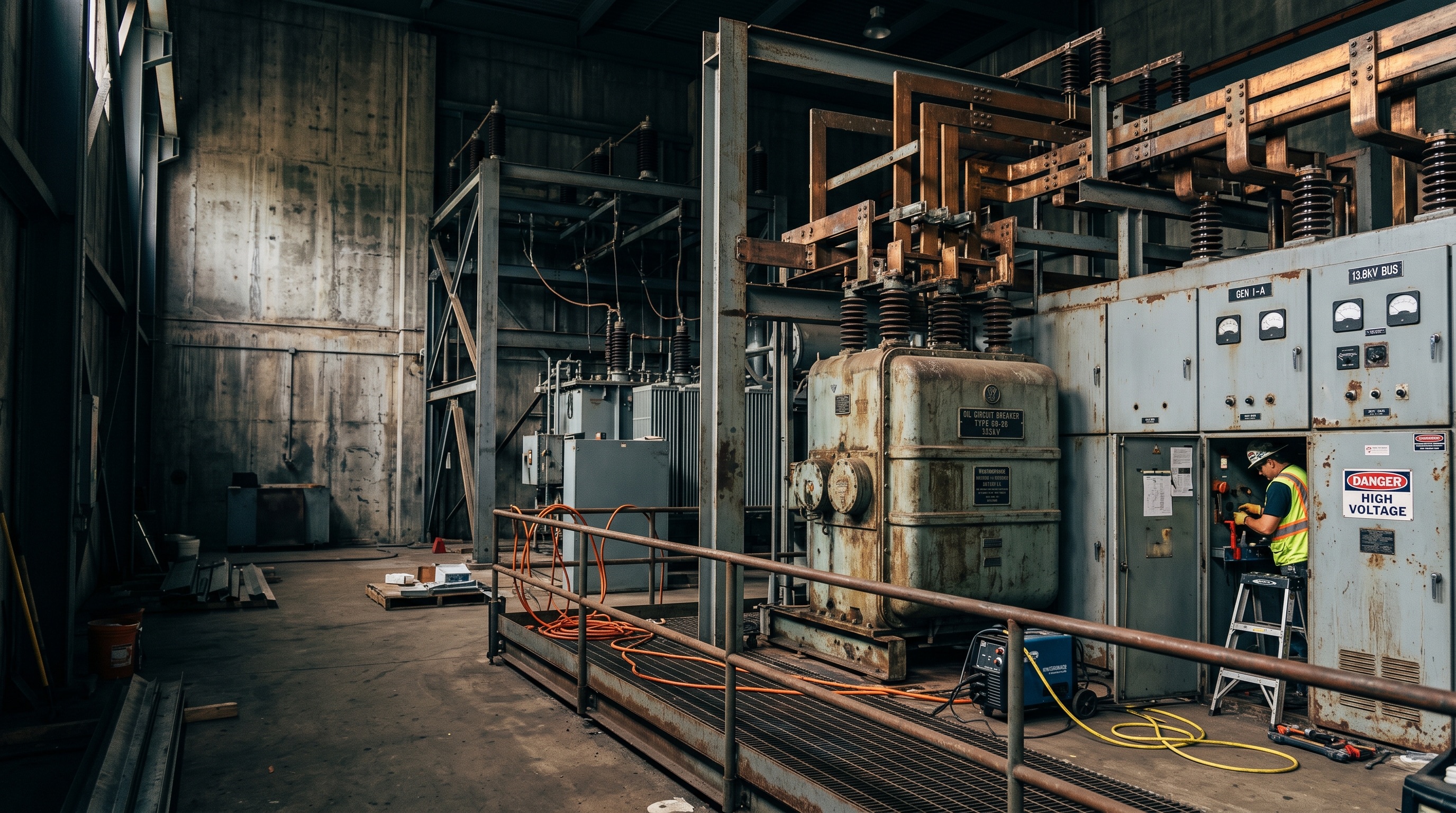
The Army Corps of Engineers put out a requirement to refurbish an Eaton Cutler-Hammer 150VCP-W50C medium-voltage breaker at Lookout Point in Oregon, rather than swap in a new vacuum breaker. The International Boundary and Water Commission, which owns transmission-class assets at dams along the Texas border, solicited a refurbishment of a 138 kV oil circuit breaker at Del Rio. The Department of Defense issued a repair, not a replacement, for an outdoor pad-mount transformer at a facility in Japan. And the Coast Guard Yard at Curtis Bay, Maryland ran back-to-back custom dry-type transformer buys on May 18 and June 3, the kind of repeat specification activity that signals a fleet working through a replacement list one unit at a time.
None of these is a headline. Together they are a pattern, and the pattern is older than this month. A separate review of federal hydro buyers found 16 transformer and switchgear solicitations across the Army Corps Walla Walla and Portland districts and the Western Area Power Administration in a 30-day span, spanning power transformers, voltage transformers, SF6 breaker overhaul kits, station batteries, and strategic spares. Federal hydro fleets built in the 1950s through the 1980s are entering a refresh cycle, and a large part of that refresh is life extension, not wholesale replacement.
Why refurbishment is winning the lead-time math
The economics behind switchgear refurbishment vs replacement come down to three pressures that all push the same direction.
First, replacement is slow. Distribution-class transformers run 52 to 78 weeks, and large power transformers run 128 to 144 weeks, with some generator step-up units stretching past 210 weeks. When a 138 kV breaker fails or a station transformer ages out, the replacement may not arrive inside two years. A refurbishment that returns the existing asset to service in a fraction of that time is not a compromise. It is uptime. Our breakdown of transformer procurement in 2026 walks through why those lead times are not easing.
Second, like-for-like new builds are not always available. Oil-filled circuit breakers in many transmission ratings are simply not manufactured anymore. A buyer who wants to keep an oil breaker running has to refurbish it, because the modern replacement is a different technology with a different footprint, different protection coordination, and a different spec sheet. The shift toward SF6-free switchgear adds another wrinkle: replacing an old breaker can mean re-specifying around environmental rules that did not exist when the original was installed, while a refurbishment keeps the known quantity in place.
Third, domestic-content rules raise the cost and complexity of buying new for federally funded work. Federal power marketing administrations default to Build America Buy America sourcing, which narrows the qualified manufacturer set and can add a waiver process to any new purchase. Refurbishing an installed asset sidesteps part of that friction. Our guide to BABA compliance for transformer procurement covers why the certified-supplier question is harder than most buyers expect.
What it means for distributors
The refurbish-first shift changes what a distributor needs to have ready.
The buyers placing these orders are not looking only for new units off a price list. They are looking for refurbishment-grade parts, rebuild kits, replacement components for legacy breaker frames, and OEM-spec replacements that match an installed base built decades ago. A distributor who can source a Cutler-Hammer rebuild kit or a tank heater for a 40-year-old breaker is solving a problem that a new-equipment catalog cannot. The federal buyers running these dockets are repeat customers for exactly that capability.
There is a timing read here too. Refurbishment buys distributors and their customers a window, not a permanent answer. The DOE 2029 efficiency floor adds a useful distinction: refurbished transformers already in service stay compliant indefinitely, while any new replacement built after April 2029 must meet the tighter spec. That changes the math at the 2029 boundary and strengthens the refurbishment case for buyers who can extend asset life past that date. Efficiency rules tightening in 2029 and parts availability that thins out every year both put a clock on how long the installed base can be rebuilt before replacement becomes unavoidable. The buyers refurbishing now are deferring a replacement decision into a future where lead times may be longer, not shorter. Distributors who track which asset classes are nearing the end of their refurbishment runway will see the replacement orders coming before the RFQs land.
The broader point is that aging-fleet life extension is a procurement category in its own right, sitting alongside new-equipment sourcing rather than underneath it. Federal facilities are showing the rest of the market what that category looks like first, because their assets are older and their sourcing rules are stricter. Cooperatives and municipal utilities working through their own 1970s and 1980s substation builds are on the same path a few years behind.
The takeaway
Switchgear refurbishment vs replacement is no longer an edge case. It is becoming the default first question for buyers facing two-year replacement lead times, discontinued product lines, and tightening domestic-content rules. The federal record is the clearest early read on the shift because federal hydro and defense fleets are the oldest and most rule-bound in the country. Watch what they refurbish today, and you are watching a preview of what the broader distribution market will be refurbishing, and eventually replacing, over the next several years.
Related Reading
- SF6-Free Switchgear Has Crossed the Commercial Threshold
- BABA Compliance for Transformer Procurement
- The State of Transformer Procurement in 2026
The Feeder tracks signals like this one every month: the federal buys, the lead-time moves, and the sourcing shifts that hit your equipment categories before they reach the trade press. It is free, it is monthly, and it is built for procurement teams who would rather see the pattern early than read about it late. Subscribe to The Feeder.
Know what changed before your next quote
Free Member tier. Pick your topics. Get a weekly digest filtered to what you actually buy.