Lakewood's 98% Came Before the Transformer Arrived
The Illuminating Company cut outage time 98% before either new transformer was energized. What a distribution transformer replacement really buys, and what it does not.
A 55-ton transformer traveled roughly 500 miles from Roanoke, Virginia to a substation on Athens Avenue in Lakewood, Ohio, and a crane set it in place over five days. In the same announcement, The Illuminating Company reported that the total time its Lakewood customers spent without power fell 98% in December 2025 compared with December 2024.
Read those two facts in the order they were published and you get a clean story about distribution transformer replacement reliability improvement. Now set them against the calendar and the story falls apart. That 98% measures December 2025. The transformer arrived in the summer of 2026 and, per the utility, “is expected to be energized later this year.” The second unit is “on track to be energized by early next year.” A mobile substation carried the load through construction.
The measurement window closes more than six months before the equipment it is being credited to ever carries current. Whatever produced that 98%, it was not the transformers.
That is worth saying plainly, because the gap between those two numbers is the single most useful thing in this project for anyone building a distribution transformer replacement reliability improvement case. It is not an argument against replacing transformers. It is an argument about what you can honestly promise, and when.
What actually bought the 98%
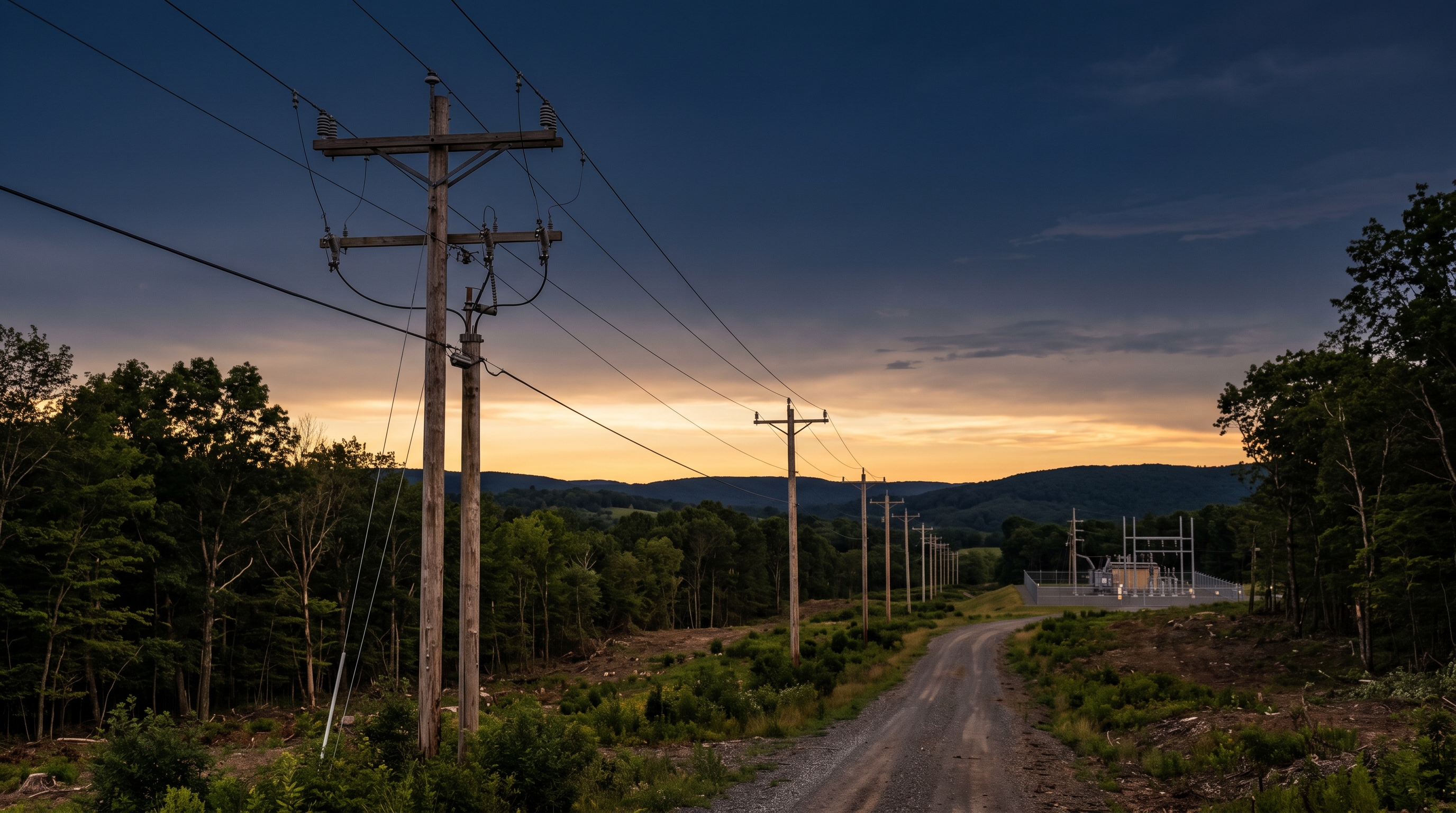
The Illuminating Company, the FirstEnergy Ohio operating company serving nearly 11,000 customers in Lakewood and West Cleveland, did not run a transformer project. It ran a multi-year hardening program, and the transformers are its most expensive and slowest component, not its first.
The work that closed before the December 2025 measurement window is all in the utility’s own account of the program:
- All four breakers replaced at the substation serving Lakewood.
- Equipment work on or around 167 poles, ongoing since October 2024.
- Tree pruning at nearly 100 locations, which the utility notes ran ahead of schedule.
- Smart meter installation, begun but not quantified.
Every item on that list attacks a fault cause. Vegetation contact, failed cutouts and arresters, degraded crossarm hardware, and slow or miscoordinated substation breakers are what interrupt an overhead distribution circuit. Pruning a span and replacing a pole-top switch removes the event. A breaker that clears and recloses correctly turns what would have been an outage into a blink.
A power transformer does none of that. It is the capacity and asset-age answer, and its failure mode is rare, catastrophic, and long to recover from. Replacing it is genuinely urgent work when the unit is at end of life or the substation is out of headroom. It is simply not the equipment that drives the interruption count on a residential feeder, which is why the frequency gain landed before the transformer did.
Two numbers, two denominators, and no standard index
The same announcement carries a second figure that is routinely read as a softer version of the first. It is not. The utility states that “local power lines served by the Lakewood Substation have also seen a 25% decrease in overall outage time.” That is a different population than the customer-time figure, measured over a different scope.
More important for anyone about to put either number in a board packet: neither is SAIDI, SAIFI, or CAIDI. No standard reliability index appears anywhere in the utility’s account of this project. “Total time customers were without power” and “overall outage time” are the utility’s own phrasing, not defined indices, and mapping them onto a reported IEEE 1366 metric is an inference nobody has published support for.
That matters commercially. A regulator or a board that already tracks your reported SAIDI will ask how a 98% figure squares with a reliability number that moved a few percent. The answer is that they are not the same measurement, over the same territory, for the same period. December-over-December on one substation’s customer base is a narrow window on a small population, and a single mild month against a single severe one can carry a large share of a swing that size. Cite it as what it is, or the first person to check will discount everything next to it.
The sequencing argument, and why it favors the buyer waiting on steel
Here is where this becomes a procurement decision rather than a reliability anecdote.
The transformers are the capital headline. Each represents an approximately $1.85 million investment including equipment, transportation and installation, according to The Illuminating Company’s own announcement of the project. Treat that as one reported project figure and nothing more. The MVA rating and voltage class are not disclosed, so it does not compare against your quote, your neighbor’s quote, or anything else.
The work that produced the measured gain was the cheap, fast half of the program: hardware on 167 poles, four breakers, and a pruning crew. None of it required a factory slot.
For a municipal utility or a cooperative sitting on a transformer quote with delivery measured in years, that ordering is the finding. The long-lead unit does not have to arrive before reliability improves. Our framework for evaluating transformer bids when lead times exceed two years is built around the same constraint from the other side: once delivery is the binding term rather than price, the question becomes what you do with the intervening quarters. Lakewood is a documented answer. You spend them on the fault causes.
This is the same order of operations that shows up in the co-op grid hardening playbook, where lean teams reach investor-owned results by sequencing work rather than outspending it, and it is why condition-based pole asset management keeps earning budget against flashier line items. Pole-top hardware and vegetation are the categories a small buyer can actually move inside a single budget year.
Distribution reliability capex justification without overpromising
The honest framing for an aging transformer replacement business case has two halves, and most internal pitches only make the first.
What the transformer buys: removal of a catastrophic, long-duration failure mode on an asset that is out of headroom or past its service life, plus the capacity to serve load you have already committed to. That is a risk and capacity argument. It is sufficient on its own and it does not need help.
What the transformer does not buy: a lower interruption count next December. If your board approves a distribution transformer replacement reliability improvement program on the promise of frequency gains, and the frequency gains were always going to come from the pruning and the pole work, then the transformer takes credit it did not earn and carries blame it does not deserve the first year the numbers do not move.
The practical construction is to fund both, and to attribute each to its own outcome in the approval document. Hardening work reports on interruption frequency; the transformer reports on capacity headroom and failure risk, and neither number has to carry the other. Anyone who has sat through a reliability review knows which of those gets questioned harder, and it is not the one with a measured number attached.
What to do with this
If you are building the case for replacement capital this cycle, three moves come directly out of Lakewood.
Separate the promises in the approval memo. One program, two outcome claims, each tied to the equipment that produces it. That survives the second-year review; a blended claim does not.
Sequence the fast work first, deliberately, and measure it before the long-lead equipment lands. Breakers, pole-top hardware and a vegetation cycle are inside a single budget year, and they generate the outcome number that funds the next request. The utility that has a measured gain in hand when the transformer arrives is in a much better position than the one still waiting to prove anything.
Then be careful with the numbers you borrow. A 98% figure with no index behind it, no defined population, and a window that closes before the equipment energizes is a real result and a bad citation. Use it as evidence that interim hardening works. Do not use it as evidence that transformer replacement improves reliability, because in this case it cannot be.
The monthly read on where this is heading
Hardening budgets are moving to the fast, cheap categories while long-lead substation equipment stays booked out, and the split is showing up in what utilities actually put on order this year. The Feeder is our free monthly digest of the procurement signals that move utility and distribution equipment buyers: lead-time shifts, supplier capacity, federal funding, and the RFP language that follows. One email a month, no filler.
Related Reading
- How to Evaluate Transformer Bids When Lead Times Exceed Two Years
- Distribution Pole Asset Management: From Age to Condition
- The Co-op Grid Hardening Playbook: Six Resilience Moves
Sources: The Illuminating Company / FirstEnergy newsroom, “The Illuminating Company Marks Reliability Milestone with Two New Transformers in Lakewood”; T&D World, August 2026.
Free RFQ templates. Weekly digest. Yours.
Free Member tier. Pick your topics. Get a weekly digest filtered to what you actually buy.