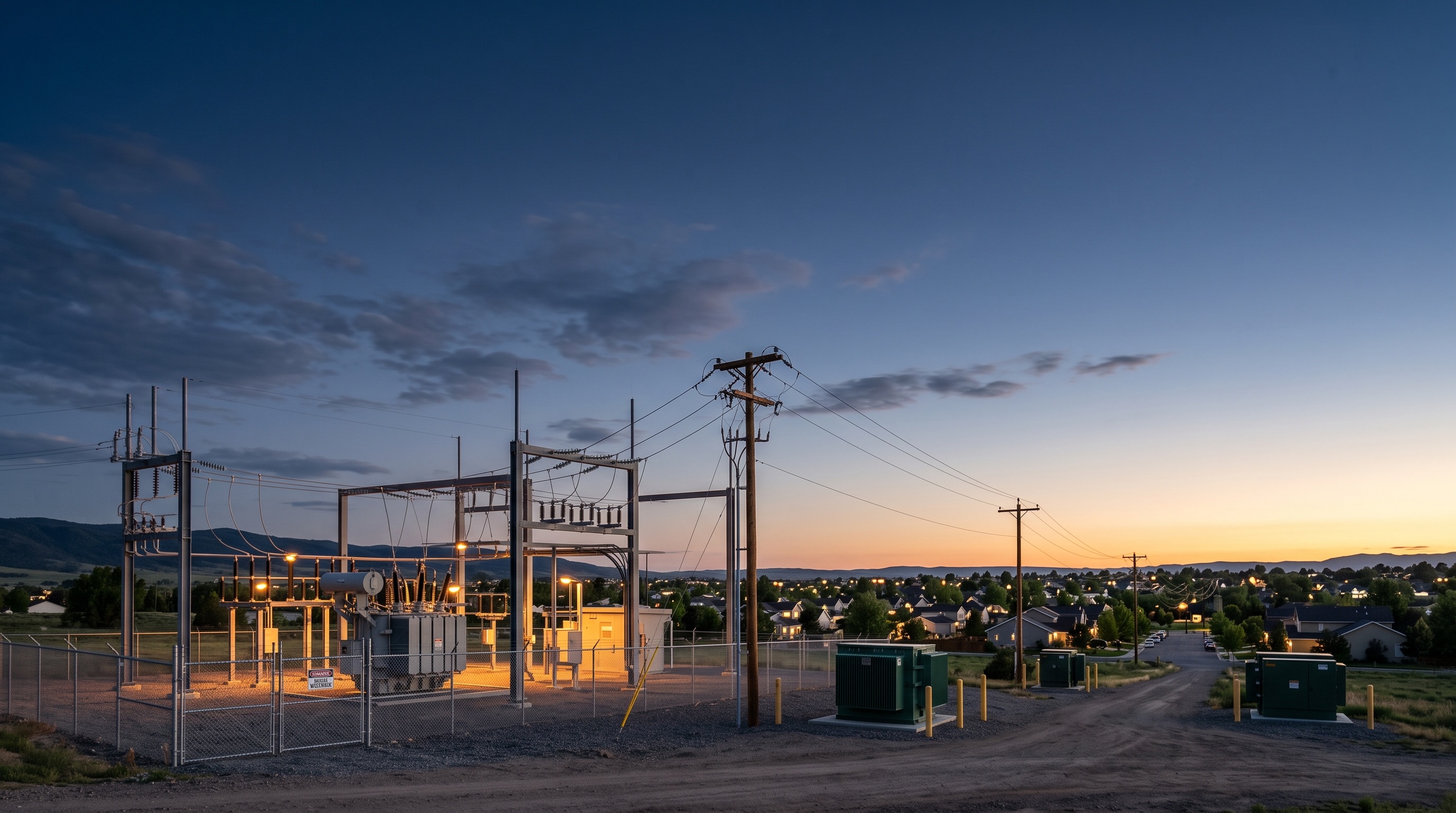
What Is the Distribution Grid? A Buyer's Field Guide
The distribution grid is the last stretch of wire from substation to meter. What it is, the equipment that runs it, and why buyers track it now.
The distribution grid is the last stretch of the power system, the wires and equipment that carry electricity from the local substation to the meter on a home or business. Generation makes the power. High voltage transmission moves it across the state. Distribution is the part that actually reaches the customer, and it is where most of the equipment a regional distributor sells ends up. If you write specs, evaluate bids, or stock medium voltage gear, this is the layer you work on every day.
This guide walks the distribution grid from the substation to the meter, names the equipment at each step, and explains why a once quiet corner of the utility budget has turned into the busiest one in 2026.
Where the distribution grid begins
The distribution grid begins at the distribution substation. A transmission or subtransmission line arrives at the fence carrying something on the order of 69 to 138 kV. Inside the fence, a power transformer steps that down to a primary distribution voltage, most often somewhere between 4 and 35 kV. In a lot of US territory the working number is 12.47 kV.
The substation is more than that one transformer. It holds the circuit breakers that clear faults, the protective relays that decide when to trip, the voltage regulators and capacitor banks that hold voltage steady as load swings, and the metering that tells the operator what is flowing. When a data center or a new subdivision shows up, this is the first thing that has to grow. We covered what that buildout looks like in how utilities design substations for data center load.
From the substation to the street
Power leaves the substation on feeders. A feeder is a three phase primary line that runs along the main roads of a service territory, and a single substation usually pushes out several of them. Off each feeder, smaller laterals tap away down side streets, sometimes single phase, to reach the last few customers.
The feeder is where most reliability equipment lives. Reclosers ride the line to clear temporary faults and close back in. Sectionalizers and fuses isolate the failed segment so the rest of the feeder stays up. Switches let a crew reroute power around a problem. Every one of these is a separate purchase order, and the distribution feeder is where the count adds up fast.
The transformer at the end of the line
The pole mounted or pad mounted transformer outside a house or behind a strip mall is the last device on the path. It steps the primary voltage, say 12.47 kV, down to the utilization voltage that runs lights and motors: 120/240 V for a home, 277/480 V for a commercial building.
These service transformers are the highest volume item on the whole distribution grid, and they have become the hardest to get. Units that once shipped in a couple of months now carry lead times measured in quarters. That single fact is reshaping how utilities and the distributors who serve them plan a year out. We go deep on it in our 2026 transformer procurement outlook.
The equipment that makes up the distribution grid
Step back and the list of distribution grid components is short enough to hold in your head:
- Poles and conductor. The physical path. Wood, steel, and composite poles carrying bare overhead conductor or insulated underground cable.
- Transformers. Substation power transformers and the service transformers at every customer group.
- Switchgear and protection. Breakers, reclosers, sectionalizers, fuses, and the relays that run them.
- Regulation. Voltage regulators and capacitor banks that keep voltage inside spec as load changes.
- Metering and sensors. Revenue meters, line sensors, and the fault indicators that speed up restoration.
- Communications. The radios and fiber that tie distribution automation back to the control room.
Each line is its own supply chain with its own lead time. The poles and conductor side has its own squeeze building toward 2027, which we tracked in the pole and conductor crunch. Treat medium voltage equipment as one bucket and you get surprised. Track each line on its own and you stay ahead of the gap.
Why the distribution grid is where the pressure is now
For years the money and the headlines sat upstream, on big transmission lines and new generation. That is changing. Storm hardening, distributed load growth, and regulators pushing utilities to wring more out of the wires they already own are all moving capital down toward the distribution grid. We laid out that shift in why utility spend is moving down to the distribution grid.
For a buyer the takeaway is direct. The fastest growing dollars are on the medium voltage gear in this guide, not on high voltage transmission. The question that decides a 2026 plan is not what the distribution grid is. It is which piece of it your supplier can actually deliver this year.
Learn it properly
If you are new to this and want the fundamentals in order, our short lesson on what the distribution grid does walks the same substation to meter path with a worked example and a quick check on your understanding. It is free and takes about six minutes.
The monthly read on where this is heading
The distribution grid is where the fastest-growing equipment dollars land, and which categories move first is the signal worth watching month to month. The Feeder is our free monthly digest of the procurement signals that move utility and distribution equipment buyers: lead-time shifts, supplier capacity, federal funding, and the RFP language that follows. One email a month, no filler.
Related Reading
- Why Utility Spend Is Moving Down to the Distribution Grid
- The 2026 Transformer Procurement Outlook
- The Pole and Conductor Crunch Building Toward 2027
Free RFQ templates. Weekly digest. Yours.
Free Member tier. Pick your topics. Get a weekly digest filtered to what you actually buy.