Pole and Conductor Procurement: The 2027 Supply Crunch
Three utility mega-programs are locking up pole and conductor procurement supply through 2027. What smaller co-ops and munis should budget and order now.
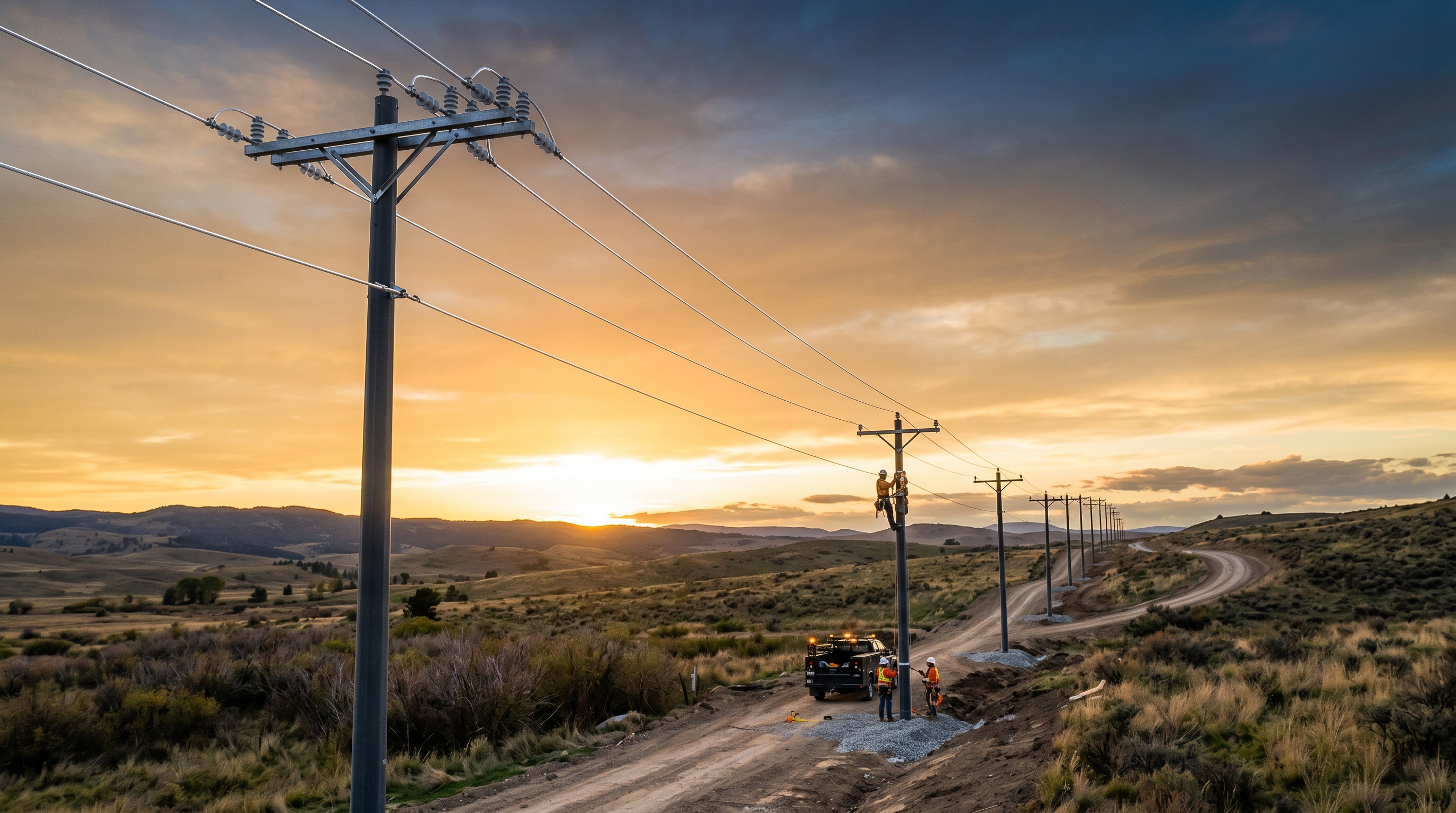
A line crew in Houston set more than 10,000 storm-resilient poles in the first three months of 2026. That is one utility, one quarter. CenterPoint plans to install 35,000 poles this year, and it signed a multi-year agreement in February to lock up composite pole supply before anyone else could. If you run pole and conductor procurement for a cooperative or a municipal system, that number is your problem too, because you buy from the same short list of factories.
Three program-scale commitments landed in the same window, and together they are compressing the supply of poles, conductor, and line hardware for every buyer who is not an investor-owned utility. None of the three is speculative. Each one is a signed program with money behind it and a public progress report. Here is what they are pulling, and what it means for a 2027 budget you are building right now.
Three programs, one supplier base
The trap in reading any single utility announcement is treating it as that utility’s problem. It isn’t. There are only a handful of composite pole pultruders, two serious domestic advanced-conductor makers, and three line-hardware houses that matter. When a 2.9-million-customer utility signs a long-term pole agreement, the factory queue it joins is the same queue your distributor quotes you from.
That is the through-line connecting Houston, California, and northwest Ohio this spring.
CenterPoint is buying 35,000 poles a year
CenterPoint’s Greater Houston Resiliency Initiative is the clearest publicly counted hardening program in the country. The first-quarter 2026 scorecard: 10,000-plus storm-resilient poles installed, 99 miles of distribution line undergrounded, 220 miles of overhead line hardened. Since the program launched in August 2024, the cumulative figure is past 56,000 poles, many of them high-strength composite.
The supply signal sits in a February 2026 contract. CenterPoint signed a long-term agreement with Resilient Structures specifically to secure composite pole supply. Utilities do not sign multi-year material agreements when the part is easy to get. They sign them when they have done the math on a 35,000-unit annual run rate and concluded the spot market will not carry it.
Composite pole lead times are the first thing to lengthen
Composite poles run roughly two to three times the unit cost of wood, and they carry a 50-year service life against wood’s 30. For a storm-exposed feeder, that trade pencils out, which is exactly why the demand is moving. The constraint is that the supplier base for Class II and Class III composite is thin. When a program the size of GHRI takes a long-term position with one of those makers, the next buyer in line waits longer.
The coastal utilities behind CenterPoint in the hurricane queue, Florida Power & Light, Duke Florida, Entergy along the Gulf, all face the same exposure and will follow the same playbook. A co-op deciding in 2027 to move its worst storm circuits to composite is entering that market at its tightest point. That is a pole and conductor procurement timing problem, not a price problem, and timing problems are the ones that strand a construction season.
Advanced conductor supply is the tighter constraint
While Houston is hardening poles, PG&E rolled out a framework to deploy advanced conductor across its system, separate from its wildfire undergrounding filing. The driver is capacity: reconductoring an existing right-of-way with high-temperature low-sag wire grows a corridor’s throughput two to three times in a fraction of the time a new line takes. California’s SB 1006 now requires the state’s utilities to study which lines qualify, so this is policy, not a pilot.
The procurement reality behind the framework is narrow. The high-temperature conductor classes that make reconductoring work, ACCC and ACCR among them, come from a very small group of manufacturers, and the carbon-composite core types have one or two domestic sources. PG&E’s framework also calls for modernizing the collateral that hangs off the wire: heat-rated suspension and dead-end hardware, splice connectors, dampers. Those parts come from the same three hardware houses that supply routine distribution work.
Stack a PG&E-scale conductor program on top of the reconductoring already underway in Colorado and across the eleven states that now mandate advanced-transmission evaluation, and 2027 to 2028 lead times on advanced conductor and its hardware lengthen sharply. A small utility that wants advanced conductor for a single congested feeder is competing for factory slots against programs a thousand times its size.
FirstEnergy shows the Midwest number
The third data point is smaller and more useful for budgeting. FirstEnergy’s transmission arm is rebuilding 11 miles of 69-kV line near West Unity in northwest Ohio for about $24 million. That is roughly $2.2 million a mile for a sub-transmission rebuild, including poles, hardware, conductor, foundations, and engineering. For a co-op or muni planning its own 69-kV rebuild, that is a defensible per-mile benchmark to take into a board meeting.
The materials detail matters as much as the number. The rebuild mixes new wood poles with steel structures set in concrete, wood on the tangents and steel on the angles and storm-exposed spans. That split is becoming the Midwest default for sub-transmission in derecho and tornado country, and it means coordinating a wood supplier, a steel pole maker, and a foundation contractor on one job. The project is one piece of FirstEnergy’s $36 billion 2026 to 2030 plan, with more than $200 million earmarked for northwest Ohio high-voltage work. Every co-op and muni in that corridor draws from the supplier base FirstEnergy is now loading.
What the smaller buyer should do about pole and conductor procurement
The pattern across all three is the same. Large utilities are taking long-term positions on the exact parts with the thinnest supplier base: composite poles and advanced conductor. Price is the secondary effect. The first effect is availability, and availability is decided by who placed the order first.
For a 2027 plan, that argues for three moves. Place composite pole and advanced-conductor orders against a forecast, not against a finished bid, because the lead time is now longer than a normal procurement cycle. Treat the $2.2-million-per-mile sub-transmission figure as a planning anchor and pressure-test your own estimates against it. And watch the IOU program announcements in your region as leading indicators, because their order timing sets your lead times whether or not you ever do business with them.
The full picture, where composite capacity is opening or closing by quarter and which regions the pinch points move to next, is the kind of detail that decides a budget.
The current edition, by equipment category
The pole and conductor crunch traced here comes down to lead times and supplier availability on a handful of long-pole items.
The Monthly Market Tracker pulls the lead times, supplier capacity, and federal program activity for one equipment category into a single report, rebuilt every month from public data and checked before it ships. It runs $79 and downloads the moment you check out.
See the current Monthly Market Tracker
Related Reading
- PG&E Undergrounding Filing: 9,000 Miles, $1B/Year to 2037
- Western Distribution Hardening Super-Cycle: 2026 Procurement Through 2037
- Steel or Composite? The Transmission Conductor Debate Is Missing the Right Cost Metric
Frequently Asked Questions
Why are utility poles and conductor getting harder to buy in 2027?
Several investor-owned utilities have committed to multi-year hardening and reconductoring programs at program scale. CenterPoint alone plans 35,000 storm-resilient poles in 2026. Those commitments draw from the same pole, conductor, and line-hardware suppliers that co-ops and munis rely on, so available capacity tightens for everyone else.
What should a small utility order first?
Composite poles for storm-zone applications and any high-temperature advanced conductor have the longest lead times and the smallest supplier base. Those are the line items to place on order well ahead of the construction season rather than at bid time.
Track this beat without paying per report
Free Member tier. Pick your topics. Get a weekly digest filtered to what you actually buy.