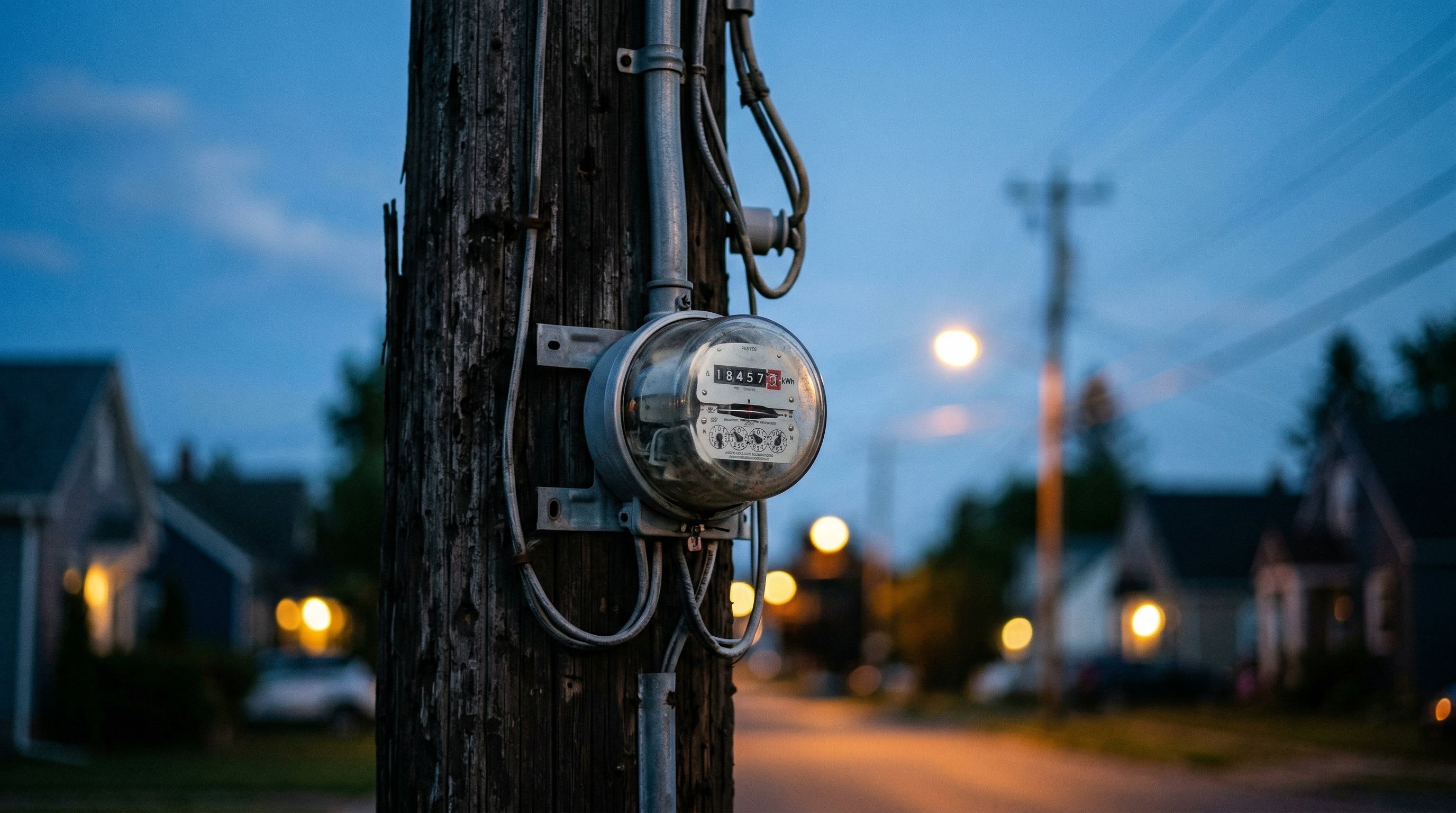
The Affordability Crisis Is a Distribution Equipment Story
Utilities face rising rates and stranded capacity simultaneously. Jigar Shah's argument reframes distribution upgrades as ROI recovery, not compliance cost. Here is what that means for procurement.
Rates are rising faster than inflation. That is the core problem Jigar Shah lays out in his April 2026 column in T&D World. Shah, former Director of the DOE Loan Programs Office and now co-managing partner at Migrate, argues that the industry has been framing this backwards.
The affordability crisis is not primarily about the cost of new generation. It is about a failure to extract value from infrastructure that already exists.
That reframe matters for procurement. Because if the problem is stranded capacity, the solution is distribution upgrades. The budget case for transformers and switchgear stops being a compliance cost and starts being a return on existing investment.
The Numbers Behind the Argument
Shah cites three figures that establish the scale of the opportunity.
Twenty-five percent more grid capacity is extractable from existing infrastructure. This is not a theoretical ceiling. It reflects technical headroom in lines, transformers, and substations that utilities are not currently using because the monitoring and control capability to use it safely is not installed. The equipment gap is measurable.
NREL estimates 160 GW of virtual power plant capacity nationally by 2030. VPPs aggregate distributed resources (EVs, smart thermostats, battery storage) into a dispatchable supply pool that behaves like generation without building generation. But VPPs depend on distribution infrastructure that can receive signals and respond to them. The 160 GW figure is a ceiling, not a floor. Getting anywhere near it requires grid edge equipment that most distribution systems do not currently have.
One trillion dollars in stranded capacity sits on the existing grid. That is the estimated value of infrastructure that ratepayers have already paid for but cannot fully use because the distribution layer cannot support it. That number converts a procurement conversation into a capital efficiency conversation.
The Real Bottleneck Is Not Money
“The money is available. The question is whether utilities have the organizational capacity to deploy it.”
That line from Shah’s column is the most direct statement of the problem. Federal funding programs (SPARK, Grid Resilience grants, IRA tax credits) have put capital on the table. The utilities that cannot move it are not failing because of a funding shortage. They are failing because procurement timelines, regulatory approvals, and organizational decision cycles were not designed for the speed that current load growth demands.
Multi-year pilot approval processes are incompatible with the pace of electrification. Shah names regulatory timelines as the specific enemy. A VPP tariff that takes three years to get through a state commission does not help a utility managing EV load additions that are happening this year.
The procurement implication: lead times are the utility’s version of this problem. A transformer with a 128-week delivery window cannot solve a grid constraint that is arriving in Q3. Building procurement capability that gets ahead of demand is the organizational capacity question Shah is really asking about.
The ROI Frame Changes the Budget Conversation
Here is where this matters for procurement managers specifically.
The traditional justification for distribution equipment spending is compliance or capacity expansion. You are either meeting a reliability standard or adding capability for load growth. Both of those frames trigger capital approval processes that can take 12-18 months.
Shah’s framing offers a different argument: distribution upgrades recover stranded value from assets ratepayers have already paid for. A transformer replacement that allows a substation to carry 20-25% more load without new generation is not new capex. It is ROI recovery on existing capital. That is a different conversation with a CFO or a public utility commission.
Time-of-use rates and DER tariffs are named as competitive differentiation for progressive utilities. Utilities that can implement those rate designs attract commercial and industrial customers who want flexible pricing. The distribution equipment required to support them (smart meters, grid-responsive switching, two-way capable transformers) becomes revenue infrastructure, not cost infrastructure. That matters when you are writing the justification for a switchgear order.
What This Looks Like on the Ground
The equipment categories where this frame applies most directly:
Pad-mount and secondary transformers for neighborhoods where EV penetration is increasing. The load growth is already happening. The question is whether the transformer on that feeder was sized for it. Lead times on pad-mount three-phase units are tightening again according to current market data. The utilities extracting value from existing distribution infrastructure are ordering replacements before the overload events, not after.
Medium-voltage switchgear at substations where DER interconnection is concentrated. Every solar installation and battery system on the distribution side requires switching capability that can handle bidirectional power flows. Conventional switchgear was not designed for that. The retrofit market is growing, and the units are on extended lead.
Protection equipment on feeders where fault patterns are changing. Distributed generation changes the fault current characteristics that protection schemes were set to handle. Recloser settings that worked in 2018 may not be appropriate today. The equipment upgrade required to reprotect a feeder correctly is not optional. It is what keeps the reliability numbers out of the regulatory spotlight.
The Procurement Manager’s Takeaway
Shah is writing for utility leadership, but the argument lands in procurement. When your utility is making the case for distribution equipment budget, the affordability crisis reframe gives you better language.
You are not asking for capital to meet tomorrow’s load growth. You are asking for capital to recover the value of infrastructure that ratepayers already own. The 25% untapped capacity figure means every dollar of distribution equipment spending has a baseline ROI case that does not depend on load growth projections.
That argument is easier to make to a CFO, easier to defend to a commission, and easier to justify in a SPARK application than “we expect demand to increase.”
The equipment is the same. The framing is different. In procurement, framing determines whether the order gets approved before the constraint arrives or after it.
Source: T&D World, April 2026, p. 42. Jigar Shah column. VPP capacity figure from NREL, cited in Shah’s column. All quantitative claims sourced to public trade press and cited research.
The monthly read on where this is heading
Jigar Shah’s ROI reframe touches pad-mount transformers, medium-voltage switchgear, and protection equipment all at once, and procurement teams are already borrowing that language for capital requests. The Feeder is our free monthly digest of the procurement signals that move utility and distribution equipment buyers: lead-time shifts, supplier capacity, federal funding, and the RFP language that follows. One email a month, no filler.
Free RFQ templates. Weekly digest. Yours.
Free Member tier. Pick your topics. Get a weekly digest filtered to what you actually buy.