Transmission Substation Procurement: ComEd Beat the Backlog
ComEd delivered 345 kV wind-interconnection substations four months early. What its transmission substation procurement reveals about beating the backlog.
While most transformer news in 2026 is about what buyers cannot get, Commonwealth Edison just finished a project ahead of schedule. The Northern Illinois utility energized new 345 kV substations that interconnect up to 550 MW of wind in LaSalle and Woodford counties, and it closed out a build that started in 2023 more than four months early. For anyone watching transmission substation procurement in a 160-week-lead-time market, the on-time part is the real headline.
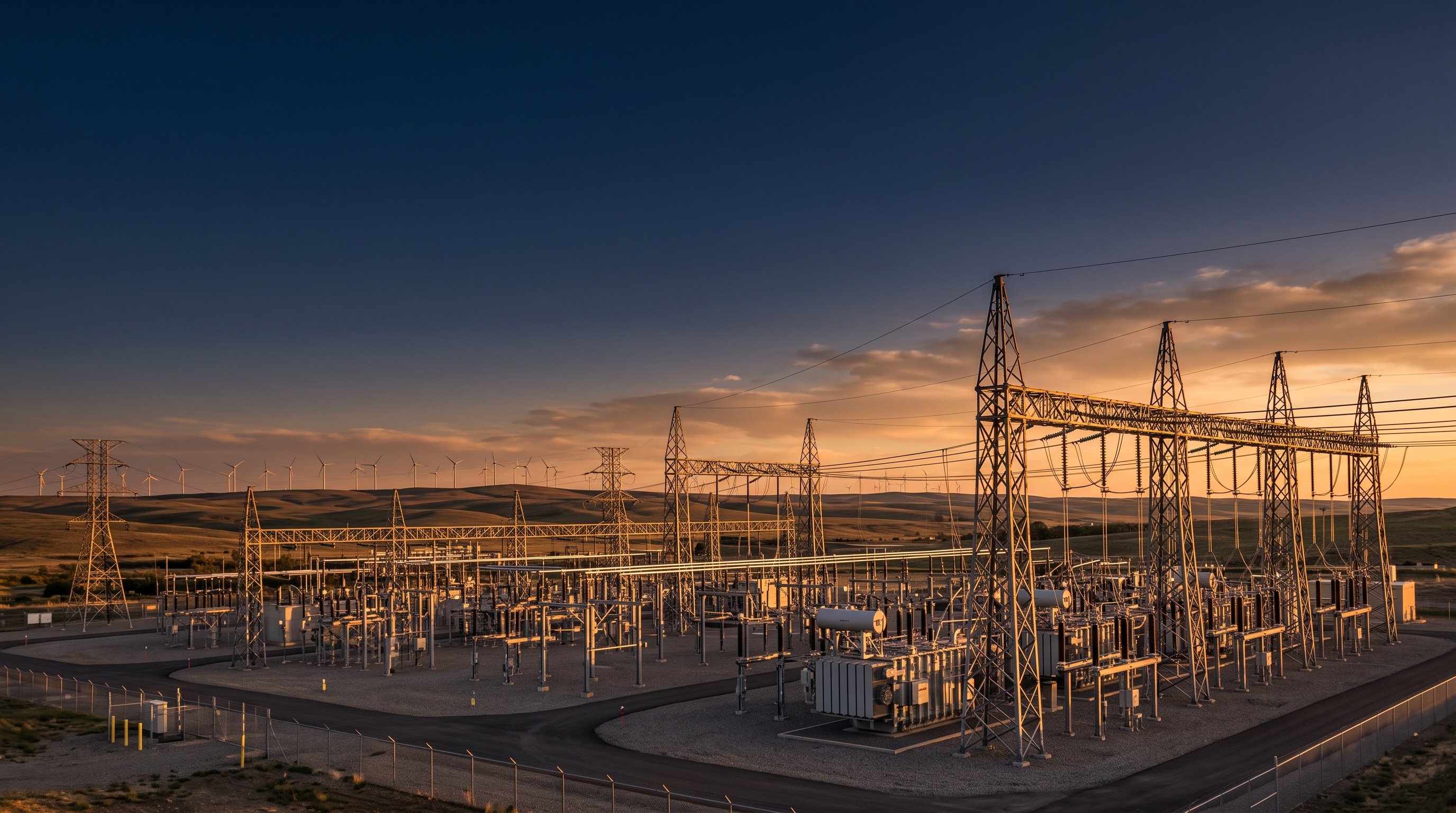
The physical scope was not small. ComEd put up 16 new transmission towers, ran more than 58 miles of fiber, and strung close to half a mile of new conductor to tie two wind farms into the grid: Osagrove Flats at 150 MW and Panther Grove at 400 MW. Both are expected online across 2026 and 2027. ComEd did not disclose transformer ratings, breaker makes, or the contractors, so treat the equipment detail as directional. The signal that matters is the schedule.
Renewable interconnection is a steady equipment order stream
It is easy to read every 2026 procurement story through the data center lens. This one runs on a different driver. A 345 kV interconnection substation for 550 MW of wind carries a bill of materials that sits squarely in distribution’s supply chain: transmission-class power transformers, 345 kV breakers and switchgear, protection and control, and the step-down path that eventually feeds distribution feeders. Renewable interconnection equipment demand competes for the exact same iron the hyperscalers and the utilities are chasing, and it does not slow down when a data center campus gets canceled.
The volume behind this is not a one-off. The interconnection queues are stacked with generation and storage waiting on the same gear, a backlog we covered in PJM Reopens Its Queue: 220 GW Across 800 Projects. Every one of those projects needs a substation, and every substation draws from a pool that is already short.
How ComEd beat the transformer backlog
So how does a project started in 2023 finish four months early when the running story is two-year-plus lead times? The answer is not luck. A rate-based utility like ComEd plans capital years out, locks supplier slots inside long-term agreements, and holds queue position that a merchant developer bidding job by job does not have. When a utility with committed factory allocation orders a transmission transformer, it is filling a slot it reserved. When a developer without that relationship orders one, it joins the back of the line.
This is what transmission substation procurement looks like when it works: reserved slots, not spot orders. That split is the quiet lesson of the past two years. Rate-based projects with locked supply move. Merchant and developer projects without it wait. We walked through how buyers should read bids in that reality in How to Evaluate Transformer Bids When Lead Times Exceed Two Years, and ComEd’s early finish is the proof case for the discipline it describes.
What wind interconnection procurement means for munis and co-ops
For a municipal utility or a co-op, the takeaway is uncomfortable. ComEd’s on-time delivery does not mean the backlog eased. It means one large investor-owned utility had the supplier relationships and the queue discipline to pull its iron through on schedule while everyone else waited. Every 345 kV interconnection like this one tightens original-equipment-manufacturer allocation for the smaller distribution-class orders a co-op needs next.
The transmission substation procurement read here is queue position and supplier relationship, not price. A co-op that has not reserved transformer and substation slots is now behind ComEd and behind the data center buyers who booked capacity first. Wind interconnection procurement, data center behind-the-fence generation, and RTO large-load rule changes are three fronts drawing from one constrained pool, and the buyer without a seat at the factory is the one who feels all three at once.
The better news is that ComEd’s approach is replicable. Executed supply agreements, early ordering against a real integration schedule, and interconnection-queue discipline are not exclusive to a utility with four million customers. A well-run procurement shop can copy the playbook. It just has to start before a deadline forces it. The same lead-time-lever thinking shows up in modular substation delivery, which we broke down in Modular Substations: The Data Center Lead-Time Lever.
The move to make now
ComEd’s early finish is one data point in a market where the gap between on-time and two-years-late is decided by who reserved capacity first. The utilities and distributors watching supplier allocation, interconnection-queue movement, and which equipment classes tighten next are the ones not waiting when their orders land.
The Feeder is our monthly read on that market: the procurement signals, the supply-chain moves, and the regulatory shifts that decide lead times, sent free once a month. Subscribe to The Feeder.
Related reading
- PJM Reopens Its Queue: 220 GW Across 800 Projects
- How to Evaluate Transformer Bids When Lead Times Exceed Two Years
- Modular Substations: The Data Center Lead-Time Lever
Know what changed before your next quote
Free Member tier. Pick your topics. Get a weekly digest filtered to what you actually buy.