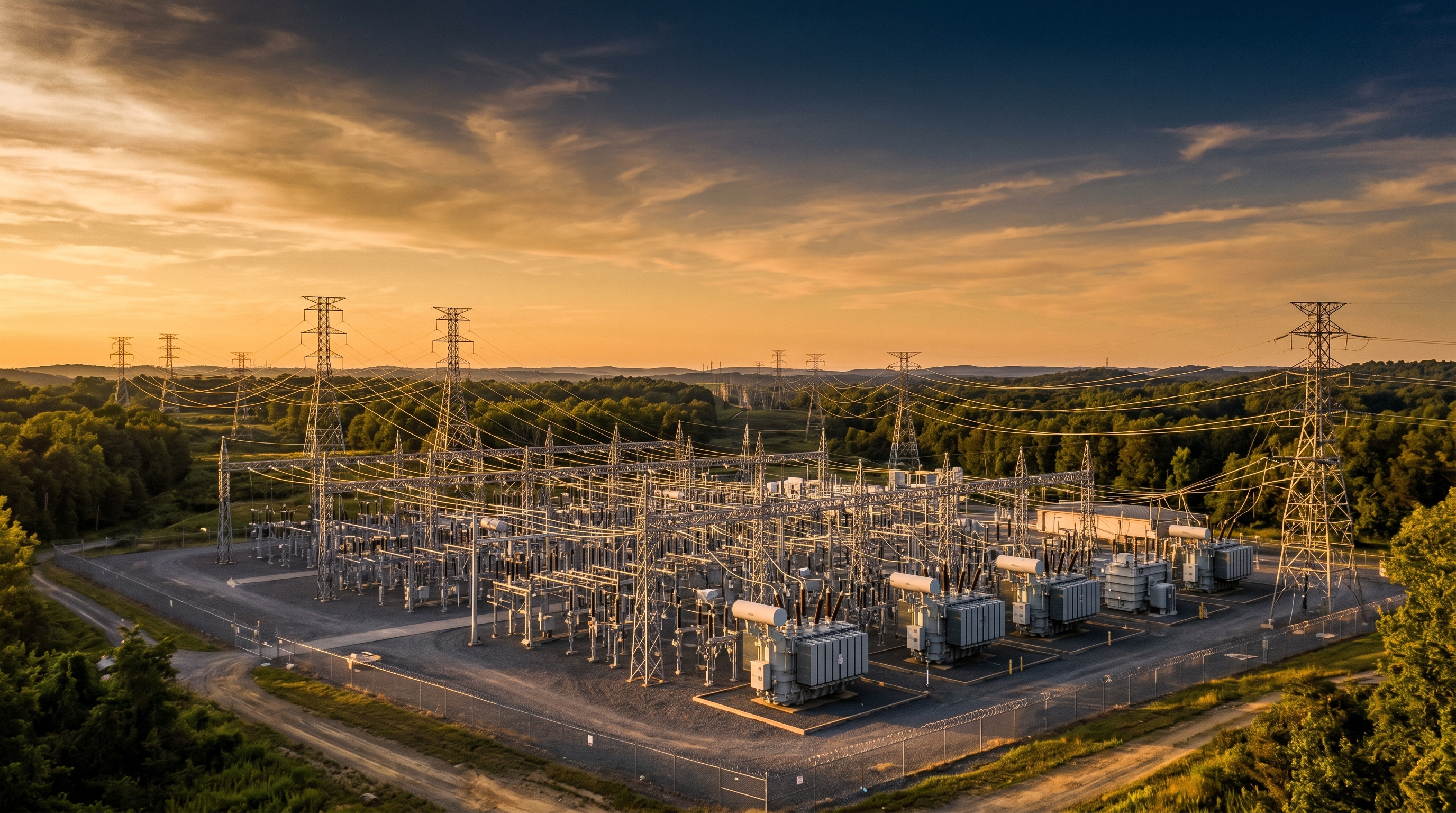
PJM Reopens Its Queue: 220 GW Across 800 Projects
PJM's first new interconnection cycle since 2022 brought in 800 projects totaling 220 GW. The procurement implications for substation transformers, switchgear, and protection equipment across 13 states.
PJM Interconnection opened the first cycle of its revamped interconnection queue on April 29, 2026, and the volume tells the story. More than 800 projects representing 220 GW of capacity filed for grid connection across the 13-state PJM footprint. This is the first new queue window since the operator effectively closed intake in 2022 to clear a backlog that had grown unmanageable.
For procurement teams across investor-owned utilities, public power systems, rural cooperatives, and merchant generation owners in PJM territory, the 220 GW figure is not abstract. It is a forward demand signal for substation-class transformers, medium-voltage switchgear, protection relays, and large power transformers that has not been seen in the PJM footprint in over a decade.
What is in the queue
The mix of resources entering the cycle reveals where the next round of equipment procurement will land. Per PJM’s April 29 disclosure:
- Gas-fired generation: 106 GW (the dominant category)
- Energy storage: 67 GW
- Nuclear: 18 GW
- Solar: 15 GW
- Solar-storage hybrids: 9 GW
- Wind: 5 GW
Gas at 106 GW is the headline. PJM’s territory has not absorbed that volume of new dispatchable thermal generation in a single cycle in modern memory. Even if the historical attrition rate cuts the queue in half between filing and operation, the throughput on substation transformers, gas plant step-up units, and 230 kV/345 kV/500 kV interconnection equipment will be substantial.
Storage at 67 GW reflects the new economics of capacity. PJM’s 2027/28 base auction cleared at $329.17/MW-day, ten times the price two years prior, and storage developers are responding accordingly. Each gigawatt of storage requires medium-voltage switchgear, padmount or substation transformers, and protection schemes that distributors and integrators in the region will compete to supply.
The capacity-market context that drives the queue
The queue reopening lands inside a market structure that is itself under historic stress. PJM’s three most recent base capacity auctions cleared at successive record highs:
- 2025-26 auction: $14.7 billion
- July 2025 incremental auction: $16.1 billion
- December 2025 auction: $16.4 billion at $329.17/MW-day
EnerKnol’s Shahid Mahdi recently summarized the dynamic in a widely circulated commentary: PJM is now facing an $80 billion capacity bill across its delivery years, and the only way out is fast-tracked replacement generation paired with grid-enhancing technologies and permitting reform.
That is precisely why the queue reopened with 800 projects at the door. Capacity prices have signaled an unmistakable buy signal to developers. Whether or not the policy debate over cost socialization resolves, the procurement consequences are already in motion.
We covered the capacity-market dynamic and PJM’s proposed 14.9 GW reliability backstop procurement earlier this month. The backstop process and the reopened queue now run in parallel, both targeting June 1, 2031 as the operational deadline.
Why this is a procurement signal, not just an interconnection signal
A queue filing is a long way from an energized substation. The historical attrition curve in PJM and elsewhere is well documented. But three structural factors make the 2026 queue different from prior cycles, and procurement teams should read them carefully.
Interconnection costs have risen 728%. The average interconnection cost per kilowatt in PJM has climbed from roughly $29/kW historically to $240/kW in the most recent study group. At 220 GW of queue volume, the implied network upgrade infrastructure spend approaches $50 billion before any generation facility equipment is purchased. The bulk of that spend is transformers, switchgear, breakers, and protection equipment.
The June 2031 deadline compresses an 8-12 year build cycle into 5 years. PJM’s reliability backstop process explicitly targets June 1, 2031 for resources with network upgrades complete. Combined with current large power transformer lead times of 1-3 years, any project not procuring transformer slots in 2026-2027 is unlikely to make the deadline. As we covered when the DPA wartime powers were invoked, the supply chain for substation-class transformers does not flex on short notice.
FERC Order 881 ambient-adjusted ratings are now live in PJM. PJM went live on AARs as the first RTO on March 4, 2026, adding 15-40% of usable capacity on existing lines. AAR deployment changes the load flow calculations that determine where new interconnection upgrades are required, and it interacts directly with the queue reopening. Procurement teams that are not modeling AAR-adjusted ratings into their substation procurement plans are working from outdated assumptions.
What tightens for procurement teams in PJM territory
Five equipment categories will see measurable tightening from this queue cycle, in roughly the order they hit the supply chain:
1. Generator step-up transformers (138 kV to 500 kV). Gas-fired generation at 106 GW is concentrated in fewer projects than the storage or solar volumes, which means fewer larger orders for GSU transformers. Domestic and import lead times for 500 kV-class GSUs are already at 100-130 weeks. The queue cycle pushes this further. North American manufacturers including Hitachi Energy, GE Vernova, Hyundai, and Mitsubishi will face allocation decisions through 2028.
2. Medium-voltage switchgear and breakers. Storage at 67 GW translates to thousands of MV switchgear lineups across collector substations. Gas-insulated and air-insulated switchgear at 15-38 kV will be in heaviest demand. SF6-free designs are commercially available at this voltage class but not yet at scale across all manufacturers.
3. Substation power transformers (115 kV to 345 kV). Network upgrade scope at $240/kW implies hundreds of new substation transformers across the footprint. PPL, AEP, Exelon, Dominion, and Pepco/PSEG will all be in the market simultaneously through 2028. Procurement teams that have not locked transformer slots for 2027-2028 deliveries are exposed to allocation risk.
4. Protection relays and SCADA integration. Each new interconnection requires line and transformer differential protection, breaker-failure schemes, and integration into control centers. Schweitzer Engineering Laboratories, GE Multilin, Siemens, ABB, and Hitachi Energy will see protection package volume rise, with delivery often gated by relay panel fabrication capacity rather than relay availability itself.
5. Underground and overhead distribution cable. Connecting 220 GW of new generation pulls medium-voltage cable, conductor, and accessories into the same supply chain that is already absorbing data center campus buildouts.
The Pennsylvania expedited track angle
One additional procurement variable worth flagging: Pennsylvania’s Department of Environmental Protection is soliciting projects for PJM’s proposed Expedited Interconnection Track, with up to 10 state-sponsored projects per year and a 10-month generator interconnection agreement timeline. PA already has 22 GW in the broader queue including 12.6 GW of solar and 7.9 GW of storage. If the expedited track is approved at FERC, equipment for that subset of projects will move from the 220 GW general queue into a procurement window measured in months rather than years.
Other PJM states are watching. New Jersey, Maryland, and Virginia all have data center load growth profiles that could justify state-sponsored expedited tracks of their own.
What procurement teams should do this quarter
The 220 GW figure does not require a strategic pivot. It requires a sharper version of the discipline procurement teams in PJM territory have been practicing for two years.
- Lock 2027 and 2028 substation transformer slots now. Allocation pressure on GSU and substation transformers will intensify through Q3 and Q4 2026 as developers translate queue filings into procurement orders.
- Bid switchgear and breakers in lots, not in projects. With 67 GW of storage and roughly 30 GW of solar/wind/hybrid resources entering the queue, MV switchgear demand is fragmented across many small projects. Aggregating across multiple projects with the same vendor compresses lead times.
- Audit AAR-adjusted ratings before specifying network upgrades. PJM’s March 4, 2026 AAR go-live changes the math on which interconnection upgrades are actually needed.
- Track the June 2026 FERC filing on the backstop procurement. If PJM’s two-phase backstop is approved at FERC in June, the bilateral matchmaking phase begins in September and pulls another tranche of equipment demand forward.
- Watch the 13-state Governors Collaborative. State pushback on cost socialization could reshape how network upgrade costs are recovered, which affects the financial case for individual projects in the queue.
The bottom line
PJM’s queue reopening is the largest single signal of forward equipment demand the operator has produced in over a decade. The 220 GW number does not mean 220 GW of equipment will be procured. But even at historical attrition rates of 30-50%, the throughput on substation transformers, switchgear, breakers, protection systems, and cable across the 13-state footprint will define the 2026-2030 procurement environment for distributors, integrators, and utility procurement teams operating in PJM territory.
The question is no longer whether the equipment wave is coming. It is whether your procurement program is positioned to absorb it.
The monthly read on where this is heading
PJM just took in 800 projects at 220 GW in its first reopened queue cycle in years, and even historical attrition rates leave a substantial equipment wave behind it. The Feeder is our free monthly digest of the procurement signals that move utility and distribution equipment buyers: lead-time shifts, supplier capacity, federal funding, and the RFP language that follows. One email a month, no filler.
Related Reading
- PJM Goes Live on FERC Order 881 Ambient-Adjusted Ratings
- Data Center Grid Costs and the PJM 14.9 GW Backstop
- FERC Large Load Interconnection Rules
- The $1.4 Trillion Utility Capex Wave
Free RFQ templates. Weekly digest. Yours.
Free Member tier. Pick your topics. Get a weekly digest filtered to what you actually buy.