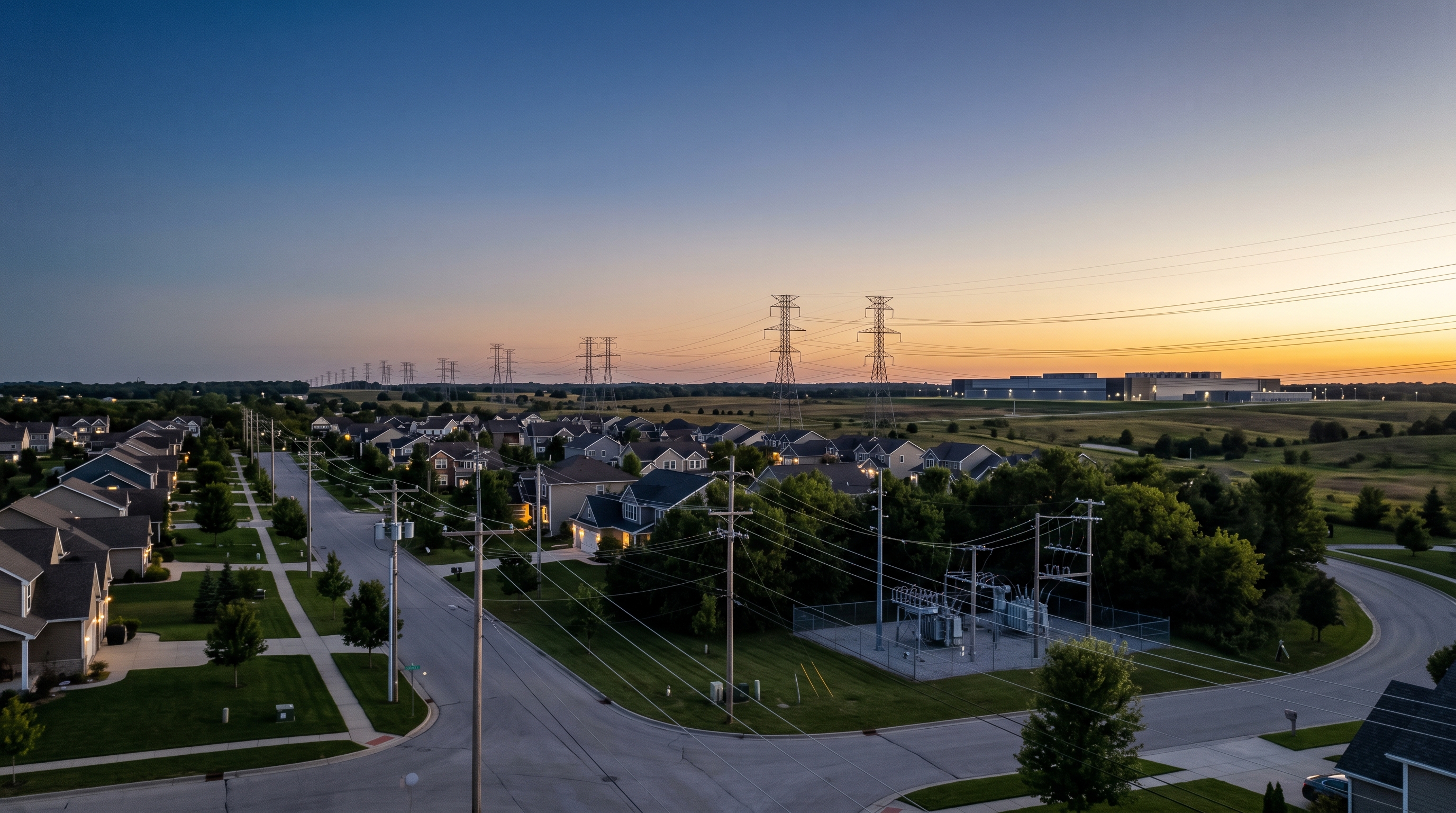
Are Data Centers Really Driving Up Electricity Prices?
A Columbia study says data centers are not the main reason electricity prices are rising in 2026. Aging infrastructure and cost allocation matter more.
The dominant story about your electric bill in 2026 is simple. Data centers arrived, demand spiked, and everyone pays for it. It is a clean narrative, and it is mostly wrong. A new report from Columbia’s Center on Global Energy Policy looks at the link between data centers and electricity prices and finds a more structural cause. The 2025 surge came from an aging grid and the policy choices around it, with data center load as one factor among several.
That distinction matters for anyone who buys, sells, or plans utility distribution equipment. If the price problem were purely a data center problem, it would ease when the buildout slows. It is not, so it will not.
What the Columbia Study Actually Found
Average residential electricity prices rose more than twice the rate of inflation in 2025. That broke the 2019 to 2024 pattern, when rates roughly tracked inflation. Columbia frames this as a signal of deeper pressure on the system, not a one-time shock.
Columbia is direct about causation. The increases cannot be attributed to any single factor. They reflect layered, region-specific cost pressures: aging infrastructure past its design life, weaknesses in grid planning and permitting, rising system investment needs, disaster recovery and climate resilience spending, fuel price volatility, and regulatory mandates. Load growth sits inside that list, not on top of it.
The most useful line for procurement teams is about who absorbs the cost. Whether load growth raises prices for existing customers is not predetermined. The direction and size of the effect depend on tariff design, cost allocation, and whether adequate supply is available. In other words, a new data center does not automatically raise your neighbors’ bills. The rules that govern who pays decide that.
How Much of Your Bill Is Actually Data Centers?
The numbers keep the debate honest. Lawrence Berkeley National Laboratory, in a report prepared for the Department of Energy, put data centers at 4.7 percent of US electricity use in 2024. That is projected to reach somewhere between 9.5 and 15.3 percent by 2030. Consumption already rose about 14 percent in a single year between 2023 and 2024.
So the load is real, it is growing fast, and it concentrates in specific places. It is also, today, about a twentieth of national demand. That share cannot drive a nationwide rate increase by itself.
Geography adds nuance. EIA data for February 2026 showed the national average retail price up 9 percent year over year, with the three largest state increases in Virginia at 26.3 percent, Ohio at 21.9 percent, and Pennsylvania at 19.5 percent. All three sit in PJM territory and all three host heavy data center growth. The load matters where it clusters. Even in those states, though, the bill reflects aging coal retirements, capacity auction repricing, and transmission cost recovery on top of new demand. The signal is layered, not singular.
Why Aging Grid Infrastructure Costs Keep Climbing
Strip out the data center story and a larger driver remains. Much of the distribution grid was built in the 1970s and 1980s. It is past its design life. Transformer failures, cable faults, and substation equipment failures that were once isolated are becoming routine, and utilities are working through a deferred maintenance backlog they can no longer defer.
This is why the fastest-growing part of the bill is delivery, not generation. The distribution and transmission cost surge documented across major utilities tracks equipment replacement, storm hardening, and capacity work, not fuel. Aging grid infrastructure costs are a structural line item, and they climb whether or not a hyperscaler shows up.
Capital numbers confirm the scale. The Edison Electric Institute projects investor-owned utilities will invest 1.4 trillion dollars in the grid from 2026 through 2030, the largest buildout in US utility history, with capital spending jumping 17 percent in 2026 alone to 238.8 billion dollars. That money flows through transformer, switchgear, cable, and protection orders regardless of how the affordability debate resolves.
Beneficiary-Pays Cost Allocation: The Fight That Decides Who Pays
If load growth does not automatically raise existing bills, the question becomes how the costs get assigned. That is the real fight, and it has a name: beneficiary-pays cost allocation. The idea is that the customer who triggers an upgrade should carry its cost, rather than socializing it across every ratepayer.
The models are already in the field. Pennsylvania approved a first-in-nation large load tariff built on a “but for” test, where hyperscalers fund the upgrades their connection requires. Entergy signed an agreement with Meta that the utility estimates will deliver 2 billion dollars in customer savings over 20 years by structuring the data center to reduce system costs rather than add to them. Across at least a dozen states, the multi-billion-dollar battle over who pays for data center grid costs is running through public utility commissions right now.
The politics are loud. North Carolina’s Clean Energy Technology Center counted more than 350 state and federal energy-affordability actions taken so far in 2026. Regulators are not waiting for the buildout to settle. They are rewriting the rules of cost allocation while it happens, and those rules will decide whether a data center is a burden on existing customers or a cost-sharing partner.
What This Means for Utility Procurement
For anyone planning equipment demand, the takeaway is steady. The affordability fight changes who pays and how closely spending gets scrutinized. It does not change the fact that the money is being spent. The 1.4 trillion dollar capital pipeline is committed, the equipment replacement cycle is not optional, and the demand for distribution hardware holds either way.
Two things do shift. First, public utility commissions are scrutinizing capital programs harder than they did five years ago, which raises the bar on documented cost-effectiveness inside every rate case. Second, beneficiary-pays allocation moves some of the equipment cost off the shared rate base and onto the load that triggered it, which changes where the order originates but not whether it gets placed.
Municipal and cooperative buyers should read the trend closely. When large loads bear their own upgrade costs, the equipment demand does not disappear, it relocates to a different buyer on a compressed schedule. The organizations that win are the ones treating procurement as a forward-planning discipline, not a spot-market reaction. Lead times on core distribution equipment have not eased, and the affordability debate does nothing to shorten them.
The narrative will keep blaming data centers because it is easy. The grid keeps aging because it is old. Both are true. The buyers who plan around the second one, and read the cost-allocation rules that govern the first, are the ones who stay ahead of the constraint.
Related Reading
- The Real Reason Your Electric Bill Keeps Climbing (It’s Not the Power)
- Data Center Grid Infrastructure Costs: The $10B Fight Over Who Pays
- The Affordability Crisis Is a Distribution Equipment Story
The Feeder tracks rate cases, cost-allocation rulings, and equipment demand signals for utility distribution professionals. One email a month, no noise. Subscribe here.
Sources: Columbia Center on Global Energy Policy, “Electricity Affordability and Load Growth: Diagnosing and Fixing the Problem” (2026). LBNL / DOE 2024 United States Data Center Energy Usage Report. EIA Electricity Monthly Update, February 2026. Edison Electric Institute, 2026 grid investment data. North Carolina Clean Energy Technology Center affordability action tally. All figures attributed to public sources.
Frequently Asked Questions
Are data centers the main reason electricity prices are rising?
No. A July 2026 Columbia Center on Global Energy Policy report finds the 2025 US price surge cannot be pinned on any single factor. Aging infrastructure, grid hardening, disaster recovery, fuel volatility, and policy mandates all layered together. Data center load is one contributor, and whether it raises bills for existing customers depends on how the costs are allocated.
How much of US electricity do data centers actually use?
About 4.7 percent of national electricity in 2024, according to the LBNL report prepared for the Department of Energy. That share is projected to reach 9.5 to 15.3 percent by 2030. It is real and growing, but it is not large enough to explain a broad national rate increase on its own.
What is beneficiary-pays cost allocation?
It is the principle that the customer who triggers a grid upgrade should pay for it, rather than spreading the cost across all ratepayers. Pennsylvania's large load tariff and Entergy's agreement with Meta are early examples. Regulators increasingly see cost allocation as the lever that decides whether new load raises or lowers existing customers' bills.
Free RFQ templates. Monthly digest. Yours.
Free Member tier. Pick your topics. Get a monthly digest filtered to what you actually buy.