Evergy Gas Pivot: 4.7 GW, 90% Solar Cut, SPP Procurement Wave
Evergy's Q1 2026 IRP raised gas to 4.7 GW, cancelled 2.4 GW of wind, and slashed solar 90%+. Here is the Kansas-Missouri equipment math that goes with it.
Evergy raised its 2026-2030 retail sales growth forecast to 7-8% per year on its Q1 earnings call. That single number, three percentage points above the previous run-rate, is the cleanest data center signal in SPP this year. It also reframes the Evergy gas pivot as the largest single-utility commitment to gas-anchored capacity in the Plains region, with 4.7 GW now planned and 2.4 GW of wind cancelled. The procurement wave behind it is what equipment buyers in Kansas and Missouri need to plan against now.
What Evergy Disclosed on May 8
The Evergy Q1 2026 disclosures put four numbers on the table that procurement teams should write down.
- Retail sales growth forecast through 2030: 7-8% annually, up from 6%.
- Q1 2026 weather-normalized retail growth: 4.7%.
- Planned gas-fired generation through 2044: 4.7 GW, up from 3.7 GW.
- Wind cancelled out of the integrated resource plan: 2.4 GW. Solar reduced from 2,415 MW to 465 MW, a 90%+ cut.
Two more numbers anchor the demand side. Large-load Energy Service Agreements now total 2.5 GW, up from 1.9 GW only three months earlier. Another 1.5 GW is in active expansion talks, with 1.5 to 3 GW of post-2030 ESAs in late-stage discussions. Named anchor customers are Meta (Kansas City data center), Google (allocation undisclosed), and Panasonic (450 MW EV battery plant, Kansas).
Capital plan: $21.6 billion. Annual rate-base growth: about 12%. Q1 2026 income: $151.5M, up 21% year over year. A $140M rate case at the Missouri Public Service Commission is pending.
Why Evergy Is the Cleanest Signal in SPP
Three things make the Evergy disclosure stand out from the other gas-pivot stories of the same week.
First, the cancellation magnitude. A 90%+ solar reduction is the sharpest renewable IRP cancellation any U.S. investor-owned utility has published in 2026. The 2.4 GW of wind eliminated is the equivalent of a complete cycle of Plains-region collector-substation buildout that procurement reps have been quoting against.
Second, the customer concentration. Meta plus Google plus Panasonic in a single SPP-territory utility footprint reduces planning ambiguity. The customer substations are co-sited with named projects, not spread across speculative interconnection-queue positions. That collapses the lead-time uncertainty that makes most utility forecasts hard to procure against.
Third, the regulatory clock. The IRP filings are now in front of the Missouri PSC alongside an active rate case. Procurement decisions trigger the moment the orders come down, and rate-case outcomes set the pace of capital deployment. The 12-month MO PSC outcome is the single most consequential data point in the SPP equipment market this year.
For the broader pattern of three competing utility responses to data center load, see our utility data center strategies analysis. Evergy is the most aggressive Strategy 1 (“Embrace via Gas”) case in the cohort.
SPP Procurement Math: Equipment Classes That Just Got Bigger
The 1.0 GW gas addition (4.7 GW vs prior 3.7 GW) plus 2.5 GW of customer ESAs translate into equipment volume that procurement teams should be quoting against this quarter.
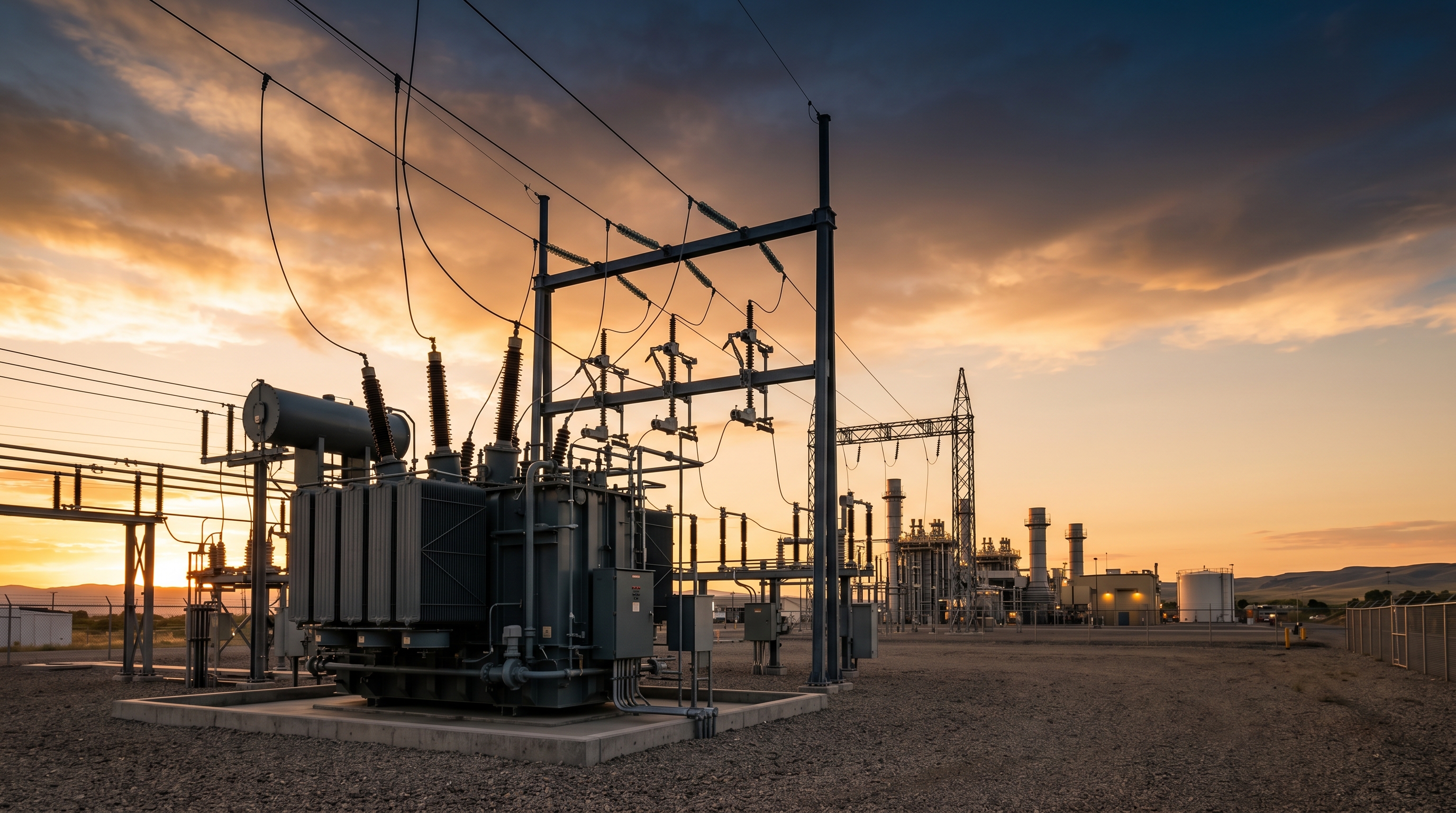
- Generator step-up transformers (GSUs). 1.0 GW of incremental gas, depending on plant configuration (single 2x1 combined cycle or multiple peakers), runs 5 to 7 large GSUs in the 200-450 MVA class. Delivery window is 2032-2042 and lead times on this size class are now 36-48 months for the largest units. See our Q1 2026 transformer procurement note for current lead-time and capacity context across the dominant supplier set.
- HV switchgear and breakers. Each new gas plant interconnection requires a dedicated switchyard with high-side breakers, disconnect switches, and metering. A single 1x1 NGCC plant in the 350-500 MW range typically needs 2-4 high-side circuit breakers plus disconnects. The 1.0 GW addition implies 8-16 incremental HV breakers in 138 kV and 345 kV classes for SPP territory commissioning.
- Customer-dedicated substations. 2.5 GW of large-load ESAs rarely connect to a single distribution feeder. The typical hyperscaler campus draws across two redundant utility feeds backed by dedicated substation transformers. Across Meta KC, Google, Panasonic Kansas, and the next 1.5 GW in expansion talks, expect 25 to 50 large dual-fed substations through 2030, each carrying 2-4 power transformers in the 100-300 MVA class.
- Distribution feeder upgrades. Kansas City data center cluster build-outs require feeder reconductoring, sectionalizing equipment, automated reclosers, and SCADA-ready padmount switchgear at the customer-substation collector points.
The substation count is where the volume sits. A single 1,000 MW data center campus requires three to five large dual-fed substations, not one. The customer side of the campus carries another two to three medium-voltage substations behind the meter. None of this volume was modeled into 2024 SPP equipment forecasts.
Equipment Classes That Just Got Smaller
The cancelled renewable portfolio takes equipment out of the SPP procurement queue at the same time it adds gas-side volume.
- Collector-substation transformers. 2.4 GW of cancelled wind is roughly 25 collector substations not built. These are typically 50-150 MVA units customized for wind-farm collection geometry.
- Inverter-class padmount transformers. The 1.95 GW solar reduction (from 2,415 MW to 465 MW) is approximately 80 padmount transformers in the 1,000-3,500 kVA class that will not be ordered.
- Ring-main units, pole-top reclosers, and protective relays for renewable feeders. The cancelled 2.4 GW wind portfolio carried hundreds of these distributed across the collection geometry. The cancellation strips that demand out of the SPP backlog.
Net SPP impact: equipment demand pivots from distributed renewable-collection iron to centralized gas-anchored generation, transmission interconnection, and large-customer substations. Suppliers selling into the wind/solar collector market should expect the Evergy line of their order book to shrink. Suppliers in GSUs, large customer substations, HV switchgear, and 138 kV / 345 kV breakers should expect Evergy’s Kansas and Missouri footprints to add a multi-year line item.
How This Connects to the Wider Pattern
Evergy is not alone. Dominion announced the 3 GW Cumberland Energy Center the same week, sized for 2033-2034 commissioning. NRG closed the LS Power 13 GW acquisition. ERCOT’s queue mix flipped with gas overtaking wind for the first time since 2016. And AEP, Entergy, Duke, and Xcel had already disclosed similar trajectories in the prior month, see our Q1 2026 hyperscaler capex analysis.
The three-utility split that the broader market is now visibly executing is documented in detail in the pillar guide. Evergy is the cleanest Strategy 1 example precisely because the cancellation side is so emphatic. There is no portfolio hedge in the published IRP, just a wholesale repricing of expected load.
For the SPP procurement teams that read these signals as they move, the open question is which incumbent supplier ramps first. GE Vernova, Hitachi Energy, Mitsubishi Electric, and Prolec GE have already booked 36-48 month lead times on the GSU class Evergy will need. The 2026-2027 frame contracts coming out of Kansas City will lock in the suppliers that get to deliver the 2030-2040 wave. See our MISO data center procurement analysis for the parallel pattern playing out one RTO east.
What Procurement Teams Should Do This Week
A short action list for buyers in or adjacent to SPP territory.
- Audit current GSU and large-power-transformer frame contracts for delivery slots in the 2028-2032 window. Evergy’s interconnection schedule will compete for that capacity.
- Pull the Missouri PSC docket on the Evergy Metro $140M rate case. The pace of procurement deployment depends on the outcome and the Order timing.
- For renewables-heavy supplier portfolios, recalibrate the SPP forecast for the next two cycles. The 2.4 GW wind cancellation is unlikely to be reinstated under current customer composition.
- For municipal utilities and cooperatives in the SPP footprint reading this, the Evergy ESA template is the document worth studying. The customer-pays-the-cost structure is the framework that public power buyers should expect to negotiate against if their territory attracts a hyperscaler.
The 2026 Tantalus Utility Future Survey found 86% of public power and cooperative buyers identify modernization as a priority while only 9% feel ready to execute. The Evergy procurement wave is the IOU mirror of that gap. The buyers ready to move now will set the supplier relationships for the decade.
What We Are Watching Next
- Missouri PSC ruling on the Evergy Metro rate case (expected within 12 months).
- The next 1.5 GW of expansion-talk ESAs converting to signed contracts.
- Federal tax-credit policy on 45Y/48E. A sunset would force any remaining renewable orders into 2026-2027 and possibly stop the 90% solar cut from going to 100%.
- Hyperscaler concentration risk. Meta and Google account for the bulk of new ESAs. A slowdown at either changes the size of the procurement wave Evergy is preparing for.
Evergy’s Q1 disclosure is one signal in a year that has produced many. The procurement decisions it implies are the kind that distribution buyers usually catch six to twelve months late. The number to keep watching is the gap between the 2.5 GW of signed ESAs and the 4.5 GW now in late-stage discussions. The first one drives the next two years of equipment purchase orders. The second one decides which suppliers spend the next decade in Kansas and Missouri.
The weekly read on where this is heading
Evergy’s 4.7 GW gas build and 2.5 GW of signed data-center ESAs are reshaping which GSU, switchgear, and substation orders SPP-territory buyers are competing for this quarter. The Feeder is our free weekly digest of the procurement signals that move utility and distribution equipment buyers: lead-time shifts, supplier capacity, federal funding, and the RFP language that follows. One email a week, no filler.
Related Reading
- Utility Data Center Strategies: Embrace, Resist, Distribute: full strategy taxonomy with the May 2026 cohort.
- Hyperscaler Utility Capex 2026: Three Q1 Strategies: AEP, Entergy, Duke, Xcel buyer-side analysis.
- GE Vernova / Prolec Consolidation: Transformer Procurement: supplier-side capacity context for the GSU wave.
- Grid Modernization Procurement Guide: DistroForge pillar guide.
DistroForge publishes intelligence reports that translate signals like the Evergy Q1 disclosure into specific equipment forecasts for procurement teams. If you want the SPP-specific equipment forecast model with named suppliers, lead times by class, and Missouri PSC docket tracking, the next quarterly intelligence report is the document to ask about.
Track this beat without paying per report
Free Member tier. Pick your topics. Get a weekly digest filtered to what you actually buy.