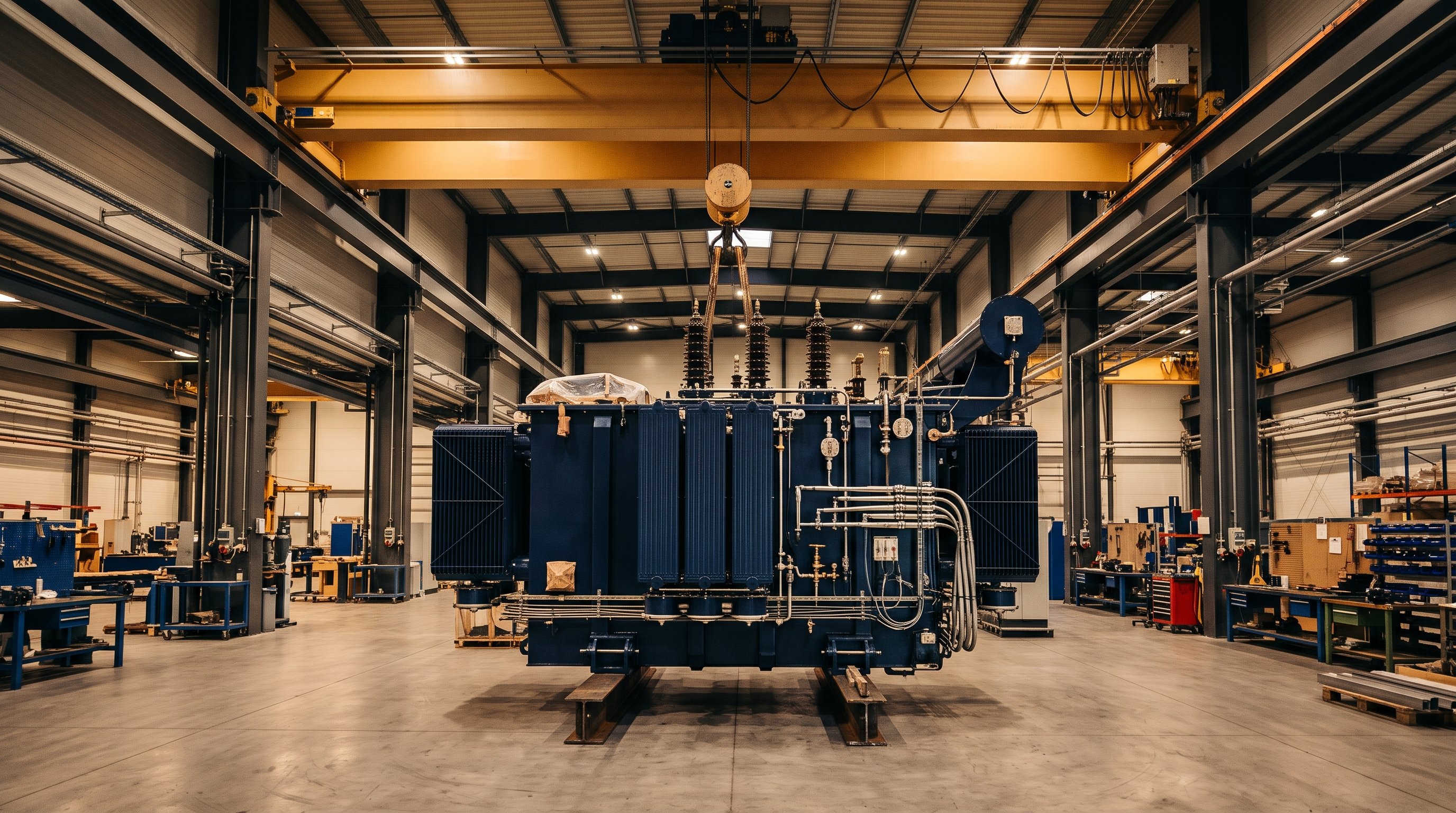
Hitachi Energy CEO on Equipment Demand: The Ask to Buyers
Hitachi Energy's CEO says power equipment demand is outrunning supply and wants framework agreements and reserved capacity. What that asks of utility buyers.
Hitachi Energy’s chief executive has said out loud what transformer buyers have been living with. In a CNBC-TV18 interview published October 13, 2026, Global CEO Andreas Schierenbeck described power equipment demand in blunt terms: “We actually aren’t coping. Demand and supply are not in balance at the moment. There is much more demand than supply.”
The more useful part of the interview for a utility, cooperative or municipal buyer is not the diagnosis. It is the request that came with it. Schierenbeck said manufacturers want customers to change how they buy: “We have to establish partnerships, engage in more long-term planning, enter into framework agreements and reserve capacity so that we can invest faster.”
That is a supplier telling you what it values. Read it as a statement of position, not as evidence that a reservation will shorten anyone’s lead time. The CNBC-TV18 article reports no lead-time figure from Schierenbeck.
What Hitachi Energy’s CEO actually said
Two statements in the CNBC-TV18 piece are direct quotes from Schierenbeck, and they are the two above. The rest needs more care, because the article mixes his paraphrased views with the reporter’s own narration.
Schierenbeck said, according to CNBC-TV18, that the industry’s traditional transactional approach, in which customers place orders and suppliers fulfil them without sufficient long-term coordination, needs to change. He said manufacturers need clear business cases to justify additional spending to shareholders, and that better demand visibility and stronger political support could help the industry move faster. On the demand side, he said data centers that once needed 20 to 40 megawatts could now need two, four or even five gigawatts, and he estimated US data center demand could reach 80 to 100 gigawatts.
CNBC-TV18 also reported that a data center can be built in about two years while a manufacturing facility takes around three to four, that grid expansion plans can take 10 to 15 years with individual projects taking five to six, and that shortages of specialised machinery, including equipment used to make transformers, can constrain capacity. Those timelines are the outlet’s framing, not figures Schierenbeck is quoted giving.
The investment behind the comments
CNBC-TV18 summarised Hitachi Energy’s spending as more than $9 billion to increase production. Hitachi Energy’s own description is broader. Its September 2025 release calls it “a more than $9 billion USD global investment program” under which the company “is expanding its manufacturing capacity, R&D, engineering, and partnerships.” That is a global, multi-category program, and the release gives no completion period.
The same release announced more than $1 billion of US investment, including approximately $457 million for a new large power transformer facility in South Boston, Virginia. That is substation and transmission-class equipment. We covered a separate Hitachi plant announcement, and why plant size ranges matter for distribution buyers, in our post on the Mississippi transformer plant. Nothing in the CNBC-TV18 article or the 2025 release ties the call for capacity reservations to pole-mount or pad-mount distribution units.
What framework agreements and capacity reservations mean for buyers
A CEO asking for reservations is asking buyers to carry some of the forecasting risk that suppliers have carried on a per-order basis. Whether that trade is worth it depends on what you get back, and the CNBC-TV18 article does not say. These are the questions to settle before signing anything that looks like a framework agreement or a capacity reservation:
What exactly is reserved? A production slot, a volume band over a period, or a priority position in a queue are different commitments. Ask the supplier to name which one, for which product class and rating range, and over what window.
What do you owe if your forecast moves? The supplier’s ask is for commitment. Find out the cancellation, deferral and volume-flex terms before you treat a reservation as low risk. A reservation you cannot adjust is a purchase order with a longer fuse.
When does the specification freeze? A reserved slot only helps if your specification is complete when the slot arrives. Lock voltage, kVA or MVA rating, winding configuration, BIL and efficiency requirements early. If a transformer requirement sheet is what usually stalls your quotes, our free transformer RFQ builder lists the information a supplier needs for liquid-filled distribution transformers and flags what is still unresolved. It needs no signup, your answers stay in your browser tab, and it is a checklist for your own review, not engineering sizing or a compliance certification.
Is any delivery commitment in writing? Schierenbeck framed reservations as what lets manufacturers invest faster. If you want a delivery benefit in return, it has to be written into the agreement. The CNBC-TV18 article does not establish one.
Can your procurement rules carry it? Public power utilities and cooperatives often work under board approval and competitive bidding requirements. Check with counsel whether a multi-year framework agreement or a reservation deposit fits your rules before you negotiate one.
Long-term planning when you are a small buyer
The request for “more long-term planning” lands differently on a large investor-owned utility than on a municipal system that buys a handful of substation units a decade. A supplier deciding where to invest weighs the visibility of the demand in front of it, and a small, irregular order book gives it little to plan around.
Two practical moves follow from Schierenbeck’s framing, as editorial suggestions rather than anything reported from the interview. First, write down a multi-year forecast of the transformers you expect to buy, by class and rating, even if it is rough, so you can share it when a supplier asks for visibility. Second, if your utility belongs to a joint action agency or a generation and transmission cooperative, ask whether it can pool member forecasts into one conversation with suppliers. Whether pooled demand earns better treatment is for the supplier to say, not for us to assume.
For the bid side of the same problem, see how to evaluate transformer bids when lead times are long, which covers scoring delivery commitments alongside price.
The takeaway
Hitachi Energy’s CEO has told the market that demand exceeds supply and that manufacturers want commitments before they build. Buyers can use that. Ask suppliers what a reservation would actually secure, insist that any delivery benefit is written down, and get your forecast and specifications in order so a commitment is usable when you make one. Do not tell a board that this interview means shorter lead times. The published account of it does not say that.
The Feeder is our free weekly briefing on the regulatory shifts, supply chain signals and manufacturer moves that shape utility equipment procurement. Sign up here.
Related Reading
- Hitachi’s Mississippi Transformer Plant Starts in 2029
- How to Evaluate Transformer Bids When Lead Times Exceed Two Years
- The State of Transformer Procurement in 2026
Frequently Asked Questions
What did Hitachi Energy's CEO say about transformer and power equipment demand?
In a CNBC-TV18 interview published October 13, 2026, Hitachi Energy CEO Andreas Schierenbeck said: "We actually aren't coping. Demand and supply are not in balance at the moment. There is much more demand than supply." He was speaking about power equipment broadly, not about one product line.
What does Hitachi Energy want customers to do differently?
Schierenbeck said: "We have to establish partnerships, engage in more long-term planning, enter into framework agreements and reserve capacity so that we can invest faster." According to CNBC-TV18, he also said the traditional transactional model, where customers place orders and suppliers fulfil them without sufficient long-term coordination, needs to change.
Will a framework agreement or capacity reservation shorten my transformer lead time?
Nothing in the CNBC-TV18 article says so. As reported there, Schierenbeck described reservations and long-term planning as what would help manufacturers invest faster. The article gives no lead-time figure from him and reports no promise about delivery dates. Treat any delivery benefit as something to negotiate and write into the agreement, not something the CNBC-TV18 article reports.
Free RFQ templates. Weekly digest. Yours.
Free Member tier. Pick your topics. Get a weekly digest filtered to what you actually buy.