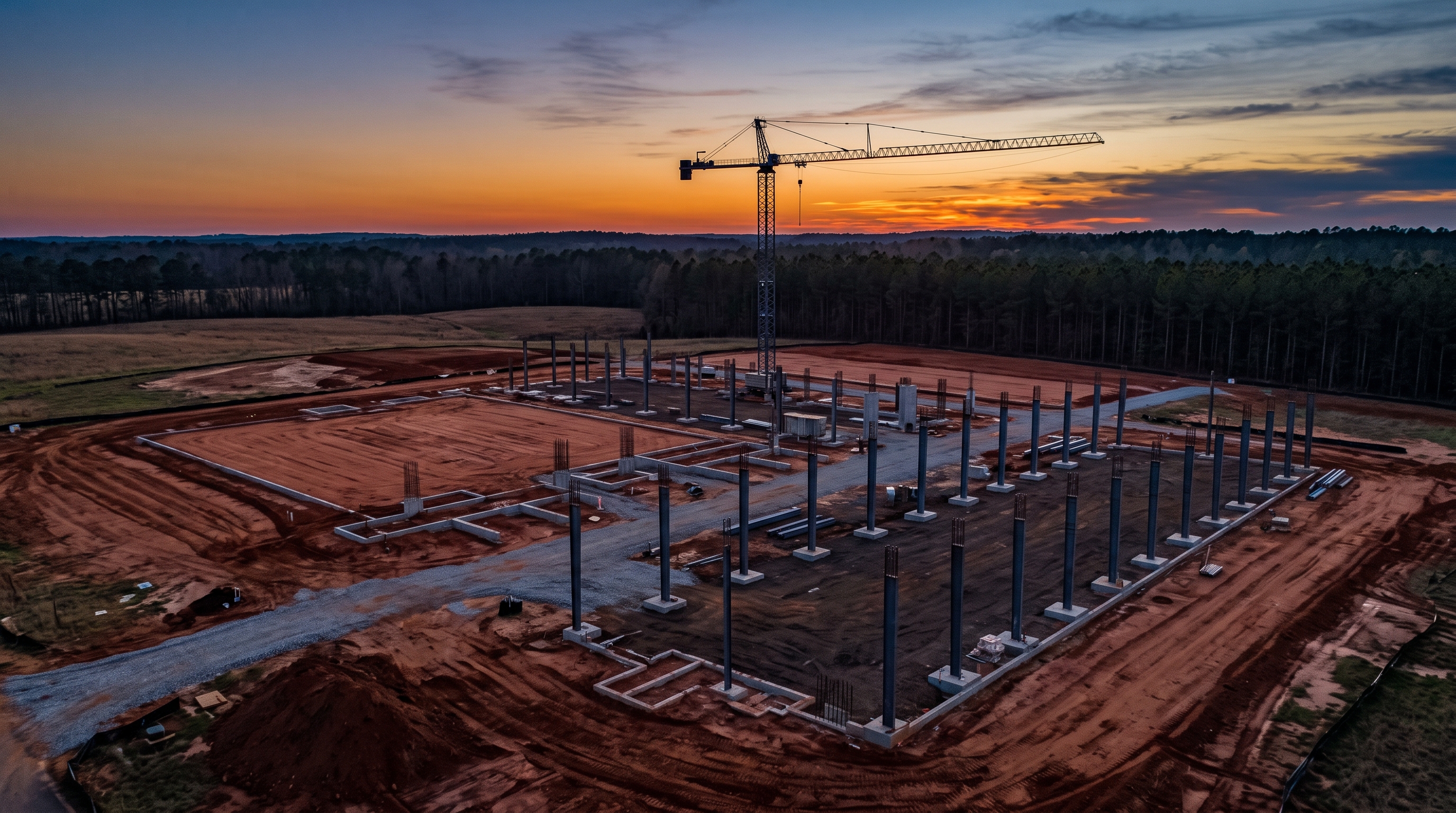
Hitachi's Mississippi Transformer Plant Starts in 2029
Hitachi's $528M Mississippi transformer plant is scheduled to build 10 to 160 MVA units from 2029, per a Hitachi SVP, and replaces an existing plant.
Hitachi Energy announced a $528 million transformer factory in Gallman, Mississippi on September 15. The trade headlines said the company would double US production of small and medium power transformers. If you are a municipal utility or a cooperative sitting on a transformer order, the useful version of that story is shorter, and it is not the headline.
Read the company’s own release next to what Hitachi told Utility Dive, and three facts matter more than the headline does. Production is scheduled to start in 2029. The plant is scheduled to build substation units in the 10 to 160 MVA range, not the pole-mounts and pad-mounts most distribution buyers are waiting on. And it is a move, not an addition: production transitions off the existing Crystal Springs plant once Gallman is finished.
None of that makes it bad news. A half-billion dollars of domestic transformer capacity is real, and on a five-year horizon it matters. It just is not an answer to the question most buyers are actually asking, which is when their unit arrives.
What Hitachi actually said
The release is specific. The new factory in Gallman sits “approximately 6.5 miles (ten kilometers)” from the existing Crystal Springs facility. “At over twice the size of the current plant, it will more than double capacity.” Construction “is expected to begin late this year, with transformer production at the facility scheduled to start in 2029.”
Then the sentence that changes the reading: “Once the new factory is completed, transformer production will transition from Hitachi Energy’s existing Crystal Springs facility to Gallman.” Crystal Springs keeps running until Gallman is done, after which the building “will continue to be used for warehousing, training, or other operational needs.”
So the comparison is Gallman against Crystal Springs, at one site, in 2029. That is a genuine capacity increase. It is not the same claim as doubling national output, and Hitachi did not make that claim.
The $528 million is described as “the cornerstone of Hitachi Energy’s around $1.5 billion U.S. manufacturing expansion program.” The earlier projects in that program include: $457 million in South Boston, Virginia, which broke ground in June; $106 million in Alamo, Tennessee, announced in August 2025 for transformer components; and $70 million in Westmoreland County, Pennsylvania for high-voltage equipment. Hitachi says the projects together create “over 1,600 jobs.” Do not read the $1.5 billion as new money on top of the $528 million.
The product class is the whole story
The release itself never names a size range. That detail came from Hitachi senior vice president Greg Callahan, who heads the company’s North American transformer business, in an email to Utility Dive. Utility Dive reports, on his word, that the Gallman facility will produce transformers in the 10 MVA to 160 MVA range, designed for voltages up to 230 kV.
That is substation power transformer territory. It is the class a utility buys for a new distribution substation, a data center interconnect, or a transmission step-down. It is not the 25 kVA and 50 kVA single-phase pole-mounts and the pad-mounts that dominate a municipal utility’s or a cooperative’s order book, and it is not what is behind most of the pad-mount and pole-mount lead-time pain.
Worth flagging, because it is inside the same document: Hitachi’s own body text says the project “will significantly increase output of power transformers manufactured in Mississippi,” while a quote from Sen. Cindy Hyde-Smith in that release calls it “more U.S.-based manufacturing of distribution transformers.” Those are different products. Callahan’s MVA range settles it. If you see this announcement described as distribution transformer capacity, that is where the error came from.
A smaller variance in the same release, in case you need to cite a number: Hitachi’s text says “over 700 jobs” and Gov. Tate Reeves’ quote says “over 650 new jobs.”
Hitachi declines to say how much relief this buys
This is the part worth sitting with. Asked about output, Callahan told Utility Dive: “While we do not disclose our production volumes (by facility), the size of the investment reflects the scale of the expansion.”
Asked about delivery, he said Hitachi Energy customer lead times “vary depending on transformer specifications, project complexity, and market conditions,” and that “expanding manufacturing capacity is an important step toward increasing supply and improving responsiveness to customer demand over the long term.”
He also said the added capacity “is expected to help alleviate industry-wide supply constraints as it comes online.” Note the tense. As it comes online. In 2029.
So there is no public number that converts this announcement into weeks off anyone’s delivery date, and the company is not offering one. Treat any lead-time figure attached to this plant as unsourced until you see where it came from.
Three questions that turn a plant announcement into a procurement fact
This is the reusable part. Plant announcements arrive several times a year now, and most of them are written for a policy audience rather than a buyer. Three questions sort them fast.
Which product class? Ask for the MVA or kVA range and the voltage class, not the word “transformer.” A plant building 10 to 160 MVA units up to 230 kV has no bearing on a pad-mount order. If the announcement does not say, the size range is usually available from the company’s transformer business lead, as it was here.
When does it ship? Separate the construction date from the first-production date. Gallman is expected to break ground late in 2026 and is scheduled to start production in 2029. An order you place this year is served by existing lines, wherever they are.
Is capacity added or moved? This is the one almost nobody checks. Read for whether the new site runs alongside the old one or replaces it. Gallman replaces Crystal Springs. The net national gain is the difference between the two, and Hitachi explicitly does not disclose it.
An announcement that answers all three unhelpfully is a supply-chain story, not a lead-time story. That is not a criticism of the investment. It is a filing instruction.
The quieter line item may matter sooner
One more thing worth noticing in the list of earlier projects. The Alamo, Tennessee expansion is $106 million for transformer components, announced in August 2025, with more than 100 jobs. Components, not finished units.
What actually moves a 2027 delivery date is rarely a new site. It is a change at a line that already exists: an added shift, a debottlenecked winding or core-cutting step, or more supply of a component that has been gating assembly. Bushings are a common example, and we have written about component-level bushing lead times separately. A components expansion feeding existing plants can reach a delivery date years before a greenfield factory can.
That is not a claim that Alamo will shorten your lead time. Hitachi has published no output figure for it either. It is a claim about where to look when the next announcement lands, and the trade press consistently looks at the biggest dollar figure instead.
What to do with this
If you are quoting a substation transformer in the 10 to 160 MVA class, add Gallman to your long-range supplier picture and nothing more; it does not exist yet. If you are buying pole-mounts or pad-mounts, this announcement does not touch your queue, and you should not let a board member believe it does.
For everyone, the durable move is the same one it has been: specify early, keep the requirement sheet complete so quoting does not stall on missing data, and treat manufacturer capacity news as a five-year input rather than a schedule input.
If a transformer requirement sheet is what is slowing you down, our free transformer RFQ builder walks through the information a supplier needs for liquid-filled distribution transformers and flags what is still unresolved. It needs no signup, your answers stay in your browser tab, and it is an information checklist for your own review, not engineering sizing or a compliance certification. The Feeder is our free briefing on the regulatory shifts, supply chain signals and market forces that shape equipment procurement. Sign up here.
Related Reading
- The State of Transformer Procurement in 2026
- How to Evaluate Transformer Bids When Lead Times Are Long
- The Pad-Mount Transformer Procurement Crisis
Frequently Asked Questions
When will the Hitachi Gallman, Mississippi transformer plant start production?
Hitachi Energy's September 15, 2026 release says construction is expected to begin late in 2026, with transformer production at the Gallman facility scheduled to start in 2029.
Will the Mississippi transformer plant build distribution transformers?
No. Hitachi senior vice president Greg Callahan told Utility Dive the Gallman plant will produce transformers in the 10 MVA to 160 MVA range for voltages up to 230 kV. That is the substation power transformer class, not pole-mount or pad-mount distribution units.
Does the new plant add capacity or replace an existing one?
Hitachi's release says the Gallman factory is over twice the size of the existing Crystal Springs plant and will more than double capacity, and that once it is complete, transformer production will transition from Crystal Springs to Gallman. Crystal Springs is retained for warehousing, training or other operational needs.
How much will the new plant shorten transformer lead times?
Nobody outside Hitachi can say. Callahan told Utility Dive that Hitachi does not disclose production volumes by facility, and that customer lead times vary depending on transformer specifications, project complexity and market conditions.
Track this beat without paying per report
Free Member tier. Pick your topics. Get a weekly digest filtered to what you actually buy.