Hyperscalers Own Generation: The Data Center Buyer Shift
Hyperscalers now own and finance generation outright. What hyperscaler-owned generation means for data center equipment procurement.
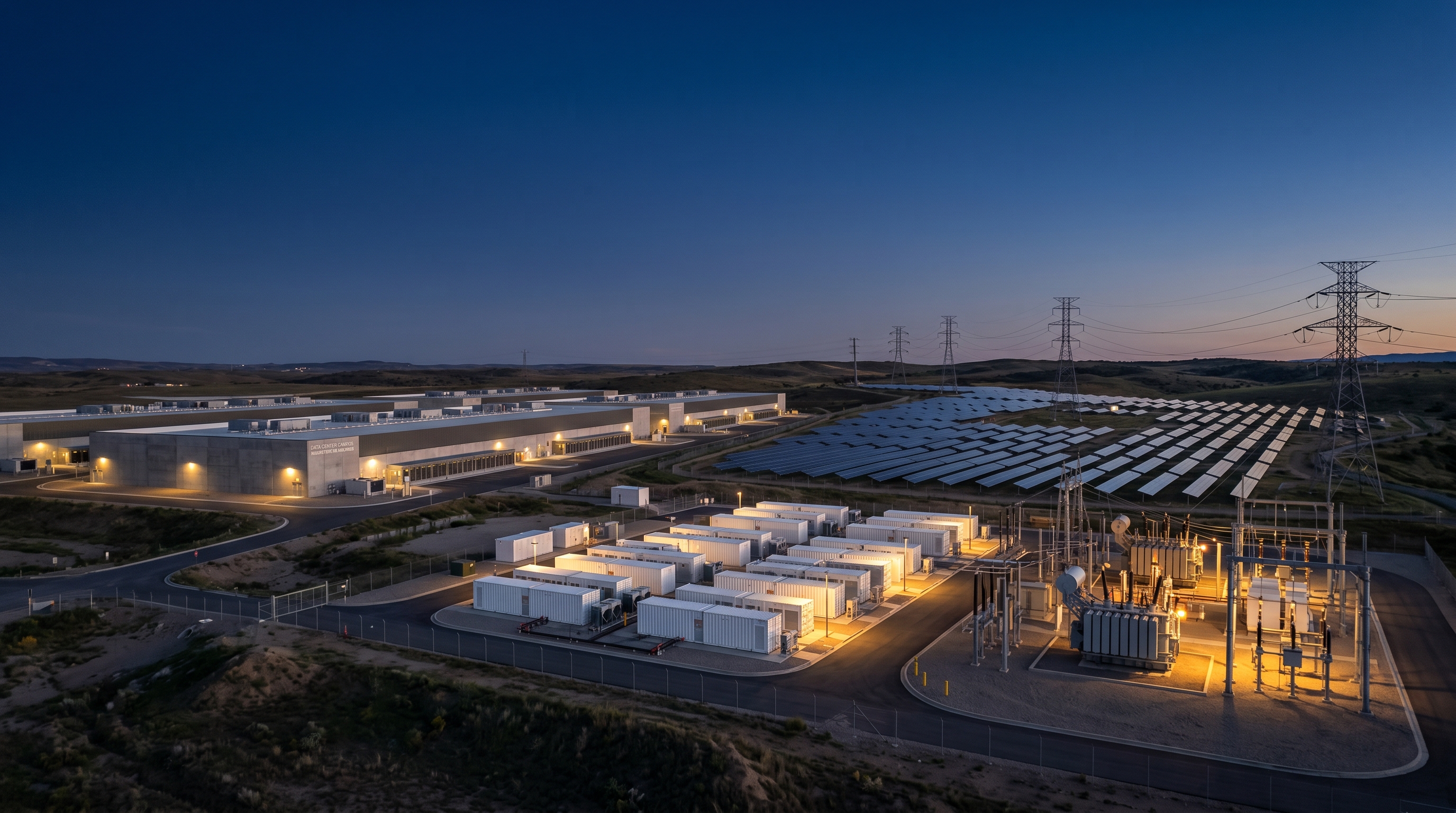
On March 13, Alphabet closed a $4.75 billion cash purchase of Intersect Power, a clean-energy developer carrying roughly $15 billion of operating or under-construction projects. Google did not buy a utility. It bought a machine that builds solar farms, battery plants, and the firm capacity behind them, then pointed that machine at its own data centers. That is the clearest sign yet of hyperscaler-owned generation arriving as a market structure, not a one-time deal. The largest electricity buyers in the country are no longer content to sign power contracts. They are buying and financing the generation itself, and in doing so they are stepping into the market for the same transformers, switchgear, and substation gear that municipals and cooperatives are already fighting to get.
Intersect was not an isolated move. Per PwC, announced power and utility M&A reached about $216 billion across 23 deals in the six months ended May 2026, up 173 percent from a year earlier. The headline number belonged to NextEra Energy’s roughly $67 billion all-stock bid for Dominion, the largest energy acquisition since Exxon bought Mobil in 1998. We covered what a single 130-gigawatt mega-utility does to supplier capacity when that deal broke. The Alphabet purchase is the other half of the same story, and it is the half that reroutes who places the order.
When a Hyperscaler Buys the Power Developer
The structure of the Intersect deal tells you the intent. Alphabet kept the development arm, the part that originates and builds projects. The grid-tied operating assets were spun into a new independent power producer, IPX Power, co-owned by TPG Rise Climate, Climate Adaptive Infrastructure, Greenbelt Capital Partners, and Google. What Alphabet retained for itself is a development pipeline of about 3.6 gigawatts of solar and wind plus roughly 3.1 gigawatt-hours of battery storage in Texas and California. Sundar Pichai framed the logic as building new generation “in lockstep with new data center load.” Google is putting around $40 billion into three Texas data centers through 2027, and it wants co-located solar and storage it controls rather than a queue position it has to wait on.
For a distribution buyer, the important part is not the dollar figure. It is who signs the purchase order. When a hyperscaler owns the developer, the battery balance-of-system stack gets bought by that developer: collector transformers, power conversion, medium-voltage switchgear, protection and metering, and the interconnection gear that ties the plant to the campus or a dedicated substation. The buyer is a tech-backed developer working a fixed multi-gigawatt build plan, not a rate-base utility moving on a regulatory cadence. That buyer purchases in bulk against a known schedule, standardizes hard to compress build time, and will pre-buy long-lead transformers and breakers to beat the queue.
Bring Your Own Power, Taken Literally
One deal is an anomaly. Four in a quarter is a pattern, and every one of them carries Google’s or Microsoft’s name.
Microsoft’s Project Kilby pairs the company with Chevron on a 20-year agreement to power a West Texas data center, reported between 2.67 and 3 gigawatts, with first power expected in 2028. The plant runs mostly on behind-the-meter Permian Basin gas through GE Vernova turbines plus Solar Turbines units, and it is designed to bypass the public ERCOT grid for primary supply while exporting surplus. A behind-the-meter generation data center at that scale moves the turbine, generator step-up transformer, and switchgear orders onto the developer’s books, with a final investment decision expected by the end of 2026.
Google’s fingerprints are on three more. A Google-backed developer, Elementl Power, signed an Early Works Agreement with GE Vernova Hitachi to advance five BWRX-300 small modular reactors, about 1.5 gigawatts, in Meigs County, Ohio, with an interconnection request already filed for the first 600 megawatts into PJM. That one is privately financed rather than recovered through customer rates, but it is early-stage: construction is targeted for 2030 and first operation around 2034, so treat it as a 2028-and-later signal that first-of-a-kind timelines tend to slip. In Missouri, Google’s $15 billion commitment anchors a New Florence campus targeting roughly 1.2 gigawatts, with Ameren Missouri adding 500-plus megawatts of new capacity on top of more than a gigawatt already contracted. And in Arizona, Google is co-funding a Salt River Project and Energy Dome 19-megawatt carbon-dioxide long-duration storage plant at the Coronado Generating Station, online in 2029 under a 20-year tolling agreement.
The Missouri deal carries the detail worth flagging. Ameren’s commitment runs through a Capacity Commitment Framework: minimum 12-to-17-year service terms, collateral equal to two years of minimum bills, an 80 percent minimum monthly demand charge, and billing tied to power requested rather than power consumed. That is the same cost-allocation logic now spreading through state tariffs, the kind we traced in Pennsylvania’s first-in-nation “but for” model tariff and that FERC reinforced when it ordered all six RTOs to justify or rewrite their large-load tariffs. For a regional distributor, that certainty is worth more than the megawatt count. A utility holding a 12-to-17-year minimum-bill commitment has a funded, bounded equipment program it can plan and source against, not a speculative queue entry.
Behind-the-Meter Generation Moves the Order to a New Desk
Here is the channel shift underneath all of it. When the developer, or the EPC firm it hires, owns the substation and the transformers and the switchgear, the equipment decision leaves the utility procurement department. It lands with the EPC: the Bechtels, Black & Veatches, Burns & McDonnells, Kiewits, and Sargent & Lundys that scope and buy on behalf of these projects. That is a different sales motion, a different credit and contracting profile, and a different calendar. The cost of delay for a hyperscaler is measured in lost compute revenue, not in a deferred rate case, so the schedule pressure is on a different order of magnitude.
The grid does not disappear from the picture. Every one of these projects that exports surplus power, as the Microsoft-Chevron plant intends to, still needs grid-tie equipment and metering. The storage plants, whatever the chemistry, still need a step-up transformer and a substation interconnection. Non-lithium long-duration storage like the SRP carbon-dioxide battery does not route around the transformer and switchgear bottleneck. It lands inside it, the same way the domestic sodium-ion buildout does. Diversifying the chemistry widens the set of projects competing for the same scarce gear. It does not create a separate, lithium-free supply chain.
What It Means for Data Center Equipment Procurement
Roll the four deals together and the read for data center equipment procurement is straightforward. Hyperscaler-owned generation turns the tech company into a direct buyer of generator step-up transformers, high-voltage switchgear, battery balance-of-system, on-site generation, and the interconnection package that ties any of it together. It pulls on the same thin pool of OEMs that supply the utilities, and it pulls with a fixed in-service date and a willingness to pay for delivery certainty. When a buyer like that decides to jump the transformer and breaker queue, availability tightens for everyone standing behind it.
For municipals, cooperatives, and regional distributors, that is the whole point. You are not only competing with other utilities for transformers and switchgear anymore. You are competing with tech-company balance sheets buying on a tech-company timeline, sometimes through an EPC you have never bid against. The defensive moves are the obvious ones done earlier than feels comfortable: lock supply ahead of need, track where these campuses are landing in your region, and read the interconnection filings where the real bill of materials first becomes public. The Missouri PSC docket and the PJM study for the Ohio SMR are where the substation class, transformer ratings, and line scope will surface before any of it shows up as a shortage on your own order.
The deals named here are the ones that closed or filed in a single quarter. The pattern is younger than the buildout it serves, and it is accelerating. Knowing which buyer is about to land in your supply region, and on what schedule, is the difference between sourcing ahead of a squeeze and discovering it at the worst possible moment. That is the read our monthly briefing exists to give you. The free Feeder digest tracks the procurement moves that matter for distribution buyers, the way the large IOUs already read the market. Subscribe and the next signal like this one lands in your inbox as it breaks.
Related Reading
- Three Utility Strategies for Data-Center Load: Embrace, Resist, or Distribute
- The Q1 2026 Hyperscaler Capex Cycle and Three Competing Utility Strategies
- Utility Procurement Intelligence Guide
Know what changed before your next quote
Free Member tier. Pick your topics. Get a monthly digest filtered to what you actually buy.