ISO-NE Asset Condition Review: What FERC Approved
FERC accepted ISO-NE asset condition review on Oct. 16, 2026, effective Jan. 1, 2027. Which transmission projects it covers and what it requires.
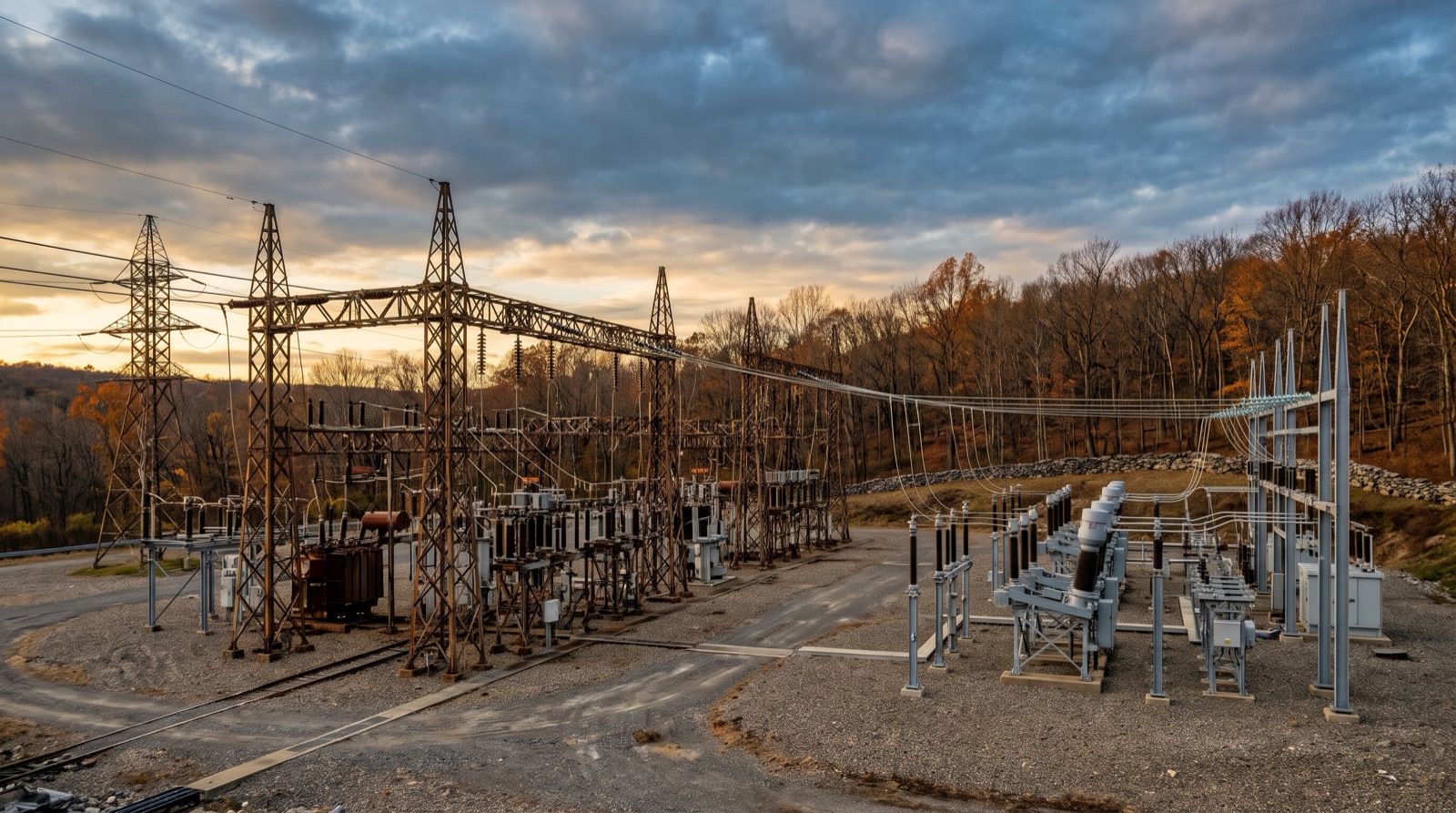
FERC has approved ISO New England as an independent reviewer of transmission owners’ asset condition projects, the capital work that replaces or rebuilds aging, deteriorating or obsolete transmission equipment. The ISO-NE asset condition review takes effect January 1, 2027. It does not give ISO-NE a veto. It does change what a transmission owner has to put on the public record for a large replacement project.
The order, issued October 16, 2026 (197 FERC ¶ 61,042, Docket Nos. ER26-3533-000 and ER26-3534-000), accepts revisions filed August 17 by ISO-NE, the NEPOOL Participants Committee and the Participating Transmission Owners Administrative Committee. FERC found the proposal just and reasonable and accepted it as requested. Every commenter supported it, according to the order.
What the ISO-NE asset condition review will examine
The order describes three objectives for the reviewer, in the filing parties’ words: to ensure the transmission owner “has sufficiently demonstrated the technical need for reconstruction or replacement” of existing Pool Transmission Facilities; to ensure “cost-effectiveness is an integral part” of how the owner develops its solution; and to report on its reviews and conclusions in a timely way.
In practice the reviewer works in three steps for each covered project or program:
- Need review. Does the owner’s evidence support the asset condition it identified?
- Solution and alternatives review. Did the owner explore and develop alternatives, and what does the reviewer conclude about the preferred solution and its rationale?
- Reporting to ISO-NE’s Planning Advisory Committee, the main forum for state and stakeholder input at multiple stages of the review.
ISO-NE will also review owners’ asset monitoring and evaluation practices more broadly and report on variations and best practices. It plans a new group inside its System Planning department to do the work.
Which asset condition projects are covered
Only projects and programs above set thresholds go through review. These are forecast cost triggers for review, not equipment prices.
| Covered | Threshold (transmission owner’s forecast PTF costs) |
|---|---|
| Individual project | $25 million or more on one line, or at one station or substation, over five years or less |
| Program, test A | $100 million or more |
| Program, test B | All three: affects 15% or more of the owner’s PTF lines or substations; more than $5 million for work at any individual line, station or substation; and $25 million or more over five years or less |
The filing also carves out work already in motion. Under the August 17 filing, projects and programs that have been presented to the Planning Advisory Committee and qualify for the Asset Condition List as proposed, planned, under construction, in service or program before January 1, 2027 are excluded, as are those already under ISO-NE’s interim review. So the new review does not reach every replacement dollar spent in 2027.
What the reviewer cannot do
The order is clear about the limits. The role is advisory. ISO-NE will not decide whether an asset condition project proceeds, will not be the petitioning party in any siting or regulatory proceeding, and will not make a legal finding on whether a project’s costs are prudent. Transmission owners keep planning, developing, owning and maintaining their facilities, and owners indemnify ISO-NE for its reviewer role except for gross negligence or willful misconduct.
ISO-NE’s existing reviews also stay in place: the check for significant adverse effects on system reliability, and the cost allocation review that decides whether some project costs are “localized” rather than shared regionally.
Some commenters noted that the reviewer will not address prudence and that right-sizing under Order No. 1920 is a separate, unfinished process. Those are the commenters’ points as the order summarizes them, not findings.
What this means for transmission buyers and suppliers
The concrete change is documentation. From January 1, a covered replacement project needs a need case and an alternatives analysis that can stand up to an independent technical reviewer in a public committee setting. That is a reasonable inference about where the work shifts. It is not evidence that purchase orders will slow, that project scopes will shrink, or that different equipment will be specified. Nothing in the order measures any of those outcomes.
For anyone tracking New England transmission work, three questions are worth asking of a given project:
- Is it above a threshold? Forecast PTF cost and timeframe decide whether review applies at all.
- Is it already excluded? A project on the Asset Condition List before the effective date, or in interim review, sits outside the new process.
- What does the reviewer’s report say? The Planning Advisory Committee reports will be the first public read on how need and alternatives are being judged.
Reading regulatory filings as demand signals takes the same care as reading rate cases. Our guide to utility rate case procurement explains why a requested dollar figure is not an equipment order, and Advanced Transmission Technology: Evaluation Before Procurement covers how alternatives analyses get written into planning rules.
The bottom line
ISO-NE asset condition review is approved and starts January 1, 2027. Large transmission replacement projects and programs will face an advisory, public review of need and alternatives, with exclusions for work already listed or under interim review. Watch the first Planning Advisory Committee reports for how the reviewer applies the test.
Get the weekly read on grid procurement
The Feeder is a free weekly email on the regulatory and supply moves that shape utility equipment buying. Subscribe to The Feeder.
Related Reading
- Utility Rate Case Procurement: What $9.2B Misses
- Advanced Transmission Technology: Evaluation Before Procurement
- The 2026 Shift: Why Utility Spend Is Moving Down to the Distribution Grid
Frequently Asked Questions
What did FERC approve for ISO-NE asset condition projects?
In an order issued October 16, 2026 (197 FERC ¶ 61,042), FERC accepted tariff and Transmission Operating Agreement revisions that make ISO New England the region's Asset Condition Reviewer, effective January 1, 2027. ISO-NE will review whether transmission owners have shown the need for qualifying replacement projects and have evaluated alternatives, and will report to the Planning Advisory Committee.
Which projects does the ISO-NE asset condition review cover?
Under the tariff revisions FERC accepted on October 16, 2026 (197 FERC ¶ 61,042), review covers individual projects where the transmission owner forecasts Pool Transmission Facilities costs of $25 million or more on one line or at one station or substation over five years or less, and programs forecast at $100 million or more, or that meet a three-part test of 15 percent of the owner's PTF lines or substations, more than $5 million at any one facility, and $25 million or more over five years or less.
Can ISO-NE stop an asset condition project?
No. FERC's order records that the role is advisory: ISO-NE will not decide whether a project proceeds, will not act as the petitioning party in siting or regulatory proceedings, and will not make a legal finding on whether project costs are prudent. Transmission owners continue to plan, build, own and maintain their facilities.
Track this beat without paying per report
Free Member tier. Pick your topics. Get a weekly digest filtered to what you actually buy.