Large Load Contract Terms: Kentucky Power's 1 GW Deal
Large load contract terms in Kentucky Power's amended TeraWulf deal: customer-funded bill credits, plant financing and collateral, pending PSC review.
On October 5, Kentucky Power said it had finalized an amended agreement with TeraWulf that would double contracted electric demand at the Muskie Data campus in Grayson, Kentucky, from 500 MW to 1 GW. Nothing is approved yet. Kentucky Power says it “plans to file the amended contract and seek related regulatory approvals later this year” at the Kentucky Public Service Commission.
The headline number is the load. What’s worth reading is the set of large load contract terms attached to it: who pays for new generation, what existing customers get back, and what security the utility holds while it builds. Those terms are written into a bilateral contract rather than a tariff, so they will become fully readable only when the filing lands.
What Kentucky Power and TeraWulf Agreed To
TeraWulf’s Form 8-K gives the contract mechanics. Its subsidiary, DB Long Hunts Data LLC, entered amended and restated transmission infrastructure and energy service agreements with Kentucky Power, executed on October 1, 2026. They raise contracted capacity at Muskie from 500 MW to 1 GW and move the planned second 500 MW phase from 2030 to 2029, “subject to Kentucky Public Service Commission approval and Kentucky Power’s construction schedule.” The first 500 MW phase is still targeted to begin ramping in 2028.
Kentucky Power’s release adds the customer-facing terms. TeraWulf’s 8-K and the press release attached to it describe the capacity and schedule changes but do not mention those terms, so everything in the next section is attributed to Kentucky Power.
Three Large Load Contract Terms in the Agreement
Customer-funded residential bill credits. If the Commission approves it, Kentucky Power says the agreement “is expected to provide $100 million in winter bill credits funded by TeraWulf” for its residential customers over the first 10 years of the contract. The utility estimates the credits could amount to about $25 per month for a typical residential customer during the winter heating season, beginning in 2029. That is a utility estimate of a proposed term, not a rate the Commission has set.
The large load pays generation financing costs. In addition to all applicable service charges, Kentucky Power says TeraWulf “has agreed to pay the estimated financing costs associated with construction of Kentucky Power’s planned 760-MW combined-cycle generation facility at Big Sandy.” The utility frames this as keeping the cost of serving new demand from being shifted to existing customers. The plant is described as planned; its own approval path is separate from this contract.
Collateral. The agreement “includes collateral requirements and other financial protections designed to safeguard Kentucky Power customers,” according to the release. The specific requirements are not public. TeraWulf’s 8-K does not tie its financing plans to this contract specifically, but it does say the company intends to upsize its senior secured revolving credit facility and seek additional senior secured debt “to further support letter of credit needs in connection with the Company’s long-term power development partnerships with utilities,” and that there can be “no assurance” it will obtain any additional financing.
The Data Center Substation and Line Scope Behind It
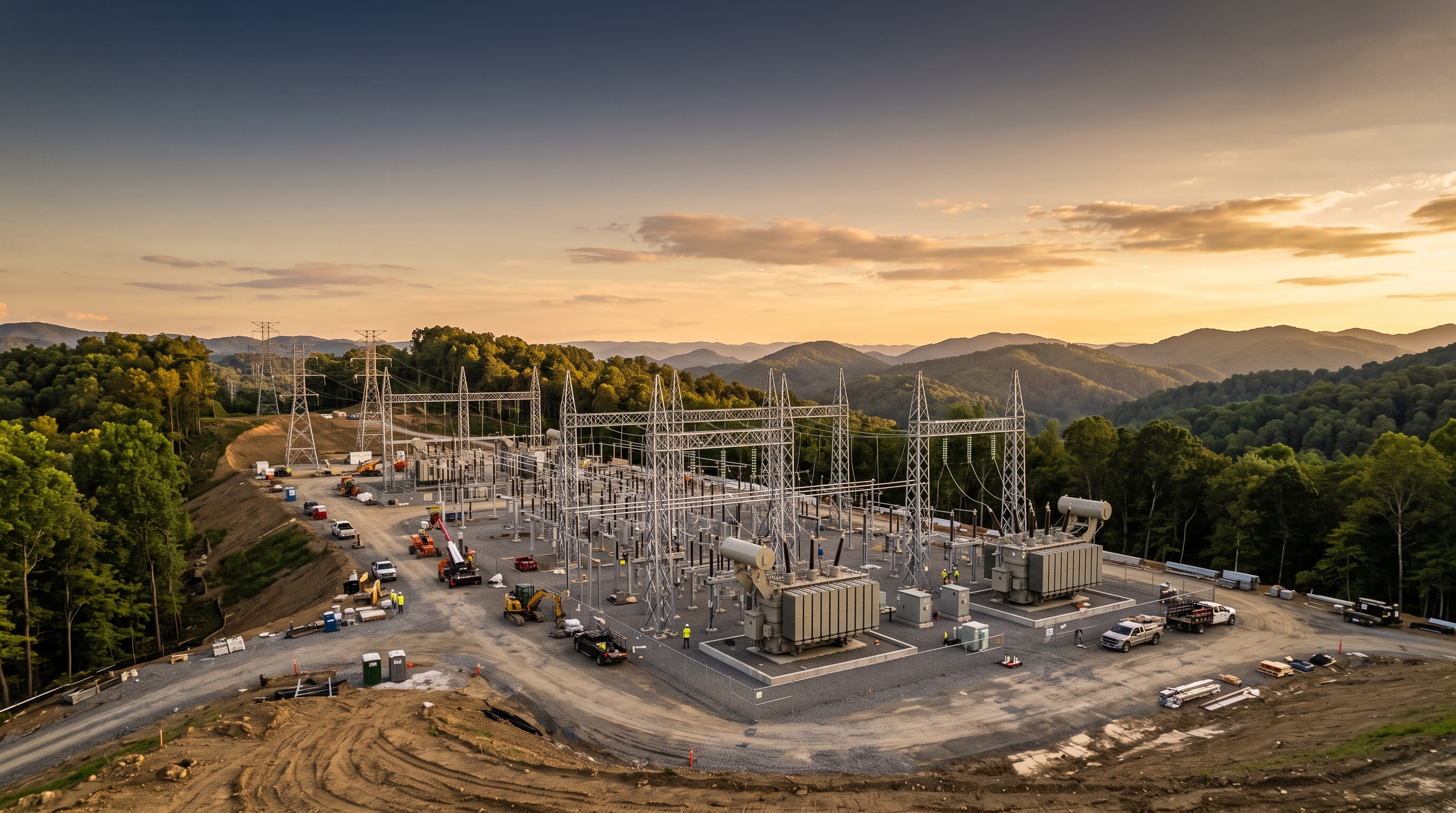
Three days earlier, on October 2, Kentucky Power announced the Muskie Transmission Improvements Project in western Boyd County to serve the campus at the EastPark Industrial Park. The utility lists:
- A new 765-kV Venator Substation
- Two 765-kV transmission lines totaling about 2.5 miles, connecting the substation to an existing line
- Two parallel 345-kV lines of about 3 miles each, 6 miles in total
Routes have not been selected. Kentucky Power says it plans to file a Commission application for the substation portion this October and for the line portion in early 2027, and anticipates a decision in spring 2027. If approved, it expects substation construction to begin in early 2027, line construction in November 2027, and in-service in October 2028, a schedule it says is “subject to change.”
That is transmission-class work rather than distribution equipment. It is still a concrete public statement of what this 1 GW load triggers on the utility side, and of how long the utility expects the approvals to take.
What Municipal and Cooperative Utilities Can Take From It
Large load cost allocation is arriving through different instruments. We have looked at three others: Virginia’s line extension order for data center substations, TVA’s data center rate class, and a cooperative data center contract in Paducah. Kentucky Power’s deal is the bilateral version: the terms live in one customer’s contract and reach the record when the utility files it.
For a distribution utility fielding its own large load request, the agreement is a useful checklist of questions to put on the table early:
- Upstream cost. Does the applicant pay for the generation, capacity or transmission its load requires, or only the service charges on the bill?
- Existing customers. Is any benefit to residential customers written into the contract, and does it depend on regulatory approval?
- Security. What collateral or letter of credit covers the utility’s spend if the load is late or smaller than contracted, and can the applicant actually post it?
- Schedule. Which dates are conditioned on approvals and construction, and which are firm?
The answers decide when substation and line equipment gets ordered, and by whom. A date that is “subject to Commission approval and Kentucky Power’s construction schedule,” as the release puts the second phase, is a date to track, not a date to plan an order around.
What to Watch Next
Two filings will make this deal legible. First comes Kentucky Power’s substation application, which the utility says is coming this October. Then comes the amended contract itself, due later in 2026, where the collateral terms and the credit mechanics would become public. As of October 11, Kentucky Power’s announcements had not given a case number for either.
Our utility procurement intelligence guide tracks the state, RTO and federal actions changing who buys this equipment and when.
The Feeder is our free weekly read on the regulatory and procurement signals that move equipment demand. Subscribe to The Feeder.
Related Reading
- Virginia Makes Data Centers Pay for Their Own Substations
- TVA Data Center Rate Lands Oct 1 on 153 Distributors
- Cooperative Utility Data Center Load Meets a 936 MW Fleet
Know what changed before your next quote
Free Member tier. Pick your topics. Get a weekly digest filtered to what you actually buy.