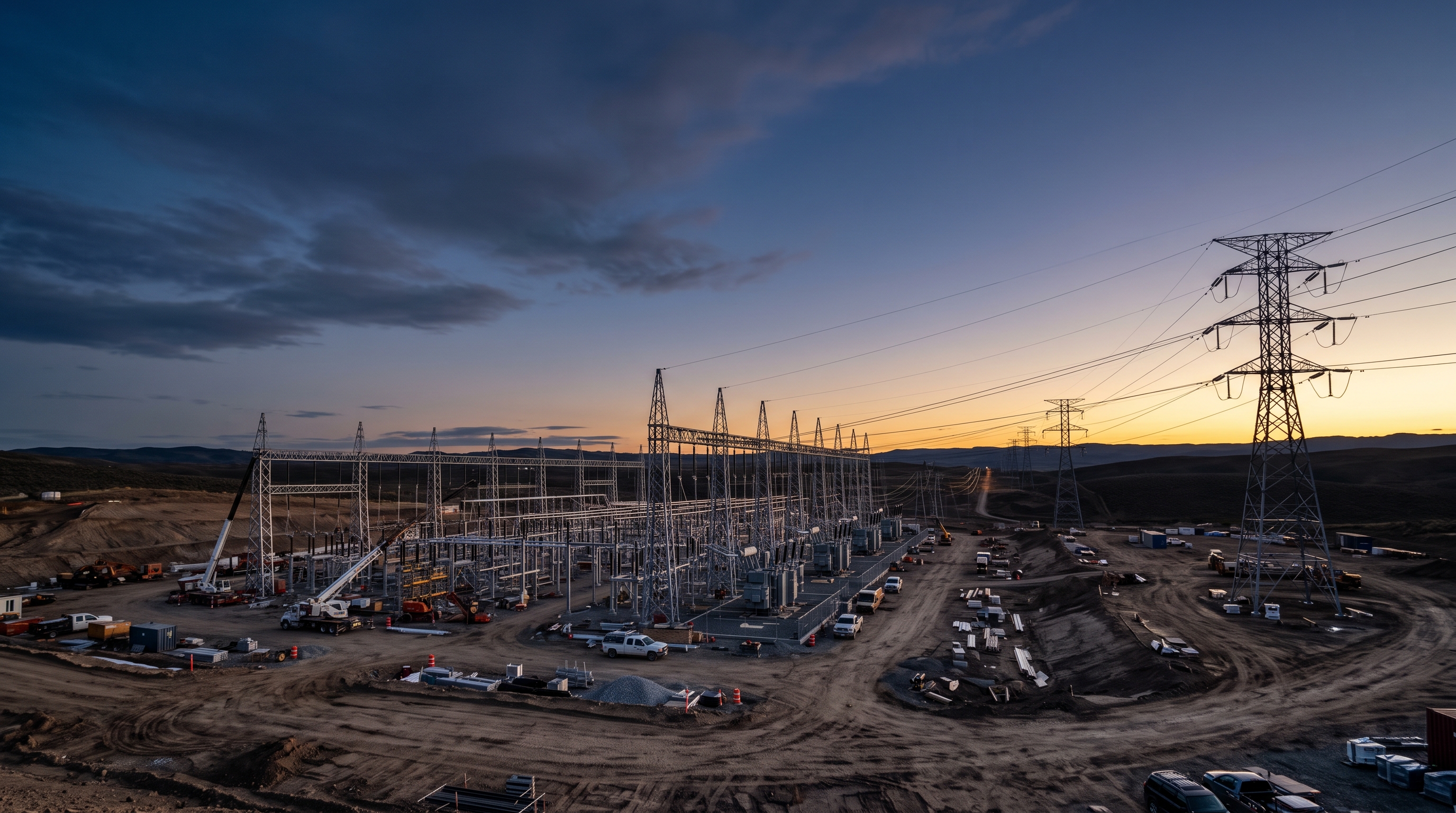
Virginia Makes Data Centers Pay for Their Own Substations
Virginia's SCC ordered a mandatory CIAC so large loads fund the substations built to serve them. What Case PUR-2026-00056 changes for equipment buyers.
The coverage of Virginia’s July 31 ruling led with the result, which is that data centers now have to pay for the substations built to connect them. The mechanism is the part worth reading, and it is far more ordinary than the headlines suggest. The Virginia State Corporation Commission did not write a data center statute. It ordered Dominion to amend its Terms and Conditions for Electric Line Extensions and Installations.
A line extension policy is the most routine tariff document a utility keeps. It is the page that decides who pays when a new customer needs facilities built to reach them. Virginia has now pointed that page at transmission, which means Virginia data center substation costs are being reassigned by tariff amendment rather than by statute. Any commission in the country can copy that without waiting on a legislature.
The case is PUR-2026-00056, Dominion Energy Virginia’s Rider T1 transmission rate filing under § 56-585.1 A 4 of the Code of Virginia. Dominion filed it on May 1. The Commission heard evidence from July 14 to 16 and issued a final order on July 31. That is a rate case, not a policy proceeding, which is why the ruling arrived faster than the ones everybody was watching.
What the Virginia SCC Large Load Order Actually Requires
The order directs Dominion, working with Commission Staff, to file amendments to its line extension policy “that would require a mandatory CIAC for defined types of transmission facilities.” A contribution in aid of construction is cash paid up front by the customer against the capital cost of the facilities built for them. Dominion’s existing policy already works this way for distribution. Projected customer revenue produces a revenue credit, that credit is applied against the capital Dominion spends, and the customer writes a check for what is left.
Three limits in the order decide how much money actually moves.
It is prospective only. The amended policy applies going forward. Nothing already built gets re-billed.
It reaches “direct connect” facilities only, which the order describes as “generally meaning substations and the lines connecting the customer to the bulk transmission system” needed to serve new or expanding large loads. The Commission uses the but-for test to draw the line, the same causation standard behind Pennsylvania’s large load tariff.
The revenue credit is narrowed. This is the sentence buyers should read twice. The order says “the revenue used to determine the amount of the mandatory CIAC shall be limited to revenues expected to be produced by a customer’s transmission charges.” Distribution line extensions credit a customer’s whole bill against the build. Here, only the transmission component counts. A narrower credit means a bigger check.
Direct Connect Facilities Cost Allocation Has No Definition Yet
The order is candid that the central term is unfinished. Its footnote says the record “sketches” a definition of direct connect facilities covering substations, lines, and other infrastructure necessary to connect the large load to the bulk system. Dominion and Staff are directed to “propose an explicit definition of ‘direct connect’ facilities” when they file.
That definition is the whole fight. Every foot of plant that lands inside it gets funded by the customer on the customer’s schedule. Every foot that lands outside stays in the rate base and gets built on a utility capital plan. Nobody quoting equipment into Dominion territory should treat the boundary as settled, because it does not exist yet.
Amazon Asked to Pay Cash and Move Up the Queue
The testimony section of the order contains the most useful paragraph in the document, and it has gone almost entirely unreported.
Amazon supported letting large loads make voluntary CIACs as a way to reduce ratepayer burden, and recommended that a customer electing that option “receive top priority in Dominion’s interconnection queue.” Amazon disagreed with mandatory direct cost allocation. Google likewise supported a line extension policy change enabling large customers to voluntarily fund substations, with ongoing maintenance shared across the system.
Read that as procurement intelligence rather than as politics. The largest buyers in the market told a regulator, on the record, that they would rather pay the full cost of a substation than wait in line for one. The Commission ordered mandatory contributions instead of the voluntary-for-priority trade, so the queue-jumping mechanism was not granted here. The preference behind it did not go anywhere.
This is the point that keeps getting lost in cost-allocation coverage. Reassigning who pays for a substation adds no manufacturing capacity. It changes whose balance sheet buys the equipment, and therefore whose schedule and whose expedite budget drive the order. A developer-funded unit is procured against an in-service date where an expedite premium is a rounding error against an idle campus. A rate-based unit is procured against a capital plan. Same factory, same slot, and only one of those buyers is indifferent to the premium. Municipal and cooperative buyers in Dominion territory should plan on competing with counterparties who have no rate case to clear.
The Cooperative Problem the Commission Could Not Solve
Buried at the end of the order is a directive nobody covered, and it is the one that reaches co-op and muni buyers directly.
The Commission acknowledged that a large load connecting in one load-serving entity can create costs for customers in a different one, calling it “an equity issue that can go in both directions.” It then found that the record is unclear on whether it even has jurisdiction to allocate another distribution company’s share of Dominion Zone wholesale transmission costs, and that a durable fix runs through FERC’s process and the Mutual Operating Agreements on file there.
So it ordered Dominion to work with ODEC and any other necessary distribution companies toward “an acceptable and symmetrical approach towards assigning costs in these circumstances,” and to file a status update within 120 days, which lands on November 28. If you buy through a Dominion Zone cooperative, that filing decides whether a hyperscaler landing next door shows up on your members’ transmission bill. It is a status update rather than a tariff, so nothing binds yet. It is also the first time a commission has put the cross-utility spillover question on a clock. The Kentucky cooperative docket we covered in August is the closest comparison, and it got there through a load-serving fight rather than a rate case.
What Got Deferred, and the Three Ways It Lands
The Commission drew a sharp line between the piece it decided and the piece it did not, in its own words:
While the current record supports a more rapid approach towards direct assignment of costs through a CIAC for “direct connect” facilities, the Commission finds that the record supports a more deliberate approach to the question of direct assignment of higher-order transmission costs.
Higher-order costs means the supplemental and regional transmission driven by aggregate load growth rather than by one customer’s connection. By the Piedmont Environmental Council’s description those are the billions, and they stay in general rates for now. PEC, which filed testimony the Commission cited, called the ruling an important first step and said plainly that it does not resolve who pays for the rest.
The order lists three ways the next docket could go. Extend the amended line extension policy to higher-order costs. Run a blended approach where direct connect facilities go through the line extension policy while supplemental project costs are directly assigned to the GS-5 rate class. Or hold the current course. Virginia has already built the machinery for option two over the past two years, having created the GS-5 class and adopted collateral requirements, minimum demand charges, exit fees and a 14-year term. The order also tells Dominion and Staff to work out how a mandatory CIAC can offset or reduce those collateral requirements, since both are aimed at the same stranded-cost risk.
The Bill Relief Did Not Come From the CIAC
One number is circulating without its cause attached, and it is the figure most people will quote when asked what the order did to Virginia data center substation costs. Getting it wrong will make anyone repeating it look careless in a board meeting.
The order reduced the projected Rider T1 increase for a typical residential customer using 1,000 kWh from $2.90 per month to $0.94 per month, a 67.5% cut. That reduction came from an amended 12-CP allocation methodology with a minimum demand adjustment, not from the CIAC. The order quantifies it: “this minimum demand adjustment decreases the residential class’s allocation factor by 2.84% and increases the GS-4 rate class’s allocation factor by 4.33%.” It is a reallocation among existing rate classes, decided in the same order and by a different holding. The CIAC has not collected a dollar yet and will not until the amended policy is filed, litigated and approved.
Two Dates Worth Calendaring
Dominion must file its proposed amended line extension policy in a new docket within 90 days of the final order, which is October 29. That filing, not the July 31 order, is where the mechanics live: the explicit definition of direct connect facilities, the revenue credit math, and the interaction with collateral. The ODEC status update follows at 120 days, on November 28.
Watch the definition. Everything else follows from where the line gets drawn.
The Takeaway
Virginia data center substation costs moved from the rate base to the customer through a tariff amendment, in a rate case, in 90 days. That speed is the transferable part. Six RTOs are already under a FERC show-cause order on large load interconnection, and states have been reaching for statutes when a line extension policy was sitting there the whole time.
For anyone selling into this, the practical change is not that substations get cheaper for ratepayers. It is that a growing share of them get bought by parties who are paying cash, choosing their own schedule, and competing for the same factory slots as the utilities that used to be the only buyers in the room. That competition arrives before the tariff does, because the buyers have already said what they want. It is also worth noting that Dominion itself is mid-acquisition, which we covered in our read on the NextEra deal, so the entity implementing this policy may not be the entity that wrote it.
Our utility procurement intelligence guide tracks the state, RTO and federal actions reshaping who buys this equipment and when.
The Feeder is our free monthly read on the regulatory and procurement signals that move equipment demand. We work through what each order means for buyers before it turns up in a lead time. Subscribe to The Feeder and start next month ahead of the buying cycle.
Related Reading
- Pennsylvania Large Load Tariff: ‘But For’ Cost Allocation
- FERC Large Load Interconnection Order: 6 RTOs on the Clock
- Cooperative Utility Data Center Load Meets a 936 MW Fleet
Free RFQ templates. Weekly digest. Yours.
Free Member tier. Pick your topics. Get a weekly digest filtered to what you actually buy.