PG&E Undergrounding Filing: 5,000 Miles Proposed to 2037
PG&E's September 30, 2026 undergrounding filing proposes 5,000 underground miles replacing 4,000 overhead miles from 2028 to 2037, pending approval.
Correction, October 2, 2026. An earlier version of this article said PG&E’s plan covered 9,000 miles of work (5,000 miles of undergrounding plus 4,000 miles of overhead hardening), cost about $1 billion a year, and “locked in” equipment demand. The filed plan does not say that. The 4,000 miles are overhead lines PG&E proposes to remove and replace with the 5,000 underground miles, so they are one portfolio, not two. The plan is a proposal awaiting approval. We also removed equipment-count estimates (cable, switchgear and transformer quantities) that were our own arithmetic rather than figures in the filing, and other unsourced lead-time and procurement-timing claims. This article now reports only what the filing says.
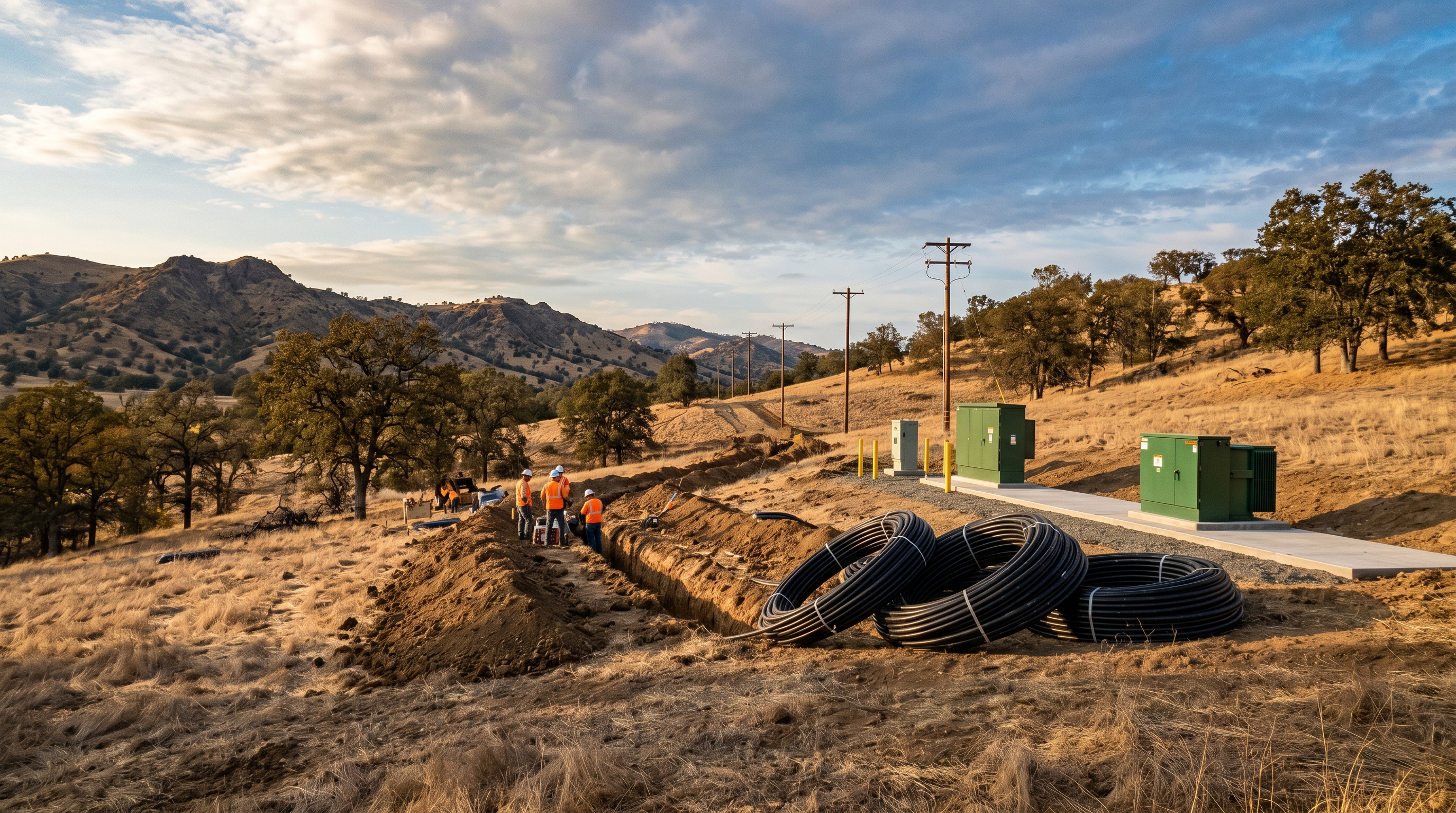
PG&E filed its proposed 10-Year Electrical Undergrounding Plan with California’s Office of Energy Infrastructure Safety on September 30, 2026. The PG&E undergrounding filing proposes 5,000 miles of new underground distribution line from 2028 through 2037, replacing about 4,000 miles of overhead line in Tier 2 and Tier 3 High Fire Threat Districts and Fire Rebuild areas. PG&E converts the two figures with a 1.25 overhead-to-underground factor, and the plan states that “the two mileage values describe the same forecast portfolio.”
For a municipal utility, cooperative or distributor that does not buy from PG&E, the useful facts are the size of the proposal, its ramp, and the approvals still ahead of it.
What the PG&E undergrounding filing proposes
From Table 1-1 and Table 2-12 of Volume 1:
- 4,000 overhead line miles removed and 5,000 underground miles installed, 2028 through 2037.
- About $11.4 billion present value of undergrounding capital. A footnote states this is the present value of $16.6 billion in nominal capital expenditures over the ten years.
- A ramp, not a flat rate. The target table starts at 250 underground miles in 2028, rises to 450 in 2031, and holds at 625 miles a year from 2034 through 2037. Averaging the nominal total over ten years gives about $1.66 billion a year; that is our arithmetic, not a figure in the filing, and because the mileage ramps, early years carry less work than later years.
- 2028 is lower than the current plan. The filing notes that its 250 miles for 2028 differs from the 400 miles approved in PG&E’s 2026 Wildfire Mitigation Plan, mainly because of the time needed to move the program onto the new plan’s requirements.
PG&E also states that from 2021 to 2027 it will install more than 1,900 underground miles under its existing program.
Undergrounding plan approval: what still has to happen
The filing is the first step, not the last. Under SB 884, Energy Safety reviews and approves the plan’s project selection and risk reduction (Phase 1). The California Public Utilities Commission then rules on PG&E’s separate application for cost recovery (Phase 2). PG&E describes these filings as “interdependent.” Until both are decided, the ten-year volumes are a proposal.
What the filing says about supply chain and sourcing
The filing addresses suppliers directly, and its wording matters for anyone trying to read West Coast demand:
- PG&E says it “has established a supply chain to deliver on our current pace of undergrounding which is adequate to support the program through at least 2029.”
- It says that “with regulatory certainty around program scope and funding,” it “will be able to pursue long-term agreements with key suppliers and manufacturers for materials such as cable, conduit, vaults, enclosures, and related equipment.”
- On construction labor, PG&E reports Master Services Agreements with nine undergrounding contractors and contract capacity in place for proposed mileage targets through at least 2029.
So the filing ties multi-year material agreements to regulatory approval. It does not describe purchase agreements placed ahead of that approval, and it contains no count of transformers, switchgear or cable to be bought.
How to use this if you buy distribution equipment
- Treat it as a forecast with approval risk. Watch the Energy Safety review and the later CPUC cost-recovery application before building PG&E volumes into your own supply assumptions.
- Read the ramp. The proposed mileage starts at 250 miles in 2028 and reaches 625 miles a year only in 2034. Any pressure on underground cable, conduit, vault and enclosure supply would build over the decade, not arrive at once.
- Watch the categories PG&E named. Cable, conduit, vaults and enclosures are the materials the filing links to long-term agreements. Those are the categories to monitor if PG&E’s plan is approved.
- Ask your own suppliers. The filing describes PG&E’s position, not any manufacturer’s allocation plans. Lead-time questions belong in your RFQ and supplier conversations.
Get the next update
PG&E’s plan now moves into regulatory review. Subscribe to The Feeder, our free newsletter, to see when the next PG&E undergrounding decision lands and what changed.
Related Reading
- Prysmian and Encore Wire’s McKinney Plant: Domestic Wire Capacity
- Pad-Mount Transformer Procurement: Why 2026 Budgets Are Already Broken
- Western Distribution Hardening: PG&E, Idaho Power and Denton Signals
Know what changed before your next quote
Free Member tier. Pick your topics. Get a weekly digest filtered to what you actually buy.