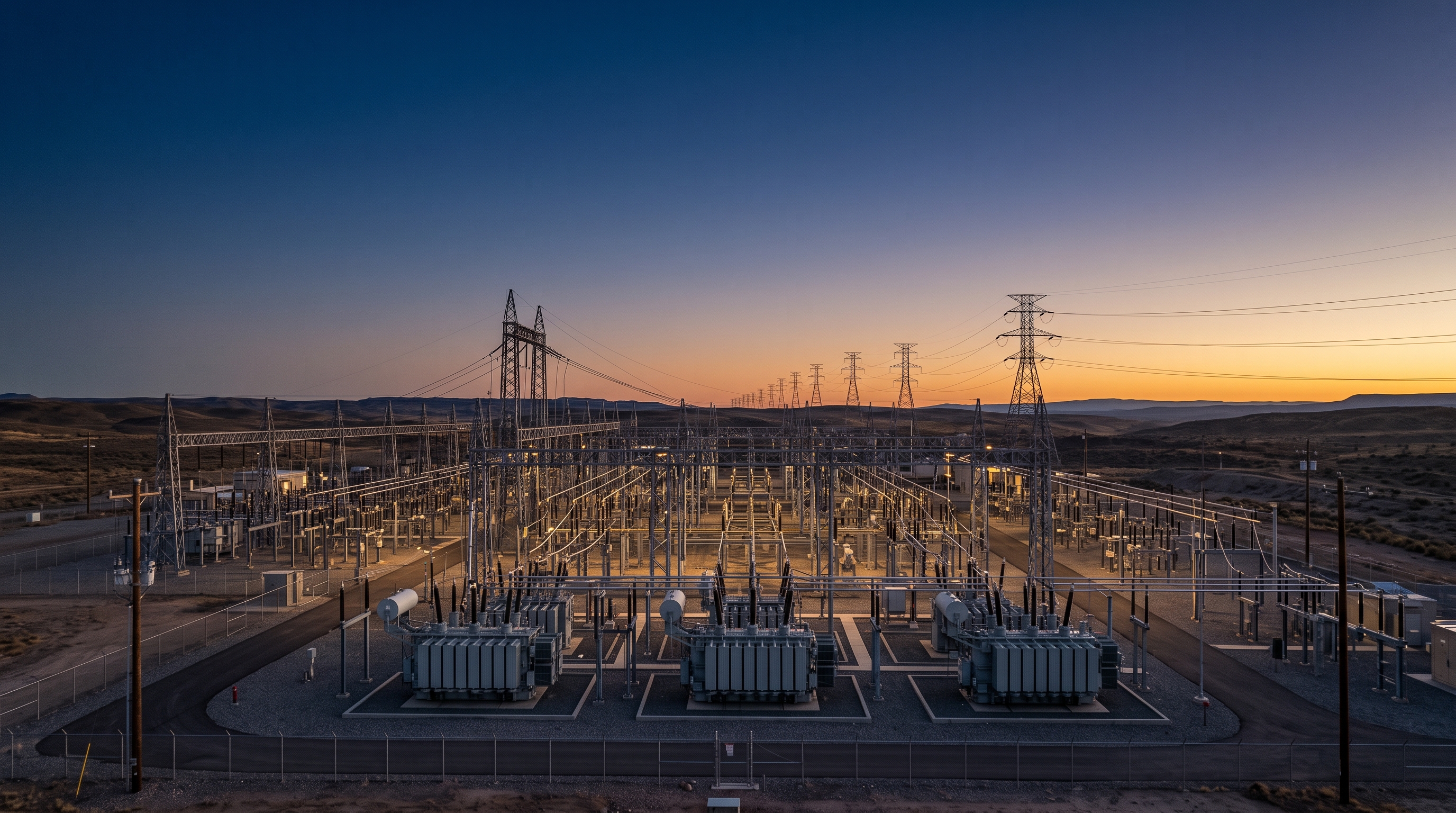
PJM 2028/2029 Capacity Auction: The Procurement Read
PJM posts its 2028/2029 capacity auction result July 14 under a ~$325/MW-day collar. Here is what a third straight clear near the ceiling means for equipment buyers.
PJM posts the result of its 2028/2029 capacity auction on July 14, and the number itself is almost the least interesting part. Under the price collar FERC approved for this cycle, the Base Residual Auction was capped at roughly $325/MW-day, and every credible read heading into results day pointed to a third straight clear at or near that ceiling. For the municipal utilities, cooperatives, and regional distributors buying into the largest grid in the country, the news is not the headline price. It is what a ceiling-bound auction says about how hard the next four years of equipment buying will be.
Start with the escalation, because it frames everything. The 2024/2025 auction cleared near $28.92/MW-day. The 2026/2027 auction cleared at $329.17. The 2027/2028 auction pinned at the FERC ceiling of $333.44. A capacity price does not climb tenfold in two years and then sit at the top of its allowed range by accident. It does that when the system is short of supply and cannot build fast enough to catch up. PJM said as much when it entered this auction 6,623 MW below its reliability target for 2027/2028, with an actual reserve margin of 14.8 percent against a goal near 20 percent. That was the first time the entire PJM footprint, self-supply areas included, came up short.
What the PJM capacity auction result actually signals
The collar is doing real work. PJM’s filing put the uncollared cap for this auction near $550/MW-day, and the market monitor credited the prior two years of collars with holding roughly $13.1 billion out of consumers’ capacity bills. So a clear near $325 is not a sign the pressure eased. It is a sign the cap is the only thing standing between buyers and a much larger number.
Nearly all of the demand growth is one customer class. Of the 5,250 MW peak-load increase PJM logged for 2027/2028, about 5,100 MW came from data centers. That is not a rounding note. It means the capacity market is now priced by hyperscale load, and the equipment consequences run straight down to the distribution layer. On July 2 this year PJM set an all-time peak of 168,158 MW during a regional heat dome, breaking a record that had stood since 2006. The grid held, but it held by dispatching demand response and emergency waivers rather than by having margin to spare.
A capacity price stuck at the ceiling is, above all, a build signal. It pulls forward generation, storage, and demand response, and PJM is trying to convert that price into steel in the ground as quickly as the queue allows. The reformed interconnection process opened its first cycle with 811 projects totaling 220 GW, a forward demand curve for substation transformers, switchgear, and cable that stretches through the end of the decade. On top of that, PJM’s board advanced a “sprint for new capacity” to close the 2028/2029 gap and a fast-track interconnection path that clears up to ten large resources per year, each 250 MW or larger, on a three-year completion schedule.
Where a ceiling price collides with distribution equipment lead times
Here is the tension procurement teams have to plan around. PJM wants new capacity built on a three-year clock. The equipment that new capacity depends on does not move on a three-year clock. Large power transformers still carry lead times measured in years, not months, and the same squeeze runs through the distribution transformer market that municipal and cooperative buyers actually order from. A fast-track program that promises a generation interconnection agreement in about ten months means very little if the step-up transformer behind it is quoted at 130 weeks. The auction price is telling you the demand is real and durable. The factory backlog is telling you the supply cannot answer on the auction’s timeline.
That gap is exactly where a buyer with a plan beats a buyer reacting to a headline. Two levers matter now. The first is timing: a capacity price locked near the ceiling for a third straight delivery year is confirmation, not speculation, that ordering early against the buildout is cheaper than competing for factory slots once the sprint projects all reach for the same transformers and breakers at once. The second is flexibility. PJM’s “Connect and Manage” model and the broader push toward flexible, curtailable large-load interconnection decide how much and how fast new equipment has to be built, and they hand service-priority decisions to transmission owners, distribution companies, and state regulators. Municipal utilities and cooperatives in the footprint inherit those operational rules along with the capacity-cost pass-through.
None of this sits still. FERC’s Section 206 show-cause order to six RTOs is pushing standardized large-load tariffs on a parallel track, and demand-side reforms are starting to bend the forecast the auction is built on. New Jersey’s newly enacted large-load law, for instance, makes data centers pay their own upgrade costs and pairs it with a peak-shaving program that lowers the demand PJM uses to size future auctions. The direction of travel is a market trying to blunt its own price with rules, while the physical bottleneck stays exactly where it was: the factory floor.
For a buyer, the 2028/2029 result is best read as a forecast you can act on. Capacity at roughly $325/MW-day for 2028/2029 against about $29 four years earlier is a hard number to build a procurement budget around, and it rewards the teams that lock equipment orders ahead of the fast-track wave rather than inside it.
The monthly read on where this is heading
The 2028/2029 capacity result sets equipment demand two to three years out, and the rules that shape it keep moving between auctions. The Feeder is our free monthly digest of the procurement signals that move utility and distribution equipment buyers: lead-time shifts, supplier capacity, federal funding, and the RFP language that follows. One email a month, no filler.
Related Reading
- PJM’s 220 GW Interconnection Queue: The Equipment Wave Behind the Price
- Transformer Procurement in 2026: Reading Lead Times Before They Bite
- Flexible Large-Load Interconnection: The Equipment Spec Behind the Curtailment Rules
Frequently Asked Questions
What is the PJM 2028/2029 capacity auction price cap?
For the 2028/2029 Base Residual Auction, FERC approved a price collar of roughly $325/MW-day at the top and about $175/MW-day at the floor. PJM's own filing stated that without the collar, the cap for this auction would have been near $550/MW-day.
Why does a capacity auction result matter for equipment buyers?
A capacity price stuck near its ceiling is a build signal. It pulls forward generation, storage, and demand response, and every one of those projects needs step-up transformers, medium-voltage switchgear, protective relays, and breakers. The auction tells procurement teams how hard the buildout will compete for factory slots.
What was the previous PJM capacity clearing price?
The 2024/2025 auction cleared near $28.92/MW-day. The 2026/2027 auction cleared at $329.17/MW-day and the 2027/2028 auction pinned at the $333.44/MW-day ceiling, roughly a tenfold rise in two years.
Know what changed before your next quote
Free Member tier. Pick your topics. Get a weekly digest filtered to what you actually buy.