FERC Large Load Interconnection Rules: What Changes for Equipment Procurement
FERC's RM26-4 rulemaking on large load interconnection reshapes how data centers and utilities procure transformers and switchgear. Key principles and timing.
FERC has until April 30 to finalize new rules governing how loads greater than 20 MW connect to the interstate transmission system. The proceeding, Docket RM26-4-000, was triggered when DOE Secretary Chris Wright invoked Section 403 of the DOE Organization Act last October. It was only the third time in the agency’s history that this authority has been used to compel FERC action.
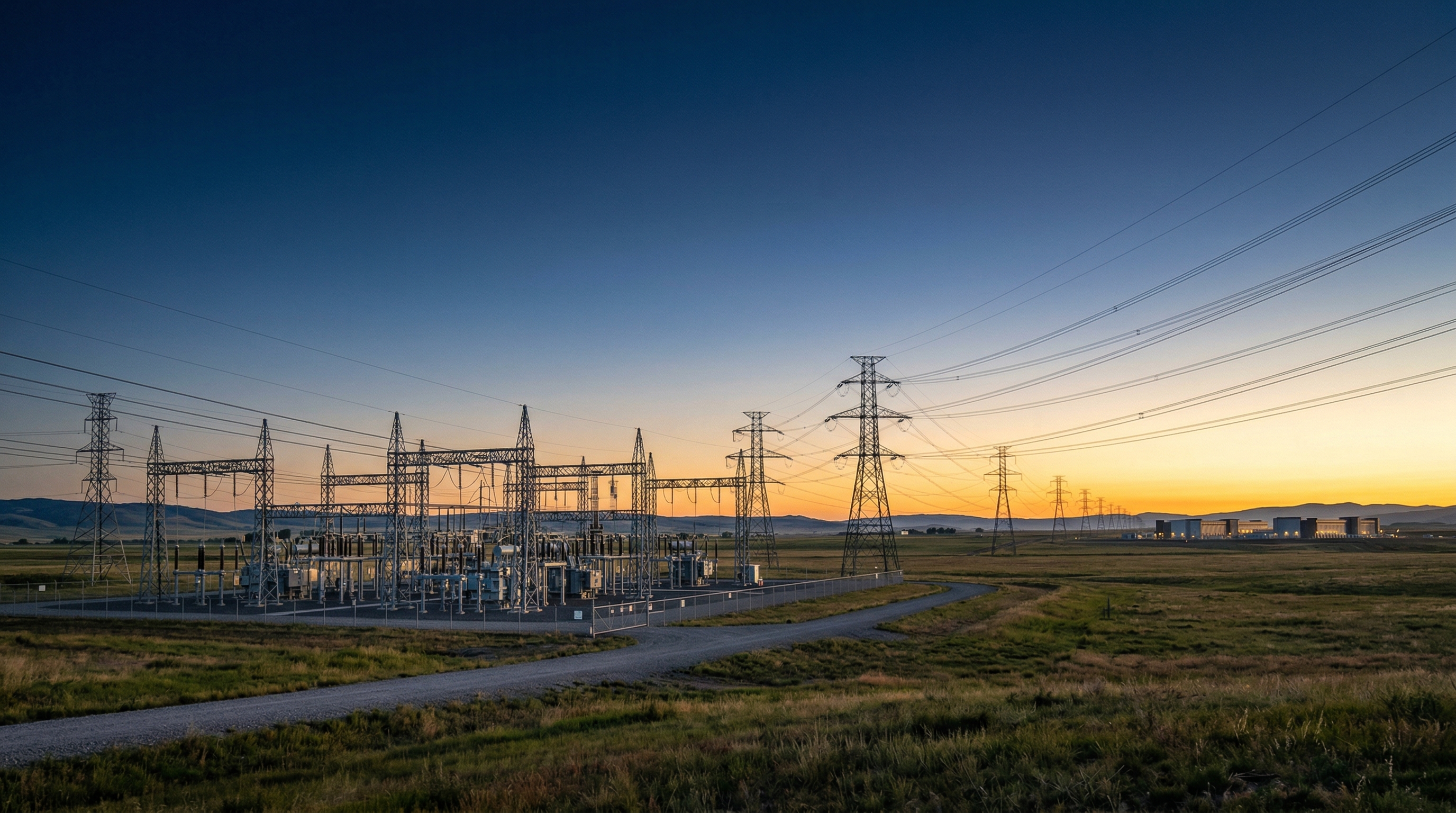
The FERC large load interconnection rulemaking matters to anyone who sells, specifies, or procures transformers, switchgear, and protection equipment. Here is why.
What DOE Told FERC to Fix
The backstory is straightforward. Data center interconnection requests have overwhelmed every major RTO’s study queue. PJM, MISO, and the Southeast have all seen request volumes that existing procedures were never designed to handle. A single hyperscale campus can draw 200 to 500 MW. The 20 MW threshold in the rulemaking captures virtually all of these projects while exempting traditional industrial loads.
DOE’s directive to FERC includes 14 guiding principles. Three of them have direct procurement implications.
Principle 8: Loads bear 100% of network upgrade costs. Data center developers will pay the full tab for every transmission upgrade their interconnection requires. That means transformers, switchgear, protection relays, SCADA systems, and substation construction, all funded by deep-pocketed hyperscalers like Amazon, Microsoft, Google, and Meta. This is not a conceptual pipeline. It is a funded one.
Principle 9: Option-to-build for load customers. This mirrors a right that generators already have. Under the proposed framework, large load customers could procure and build their own transmission facilities rather than waiting for the incumbent utility to do it. For equipment distributors, this principle creates a new customer segment. Data center developers with capital and urgency may come to you directly rather than through utility procurement channels.
Principle 7: Expedited processing for curtailable loads. Loads that accept curtailment get a faster study track. That compresses the timeline from interconnection request to equipment order, potentially cutting years of queue delay down to months for flexible facilities.
Why the Timing Is Uncertain
The April 30 deadline sounds firm, but the legal reality is more complicated. FERC’s proceeding is still at the Advance Notice of Proposed Rulemaking (ANOPR) stage. Initial comments closed in November 2025. Reply comments closed in December.
Legal analysts at Vinson & Elkins and Mayer Brown expect FERC to issue a Notice of Proposed Rulemaking (NOPR) by April 30 rather than a final rule. That would push the actual effective date into late 2026 or 2027. Even so, a NOPR carries weight. Utilities and developers will begin adjusting their procurement strategies based on the direction FERC signals, well before a final rule takes effect.
For procurement teams tracking FERC large load interconnection developments, the practical question is not “when does the rule become binding?” It is “when do buying patterns start to shift?” The answer: they already have.
The Scale Behind the Rulemaking
This proceeding did not emerge from an abstract policy debate. It responds to real demand. FERC data shows 50 GW of data center capacity was already online by the end of 2025. MISO has reported 43% annual growth in data center load since 2020. The $33 billion Ohio data center megaproject in Pike County is just one example of the infrastructure driving interconnection queue backlogs across PJM territory.
Each of those projects needs step-up transformers, medium-voltage switchgear, protection relays, and metering equipment at every point of interconnection. When the rule standardizes large load transmission procedures and the option-to-build provision opens direct procurement to load customers, transformer procurement for data centers becomes a distinct market segment rather than a subset of utility capital planning.
What This Means for Rick and Maria
If you are a regional distributor, the option-to-build provision is the headline. Data center developers with $500 million interconnection budgets are not accustomed to utility procurement timelines. They want to move fast, and Principle 9 gives them the legal framework to source equipment themselves. That means RFPs from companies you have never sold to before, for transmission-grade equipment, on compressed timelines.
If you run procurement for a municipal utility or co-op, the standardized study process is the win. Right now, interconnection procedures vary wildly by RTO. A single set of federal rules reduces the uncertainty around study deposits, withdrawal penalties, and timeline expectations. You can plan your capital budgets with more confidence when the rules are uniform.
Both groups should be watching the FERC large load interconnection docket closely. The comment record is public on FERC’s website.
Three Things to Do Before April 30
Track the docket. FERC will signal its direction through the NOPR. The specific cost allocation methodology and option-to-build implementation details will determine how quickly new procurement channels open. Read it the week it drops.
Identify large load projects in your territory. Cross-reference your service area with pending interconnection requests in your RTO’s queue. If 200+ MW loads are in the study pipeline, the equipment demand is coming whether or not the final rule lands this year.
Stress-test your lead time assumptions. Power transformers still sit at roughly 128 weeks (Wood Mackenzie, Q2 2025). When data center interconnection rules under FERC RM26-4 accelerate the study-to-procurement timeline for dozens of hyperscale projects simultaneously, the existing supply constraints get worse. If you are evaluating bids today, factor extended lead times into your scoring.
DistroForge publishes monthly procurement intelligence covering transformer lead times, regulatory developments, and equipment demand signals. Subscribe to The Feeder for the free monthly read, or see our report catalog.
Related Reading
- What a $33 Billion Ohio Power Project Means for Regional Equipment Procurement
- The State of Transformer Procurement in 2026
- How to Evaluate Transformer Bids When Lead Times Exceed Two Years
Sources:
- Vinson & Elkins: DOE Directs FERC to Address Large Load Interconnection (October 2025)
- Mayer Brown: Key Takeaways for Data Center Developers (November 2025)
- FERC Docket RM26-4-000 (Ongoing)
- DOE Section 403 Directive (PDF) (October 2025)
- Wood Mackenzie T&D Supply Chain Survey (Q2 2025)
Know what changed before your next quote
Free Member tier. Pick your topics. Get a weekly digest filtered to what you actually buy.