American Energy Dominance Act: What 45Y/48E Restoration Means for Equipment Demand
Four PJM-state House Republicans want to strip OBBBA's accelerated 45Y/48E tax credit deadlines. The procurement read on collector-substation equipment, storage interconnections, and the July 4 cliff.
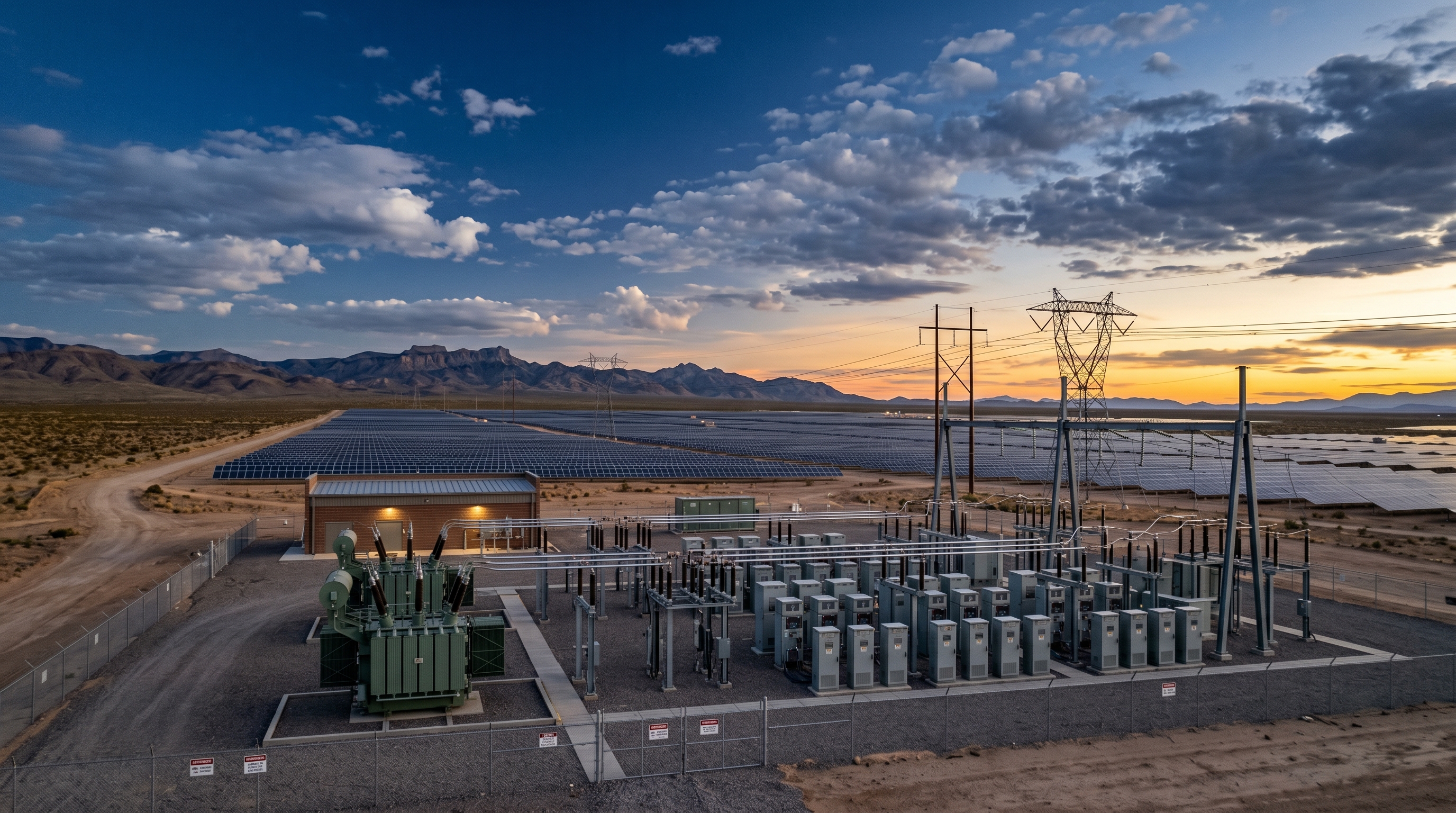
Four House Republicans from PJM-footprint states want to roll back the One Big Beautiful Bill’s accelerated tax-credit cliffs. If they succeed, the procurement frenzy stacking up against the July 4, 2026 safe-harbor deadline turns into a steadier multi-year build cycle. If they fail, expect a Q2 2026 order surge followed by a 2028 collapse on the storage and solar side. Either way, the next eight weeks reset the equipment-demand picture for collector substations, MV switchgear, and protection relays serving renewable interconnections.
The bill is the American Energy Dominance Act, introduced in late April 2026 by Reps. Brian Fitzpatrick (R-PA), Max Miller (R-OH), Mike Carey (R-OH), and Mike Lawler (R-NY). Its target: the OBBBA-imposed deadlines on the 45Y production tax credit, the 48E investment tax credit, the 45V clean hydrogen credit, and several energy-efficiency provisions. The 45Y/48E credits originated in the 2022 Inflation Reduction Act. OBBBA, signed in early 2026, accelerated their sunset to end-of-2027 and forced project commencement by July 4, 2026 to safe-harbor full credit value.
The 45Y 48E tax credit extension fight is not a renewables side-show. It is the financing backbone for the 67 GW of battery storage and 15 GW of solar that just entered PJM’s reformed interconnection queue, which we covered in PJM’s 220 GW reopening. Without the credits, a meaningful share of those queue projects fail to reach financial close. With them, PJM’s collector-substation and storage-interconnection equipment pipeline through 2030 holds together.
Why four PJM-state Republicans are sponsoring it
The political read matters because it tells you whether the bill has legs.
All four sponsors represent states heavy with PJM-related grid employment and in-state renewable manufacturing. Pennsylvania has First Solar’s Lake Township module plant. Ohio has First Solar’s Perrysburg/Lake operations and a growing battery-cell footprint. New York has Hanwha QCells assembly. Renewable construction in these states is union-heavy and politically organized. Constituents whose projects stalled under OBBBA’s compressed timeline are calling their representatives.
The bill’s framing as “American Energy Dominance” rather than “save the IRA” is the political packaging needed to attract additional GOP cosponsors. Watch for AZ, NV, GA, and NC House Republicans to consider joining. The Senate path is the harder gate: Senate Finance under GOP control would need to advance a companion or attach the provisions to a vehicle bill. Senate GOP has already preserved some clean-energy provisions in earlier legislation, so a narrow extension is not out of reach.
What’s actually at stake on the equipment side
The 45Y PTC and 48E ITC underwrite project economics for solar, wind, and storage. When those credits compress or expire, project finance models break, and equipment orders that were locked in for 2027-2028 commercial operation get cancelled or deferred. The procurement consequence is concentrated in a specific equipment basket:
- Medium-voltage step-up transformers sized for collector substations (typically 34.5kV-to-138kV/230kV)
- 34.5kV switchgear and breakers for solar and storage collector systems
- Protection relays and SCADA packages for renewable interconnections
- Battery-side equipment: bidirectional inverters, battery management systems, MV step-up
- Wind-side equipment: collector cable, pad-mount transformers, breakers
The MV-to-HV transformer category sits at the intersection of OBBBA’s near-term cliff and the longer-running transformer procurement crunch we have tracked. The named storage and solar vendors with the most exposure are Tesla (Megapack), Fluence, Wartsila, Sungrow, and Powin on the storage side; Nextracker, Array, First Solar, Hanwha QCells, and Boviet on the solar side.
The two scenarios procurement teams need to model
Scenario A: bill passes, or a Senate companion attaches to a must-pass vehicle.
The Q2-Q3 2026 safe-harbor procurement panic eases. Solar and storage projects that were rushing to lock equipment by July 4 spread purchasing over 2026-2028. Distribution-side interconnection equipment demand stays high but smooths out, with fewer expedite premiums and fewer cancellations on the back end. The 67 GW of battery storage in PJM’s queue gains a credible long-term financing path. Domestic transformer and switchgear manufacturers see steadier factory utilization rather than a boom-bust cycle.
Scenario B: bill fails or stalls past July 4.
Pre-deadline procurement spike accelerates. Equipment vendors should expect a Q2 2026 order surge across collector-substation transformers, MV switchgear, and inverters. Post-July 2026, solar and storage project starts collapse on the unsafe-harbored side. Wind starts likely look worse, with longer development timelines and harder-to-document continuous-construction safe-harbor positions. The 67 GW of storage in PJM’s queue would lose a major share of its financing thesis, and many projects would withdraw before reaching an interconnection service agreement.
The asymmetry: in Scenario B, your near-term order book is bigger but your 2028 demand picture is hollowed out. In Scenario A, your near-term book is steady but the long-tail volume is more durable. Capacity planning under either scenario benefits from making the call by mid-June, not mid-September.
What this means for muni utilities and cooperatives
For municipal utilities and rural cooperatives that are interconnecting solar or storage projects in their own service territories, the call is simpler than it looks:
- Don’t pause on the assumption the bill passes. Lock equipment for current-cycle projects under the OBBBA July 4 safe-harbor as the floor case. Treat any extension as upside optionality.
- Stage your collector-substation orders. If you have multi-phase projects, get the first phase under safe-harbor and keep the second phase flexible. That preserves both protection and optionality.
- Watch DOE LPO and ERA grant disbursements. Both programs likely accelerate if 45Y/48E narrows, providing partial offset for cooperatives and small munis.
- Don’t assume your interconnection queue position is safe. Even in Scenario A, RTOs are reshaping queue priority. Read our analysis of FERC large-load interconnection rules for the cross-current.
The connection to data-center load and gas
OBBBA’s accelerated cliff was always politically uncomfortable because of the demand backdrop. PJM is short approximately 14.9 GW heading into the next capacity year. Data-center pipelines drive load growth that even the most aggressive gas buildout can’t fully cover. Cutting 60-plus GW of in-development renewables off cleanly under OBBBA strands capacity at exactly the wrong moment. We unpacked the demand side in 50 GW of data centers rewriting grid procurement.
PJM’s just-released Cycle 1 mix of 106 GW gas vs. 15 GW solar already shows the market adjusting to the OBBBA timeline. If the American Energy Dominance Act passes, future cycles likely rebalance. If it fails, Cycle 2 will look even more gas-heavy, with all the gas-turbine lead-time pressure that implies.
What we are watching next
Three signals will tell you which scenario is materializing before the July 4 deadline:
- Cosponsor count by mid-May. If the bill picks up GOP cosponsors from outside PJM (AZ, NV, GA, NC), Senate movement becomes plausible.
- Senate Finance behavior in June. A companion bill or an amendment attached to a tax vehicle is the surest signal of passage.
- PJM Cycle 1 ISA conversion rate. Watch how many of the 67 GW of storage and 15 GW of solar projects actually sign interconnection service agreements. A drop-off after July 4 confirms Scenario B.
For procurement teams, the takeaway is straightforward: don’t bet on the bill passing, don’t bet against it, and stage your equipment orders so you are protected in either outcome.
The monthly read on where this is heading
A four-member House bill could turn the July 4 safe-harbor cliff into a steadier multi-year build cycle instead of a boom-bust one, and which scenario wins plays out over the next eight weeks. The Feeder is our free monthly digest of the procurement signals that move utility and distribution equipment buyers: lead-time shifts, supplier capacity, federal funding, and the RFP language that follows. One email a month, no filler.
Related Reading
- One Big Beautiful Bill: Utility Equipment Demand Shifts
- PJM Reopens Its Queue: 220 GW Across 800 Projects
- 50 GW of Data Centers Are Rewriting Grid Procurement
Free RFQ templates. Weekly digest. Yours.
Free Member tier. Pick your topics. Get a weekly digest filtered to what you actually buy.