CAISO Transmission Plan: $6.7B and the Equipment Wave
The CAISO transmission plan just approved $6.7 billion across 38 projects. Here is the high-voltage equipment buyers should plan to chase, and when.
The CAISO transmission plan for 2025-2026 cleared the board this month at $6.7 billion across 38 projects. That is a real number, not a wish list. The California Independent System Operator only carries projects into a board-approved plan once it intends to build them, which means buyers now have a decade-long shopping list of high-voltage equipment hiding inside a single document.
Two details matter more than the headline dollar figure. First, the cost came down from the $7 billion April draft after transmission owners refreshed their cost assumptions. Second, more than half the projects and more than half the spend trace back to one driver: forecasted load growth. Not aging assets. Not policy targets. Load.
What load growth actually bought
When a grid operator says load growth, the buying pattern is predictable. You get new lines, new substations, and the equipment that ties them together. The CAISO transmission plan splits its biggest commitments between a long-haul bottleneck and an urban load pocket.
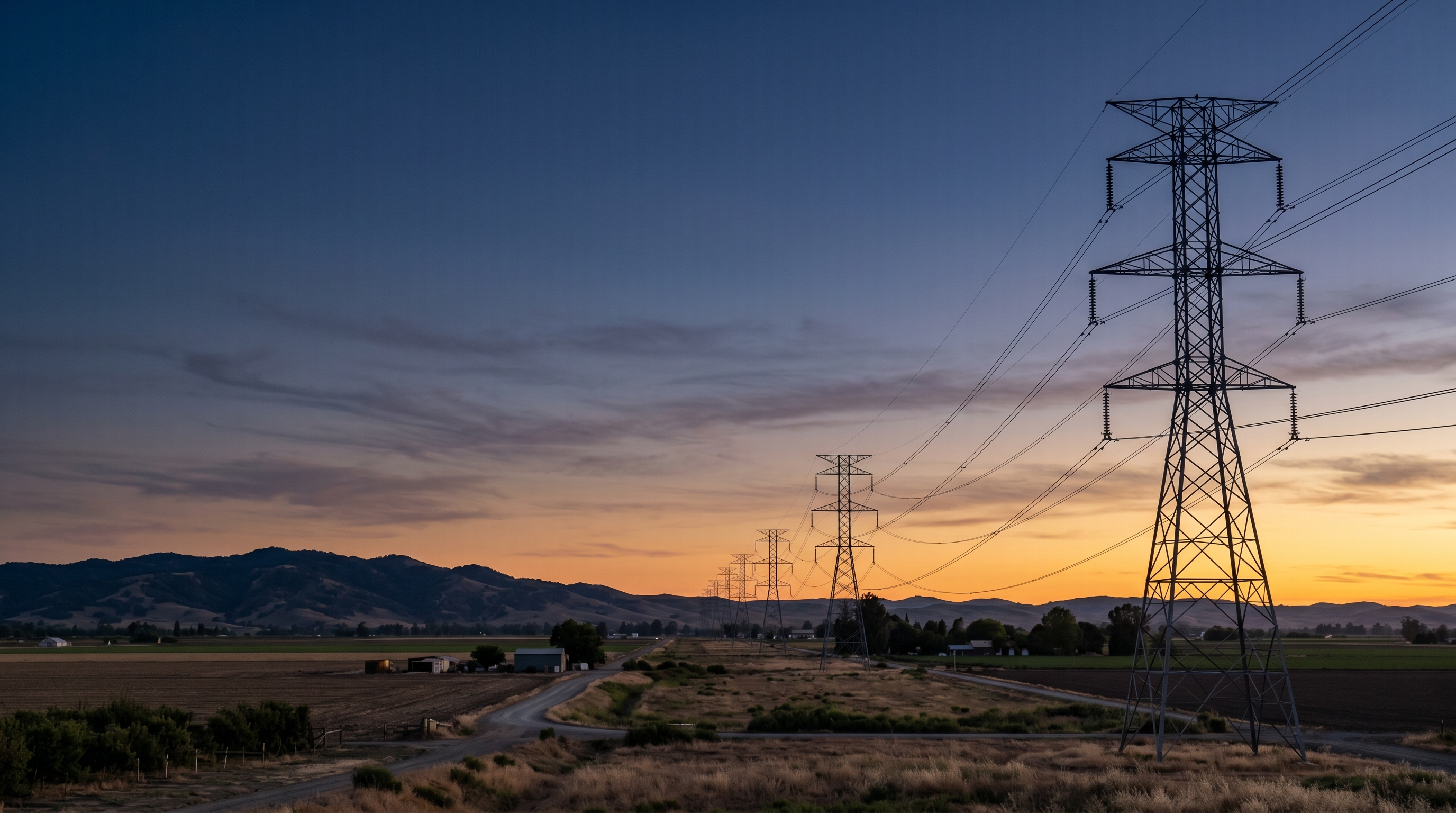
The long-haul piece is Path 15. CAISO identified the need for a new 500 kV line to relieve congestion on that north-south corridor, which has been a chokepoint for moving power between Northern and Southern California for years. The same line opens up renewable development in the Westlands area across Fresno and Kings counties. CAISO flagged that the recommended alternative still needs engineering refinement in next year’s cycle before a final route, so the procurement clock has not started. But the equipment class is now defined.
The urban piece is the Greater Bay Area Tesla-Trimble-Metcalf 230 kV corridor expansion, sized to feed the south Bay Area. That is the same Metcalf node anchoring the LS Power HVDC work already under construction in San Jose. The plan also clears the runway for roughly 45 GW of new solar PV statewide, which carries its own interconnection equipment tail.
The Path 15 transmission upgrade nobody can buy off the shelf
A 500 kV line is not a catalog order. The Path 15 transmission upgrade pulls in the longest-lead, most concentrated equipment in the trade.
Start with the obvious. Bulk-power transformers and autotransformers at 500 kV. Shunt reactors to manage line charging on long EHV circuits. Dead-tank 500 kV breakers. Then the supporting cast: disconnect switches, instrument transformers, surge arresters, protection relays, and the SCADA tie-ins at every terminal. None of that ships fast right now, and a 500 kV class transformer is among the hardest items on the board to source on a tight window.
Here is the part buyers tend to miss. A congestion-relief line gets built because the corridor is already saturated, which means the project competes for the same EHV transformer and reactor slots that every other load-growth project in the West is chasing at the same moment. The CAISO transmission plan does not exist in a vacuum. It lands on top of a national capex surge that has already stretched lead times on exactly these items.
What 500 kV transmission procurement actually requires
The Bay Area 230 kV work and the Silicon Valley HVDC projects make the squeeze sharper. The LS Power Power the Santa Clara Valley project alone carries a cost cap near $1.59 billion and uses VSC-HVDC converter equipment, with an in-service target around 2028.
That matters for one blunt reason. Only three firms build VSC-HVDC converter equipment at this scale: Hitachi Energy, Siemens Energy, and GE Vernova. When California normalizes underground HVDC for urban infeed, every megawatt of converter demand draws from the same three order books that serve the rest of the country. So 500 kV transmission procurement in this plan is really two parallel problems. The conventional EHV gear with its own queue, and the converter and EHV cable systems where the supplier list is short enough to count on one hand.
Substation expansions sit underneath all of it. Each new tie at Metcalf, each Westlands interconnection, each 230 kV terminal needs breakers, bus work, and protection. Those are the items a buyer can actually move on early, while the line routes get refined.
Reading the California grid buildout as a buyer
The instinct when a $6.7 billion plan drops is to wait for the RFPs. That is the wrong read on this California grid buildout.
The projects with firm scope, the 230 kV corridor work and the substation expansions, will procure ahead of the 500 kV line that is still in engineering. A buyer or distributor positioned on breakers, switchgear, instrument transformers, and protection gear can be in the conversation this year. The EHV transformer and reactor demand will arrive on a longer fuse, but the order slots fill from the front, so the firms watching the queue now are the ones who hold an allocation when the line is finalized.
There is also a timing tell in the cost revision. CAISO trimmed the estimate after transmission owners updated their numbers, which signals the owners are already deep in cost discovery with suppliers. That work happens before a public solicitation, not after.
This is the same pattern playing out across the West, where a distribution hardening super-cycle and a broader $1.4 trillion utility capex wave are pulling EHV equipment forward at the same time. California’s competitive process adds its own wrinkle, since CAISO awards many of these lines through the FERC Order 1000 framework rather than handing them to the incumbent utility. And the load behind the whole thing is the same force reshaping equipment demand nationally, as we covered in our look at data center load and grid infrastructure.
The takeaway is narrow and practical. Map your product line against the two anchor projects, sort by which scope is firm versus still in engineering, and get on the early procurement for the substation and 230 kV work now. Waiting for the press release on the Path 15 line means waiting until the slots are gone.
The full picture, project by project with equipment classes, supplier exposure, and the lead-time windows that decide who gets an allocation, is the kind of breakdown we build into our procurement intelligence reports. If you want the buyer’s-eye map of this plan before your competitors finish reading the press release, see how our procurement intelligence works.
The monthly read on where this is heading
CAISO just cleared $6.7 billion in transmission work, and the order sequence, substation gear first, EHV transformers on a longer fuse, is the kind of read worth having before the RFPs post. The Feeder is our free monthly digest of the procurement signals that move utility and distribution equipment buyers: lead-time shifts, supplier capacity, federal funding, and the RFP language that follows. One email a month, no filler.
Related Reading
- Western Distribution Hardening Super-Cycle: 2026 Procurement Through 2037
- FERC Order 1000 Under Fire: Utilities Push to Dismantle Competitive Transmission Bidding
- The $1.4 Trillion Utility Capex Wave and the Transformer Procurement Squeeze
Know what changed before your next quote
Free Member tier. Pick your topics. Get a weekly digest filtered to what you actually buy.