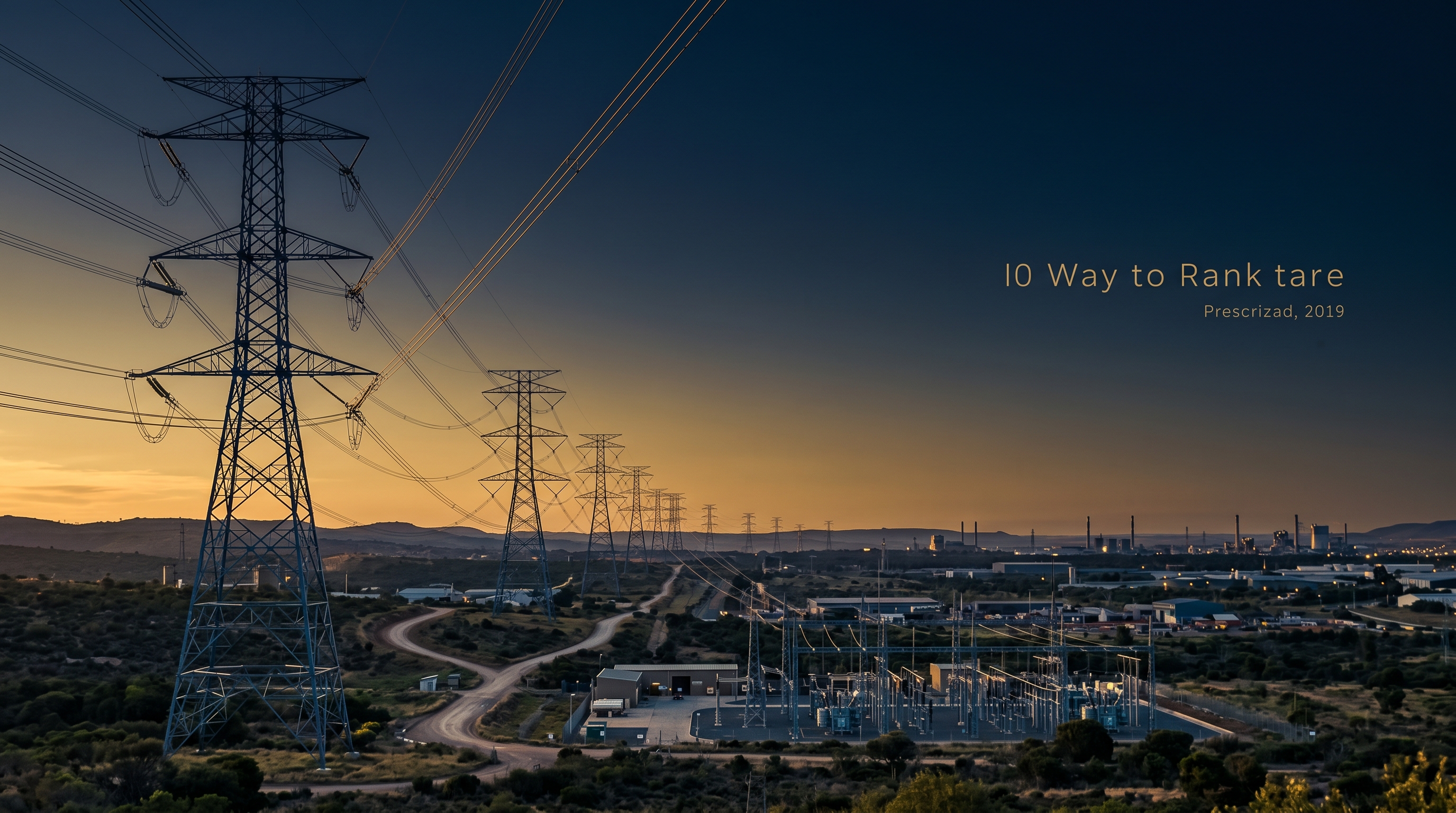
The $1.4 Trillion Utility Capex Wave: What It Means for Transformer Procurement
U.S. investor-owned utilities plan $1.4T in capital spending through 2030, with $686B aimed at T&D. Here is what the new baseline means for transformer lead times, pricing, and sourcing strategy.
A new number that reshapes the procurement conversation
A PowerLines report released on April 13, 2026 puts a specific figure on what procurement teams have been feeling for two years: U.S. investor-owned utilities now plan roughly $1.4 trillion in capital spending through 2030, a 21 percent jump over the $1.1 trillion projected just a year earlier. Latitude Media described the total as equivalent to “three interstate highway systems.” Fortune and CBS News tied it to the data center buildout. Utility Dive framed it as an affordability crisis in the making.
For buyers of transformers, switchgear, and substation equipment, the number matters less for its size than for where it lands. Roughly half of the $1.4 trillion, about $686 billion, is targeted at transmission and distribution infrastructure. That is the exact market where step-up transformers, distribution pad-mounts, medium-voltage switchgear, reclosers, and feeder protection equipment are the core purchase. A 21 percent demand increase is arriving into a supply chain that was already posting 128-week power transformer lead times.
That collision is the procurement story of 2026, and it is worth working through carefully.
Who is actually spending
The top-line number is dominated by a small number of utilities. Per the PowerLines analysis:
- Duke Energy: $102.8 billion (Charlotte, NC)
- NextEra Energy: $94.2 billion (Juno Beach, FL)
- Southern Company: $81.2 billion (Atlanta, GA)
- Pacific Gas and Electric: $73.5 billion (San Francisco, CA)
- American Electric Power: $72.0 billion (Columbus, OH)
The top 10 utilities account for roughly $707 billion, or about 53 percent of the total. The top 5 alone represent $424 billion in planned capital investment over five years.
Regionally, the Southeast leads at $572 billion, reflecting Duke, Southern, and Florida Power and Light territory and the data center cluster in Virginia and Georgia. The Midwest follows at $272 billion (AEP, ComEd, Ameren), the West at $225 billion, and the Northeast at $195 billion. These are not evenly distributed markets, and the competition for manufacturer factory slots will concentrate in the territories above.
Where the T&D money actually goes
Utility capital plans are blunt instruments at the summary level, but the category breakdown is directional. PowerLines and subsequent coverage consistently place the $1.4 trillion allocation at roughly 49 to 50 percent T&D, 30 percent new generation, and 20 percent other infrastructure. Inside the T&D bucket, the equipment categories absorbing the most spend are unsurprising to anyone on a procurement desk:
- Power transformers (substation class, 100 MVA and above), including generator step-up units for new generation interconnection
- Distribution transformers (pad-mount and overhead), with pad-mount crisis dynamics covered in our pad-mount transformer procurement crisis analysis
- Medium-voltage switchgear for substation retrofits and data center campus feeders
- Protection and control equipment, including reclosers, relays, and sectionalizing switches
- Underground cable and conductor for feeder reinforcement
POWER Magazine’s January 2026 Transformers in 2026 analysis sets the baseline that all of this capex pushes against: power transformer lead times of 128 weeks, generator step-up (GSU) lead times of 144 weeks, a 30 percent supply deficit for power transformers and a 10 percent deficit for distribution units. Demand since 2019 is up 274 percent for GSUs, 116 percent for power transformers, and 34 percent for distribution. Roughly 40 million distribution transformers in the U.S. fleet, over half of the installed base, are already beyond their original service life.
Capital plans that assume normal lead times and normal pricing have already been overtaken by the market. The $1.4 trillion figure is what utilities are willing to spend. Whether they can actually take delivery in the planned windows is a separate question.
PJM is the leading indicator
The single clearest signal that capex translates directly into equipment pressure is PJM’s 14.9 GW reliability backstop proposal, filed April 10, 2026. The RTO is seeking a two-phase procurement of new generation resources, matched bilaterally with data center buyers through September 2026 to March 2027, with a central auction in March 2027 for any remaining shortfall. The hard operational deadline is June 1, 2031.
Two numbers inside that proposal matter for equipment buyers. First, the average interconnection cost in PJM has risen 728 percent, from $29 per kW to $240 per kW, driven largely by network upgrade costs in which transformers and substation equipment are the dominant line items. At 14.9 GW and $240 per kW, implied network upgrade spend alone approaches $3.5 billion before any generation facility equipment is ordered. Second, capacity prices in PJM’s December 2025 auction cleared at $329.17 per MW-day, roughly 10x the $28.92 price from two years prior. That clearing price creates the economic basis for utilities and merchant generators to underwrite the equipment procurement required to build out 14.9 GW of new capacity in five years. That is a cycle that historically takes 8 to 12 years.
PJM is one RTO. The same dynamics are visible in MISO’s $2.6 billion substation retrofit allocation, ERCOT’s 765-kV buildout, and Southeast data center campus interconnection queues. The equipment demand these programs imply is compressive; it must happen in a shorter window than the supply chain was built for.
Pricing is no longer the evaluation problem
One of the most consequential shifts for procurement teams in 2026 is that price variance between qualified transformer suppliers has narrowed to the point where it is rarely the deciding factor. Transformer prices are 4 to 6x their 2022 levels. Power transformer prices are up 77 percent since 2019; some distribution classes are up 95 percent. Medium-voltage switchgear prices are up roughly 50 percent since 2021, and circuit breakers are up 47 percent.
Hawaiian Electric’s March 2026 rate case disclosed that a distribution transformer unit that cost $3,730 in 2020 now costs $7,879, a 111 percent increase. Our Hawaiian Electric rate case analysis walks through the regulated-utility math, but the procurement lesson generalizes: the unit cost floor has reset upward, and it is not coming back to 2020 levels.
In this environment, the evaluation criteria that actually determine project success are:
- Delivery confidence: verifiable factory slots, realistic acknowledgment dates, and track record on prior orders
- Specification flexibility: willingness to accept standard primary designs and negotiable secondary features, not custom single-unit runs
- BABA compliance readiness: domestic content certifications available at the unit level, not just corporate-level attestations
- Post-delivery support: commissioning, warranty response, and replacement part availability on 5 to 10 year horizons
Our guide to evaluating transformer bids during long lead times details a weighted scoring framework for this environment. The short version: delivery confidence and total cost of ownership together should dominate the scoring, with pure unit price capped well below half.
Domestic manufacturing is expanding, but not in time
The supply response is real but delayed. Eaton’s $340 million South Carolina transformer facility targets 2027 production. Siemens Energy’s $150 million North Carolina plant is on a similar timeline. Hitachi Energy has committed over $1 billion to North American capacity expansion. ERMCO is expanding in Tennessee and Wisconsin. WEG is building a $77 million facility in Missouri. In the switchgear market, Eaton announced a separate $500 million U.S. expansion in April 2026 with new plants in Bellevue, Nebraska and Henrico County, Virginia, with the latter explicitly targeting the data center alley corridor. Schneider Electric has committed $140 million to U.S. medium-voltage switchgear capacity.
North Carolina has emerged as a particularly concentrated grid equipment manufacturing hub. We covered the $185 million-plus investment base in our North Carolina grid equipment manufacturing hub analysis.
Two things matter for procurement teams reading these announcements. First, production starts are largely 2027 and later. A plant that breaks ground in 2026 does not materially relieve 2026 or 2027 procurement pressure. The meaningful relief window is 2028 and beyond, and even then NEMA’s 2 percent annual demand growth through 2050 means the backlog is structural rather than cyclical. Second, many of these new lines are being optimized for hyperscaler data center and utility scale generator specifications. Hitachi Energy publicly committed to NVIDIA’s 800-volt direct-current architecture for data center transformers. Standard municipal and cooperative orders should expect to compete for factory time that is increasingly configured around large-campus and GSU production runs.
The practical implication is that buyers without hyperscaler-scale buying power should plan 2027 to 2028 orders assuming they are competing for roughly a third of OEM production while the top three hyperscalers consume the rest. The triple squeeze analysis covers the compounding pressures of demand, tariffs, and storm damage that sit alongside this capacity dynamic.
Affordability pressure is the political counterweight
The $1.4 trillion figure is also triggering a parallel political conversation that procurement teams cannot ignore. Residential electricity prices are up 33 percent per kWh since 2019 and roughly 40 percent since 2021. Utilities filed a record $31 billion in rate hike requests in 2025, double the $15 billion requested in 2024. Forty-nine percent of Americans earning under $50,000 now report difficulty paying their electric bills, up from 34 percent in 2023.
Thirteen PJM states have formed the PJM Governors Collaborative to push back on cost socialization, particularly for data-center-driven capacity. State consumer advocates in Maryland, Pennsylvania, and Delaware have filed principles opposing residential cost allocation for large-load upgrades. Southern Alliance for Clean Energy’s Stephen Smith publicly called the $1.4 trillion plan a “gold rush” and warned that data center load projections are “pure speculation” given that current projections would require 90 percent of global chip supply to physically materialize.
For procurement teams, this affordability backlash creates two near-term effects. First, regulators will increasingly scrutinize procurement efficiency, not just prudency. Utilities that can demonstrate competitive sourcing, domestic content compliance, and total cost of ownership discipline will fare better in rate cases than those that cannot. Second, a meaningful subset of the $1.4 trillion is likely to be deferred or cancelled if data center load projections soften. The boom-bust risk is real, and it means overcommitting to single-source factory slots in 2026 carries its own tail risk.
What to do differently this quarter
The $1.4 trillion number does not change the fundamentals of transformer procurement as much as it hardens them. Four near-term moves follow from the data:
- Lock factory slots now for 2027 to 2028 delivery, not 2026 delivery. The 128-week power transformer lead time and 144-week GSU lead time mean that orders placed in Q2 2026 begin arriving in Q1 to Q2 2028. Treat 2026 and 2027 as planning and commitment years, not delivery years.
- Qualify a second and third source on every major class. The domestic manufacturing expansion creates new qualified bidders that were not available in 2022 to 2023. Running a qualification cycle in 2026 positions you for 2028 to 2029 factory availability.
- Document BABA compliance at the unit level now. The Build America, Buy America 55 percent domestic content threshold is administered on a per-product basis. Corporate-level attestations do not substitute for unit-level certification when the funding source audit arrives. Our BABA compliance for transformer procurement guide covers the documentation pattern.
- Model affordability risk into 5-year commitments. If your utility customer base is politically exposed to rate-hike pushback, contracts with fixed take-or-pay commitments in 2027 to 2028 that priced data center growth at 2025 projections carry real deferral risk. Build optionality into the commitment structure where the manufacturer will allow it.
Related reading
- The Triple Squeeze: Record Demand, Tariffs, and Storm Damage Converge
- Hawaiian Electric: When a Transformer Cost Doubled, the Rate Base Reset
- How to Evaluate Transformer Bids During Long Lead Times
- North Carolina Is Becoming a Grid Equipment Manufacturing Hub
- Who Pays for Data Center Grid Costs? The Infrastructure Fight
Our Intelligence Reports go deeper on capacity tracking, BABA qualification by manufacturer, and the specific lead-time and pricing trajectories inside each major utility’s capex plan. If your team is building a 2027 to 2028 transformer sourcing strategy, the reports cover manufacturer-level slot availability, regulatory risk by jurisdiction, and the substitution dynamics between domestic and international supply.
Lead Time Tracker — Q2 2026
Current lead time ranges by equipment class and manufacturer, updated quarterly. Know where the queues stand before you write the spec.
The Grid Brief
Lead times. Pricing shifts. Funding deadlines. Delivered Thursday mornings.