Data Center Nuclear Power: The 100-Day Procurement Update
Data center nuclear power procurement enters a new phase: 13 GW of PPAs, an 800V DC interconnection shift, and SRP's September board vote on Marigold.
Data center nuclear power procurement stopped being a press-release story around the second week of July. In April, Amazon, Google, Meta, and Microsoft had collectively signed for more than 13 gigawatts of nuclear capacity, a Salt River Project board flip put a clean-energy majority in charge of Arizona’s largest public utility, and Vertiv and NVIDIA were promising an 800V DC standard for late 2026. All three read as forward-looking at the time. None of them had a purchase order attached.
Three months later, two of them do. SRP’s new board is voting in September on a 1.675 gigawatt mixed-resource plant with its own substation and four miles of 230-kV line. Hitachi Energy has turned the 800V DC pitch into a named vendor partnership with a lead-time claim attached to it. The nuclear deals are still mostly on paper, but the interconnection studies for the earliest ones are due any quarter now. Here is what changed, and what it means for equipment buyers who aren’t hyperscalers.
13 Gigawatts of Nuclear Power Purchase Agreements Meet a 2028 Deadline
The scale of the commitment is not in dispute. Microsoft signed a 20-year, roughly $16 billion deal to restart the Crane Clean Energy Center (formerly Three Mile Island), targeting commercial operation by the end of 2028. Meta’s nuclear portfolio is larger still: agreements with Vistra, Oklo, and TerraPower toward 7.7 gigawatts, more than any other US company, including a 1.2 gigawatt campus in Ohio. Amazon backed X-energy’s small modular reactor program with a $700 million funding round, chasing 5-plus gigawatts by 2039, and Google split its bet between a 500 megawatt Kairos Power fleet deal and an additional 1.8 gigawatts committed to Elementl Power’s Ohio sites.
None of that capacity interconnects itself. A restarted reactor at an existing plant, like Crane, still needs the substation upgrades that come with adding 835 megawatts back onto a grid that has run without them for years. Site a small modular reactor next to a data center campus instead, and the equipment list looks the same: medium-voltage switchgear, protection relaying, and step-up transformer work, just compressed into a footprint the utility didn’t plan for five years ago. Crane’s 2028 target puts its equipment order window in 2026 and 2027, arriving directly on top of the demand already stacked up ahead of it. The SMR fleets land later in the decade, but the labor and manufacturing-slot competition they create starts now, not when the first reactor goes critical.
The 800V DC Data Center Architecture Just Got a Vendor Stack
The technical case for 800V DC was always straightforward: it moves 85 percent more power through the same conductor size, cuts copper requirements by roughly 45 percent, and improves efficiency enough to matter at gigawatt scale. NVIDIA’s Vera Rubin Ultra Kyber platform set the standard, and Vertiv’s commercial ecosystem around it is due in the second half of 2026. What changed between April and July is that the transition equipment stopped being a roadmap slide and started being a purchasing decision.
Hitachi Energy rebranded its entire data center go-to-market around “speed-to-power” at CERAWeek in March, bundling the 800V DC commitment with prefabricated Grid-eXpand substations and a named partnership: e2Companies designated Hitachi its preferred power-conversion provider, built around a sub-cycle stability platform meant to absorb the load swings AI training clusters put on the interconnection. That prefab substation line is marketed at a 30 to 40 percent lead-time reduction against stick-built construction, though it doesn’t shrink the underlying transformer order any more than modular substations generally do. What it does mean is that the AC-to-DC conversion boundary, the equipment sitting between the utility’s AC distribution and a facility’s DC bus, now has a named vendor stack instead of a concept. For distributors and smaller OEMs, that boundary hardware is the addressable slice of the 800V DC transition. The rest of it happens inside the data center’s fence line.
SRP Marigold Energy Center: The Board Flip Has a Dollar Figure Now
The clearest signal of the three is the one with a calendar date. SRP’s Clean Energy Team won five of seven contested board seats in the April 7 election, on turnout four times the prior cycle, giving renewable-leaning candidates an 8-6 majority over a utility that served roughly 67 percent of its 2024 load from fossil fuels. On July 22, that board got its first big test: staff proposed the Marigold Energy Center, a 600 megawatt solar, 400 megawatt storage, and up to 675 megawatt gas project in Stanfield, Arizona, with its own new substation and four miles of 230-kV transmission, headed for a board vote in September.
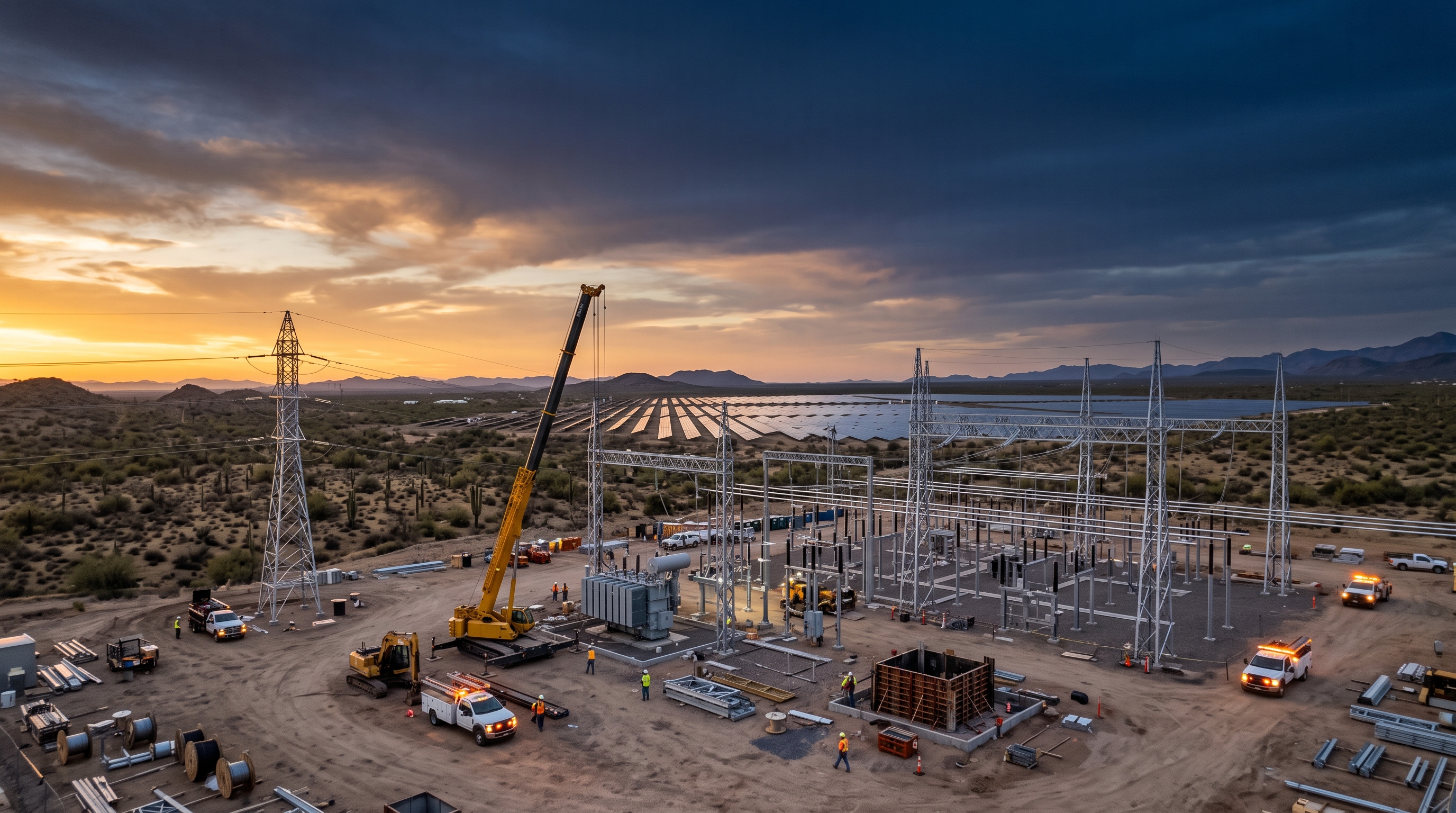
That is a defined equipment scope, not a policy direction. A 1.675 gigawatt mixed-resource plant with a dedicated substation means 230-kV breakers and protection, a collector transformer bank for the solar array, a power-conversion package for the storage, and step-up equipment for the gas turbines, all racing the same manufacturing queues that SRP’s own load-flexibility pilots and every other utility in this cycle are already competing in. There’s a second detail worth watching past the plant itself: Electrical District No. 3, a small Arizona irrigation-and-electrical district, is evaluating an offtake partnership to buy into a share of Marigold rather than build its own generation. It’s the model smaller public power utilities increasingly reach for when they can’t finance or staff a gigawatt-scale project alone, and SRP’s board is now the proof of concept for whether a clean-energy governance shift actually converts into procurement, not just campaign promises.
What Three Signals Mean for Buyers Outside Arizona
None of these three stories is really about Arizona, Ohio, or Pennsylvania on its own. Together, they describe one mechanism approached from three angles that don’t normally show up in the same news cycle. Hyperscaler capital is buying nuclear power purchase agreements. A transformer and switchgear OEM just built a named product stack around the 800V DC transition. And a public utility board that flipped clean-energy three months ago is now voting on a specific, dollar-figured project. Different actors, same order book: transformers, switchgear, and the skilled labor to install them, all drawn from the same limited pool every other utility in this cycle is bidding for.
For a municipal or cooperative buyer with no data center in its territory, the read isn’t “watch SRP.” The three mechanisms reshaping AI-era procurement have all now produced dated, public commitments in the same 100-day window, and the lead-time pressure they create on shared OEM capacity isn’t a future risk to plan around. It’s already in the order book. Treat this the way hyperscaler-owned generation changed who your utility competes against for equipment earlier this year: the names on these orders are unusual, but the transformers, switchgear, and protection equipment they’re ordering are the same catalog your utility draws from.
The Feeder tracks lead times, backlog signals, and capacity moves across the equipment classes muni and co-op buyers actually purchase, and sends the read to your inbox every week. It’s free. Sign up here.
Related Reading
- Hyperscaler-Owned Generation Is Reshaping Data Center Procurement
- Modular Substations: The Data Center Lead-Time Lever
- Data Center Load Flexibility and What It Means for Equipment Spec
Know what changed before your next quote
Free Member tier. Pick your topics. Get a weekly digest filtered to what you actually buy.