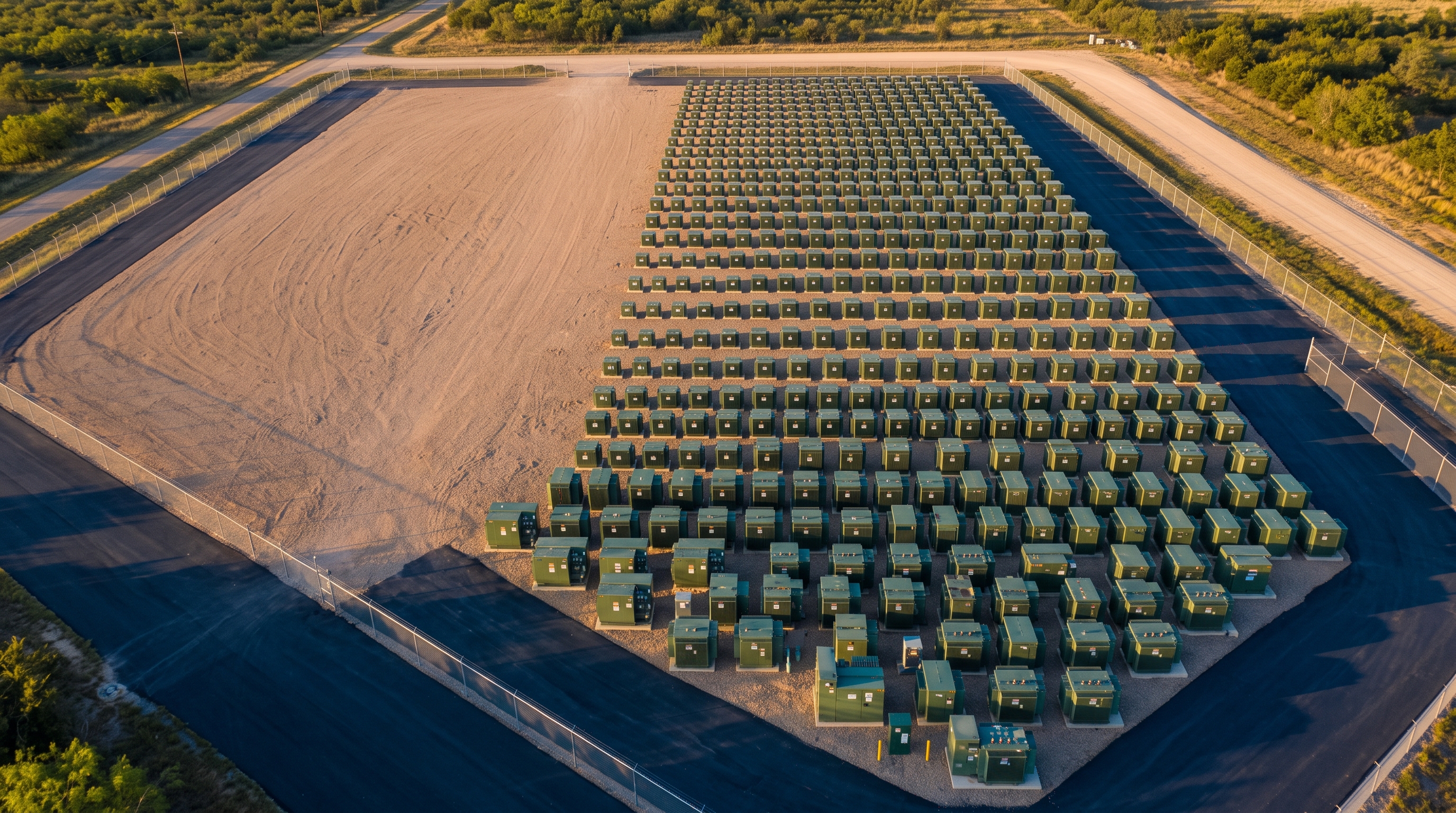
DOE 2029 Transformer Efficiency Requirements, by kVA
DOE 2029 transformer efficiency requirements are uneven by rating. 10 CFR 431.196 holds 300 kVA to a higher efficiency than 500 kVA. Check your ratings.
If you write transformer specifications, the DOE 2029 transformer efficiency requirements have probably reached you as a percentage: something like a quarter of the market moving to amorphous cores. That framing is fine for a board slide and useless at a desk, because it cannot tell you whether the unit on your drawing is in the quarter or the three quarters. The rule does not work in market shares. It works in kVA ratings, and the ratings are public.
Here is the part that gets lost. The April 2024 final rule does not name a core material. Not amorphous, not grain-oriented electrical steel, not anything. It publishes a minimum efficiency for each kVA rating and leaves the material to whoever designs the unit. Everything you have read about amorphous cores is an inference about how manufacturers will hit those numbers, and the manufacturers themselves do not agree on it.
So the useful question is not which material the rule mandates. It is how hard the rule squeezes your rating, because the squeeze is wildly uneven and the unevenness is the whole story.
The Distribution Transformer Core Loss Reduction Is Not Uniform Across 2029
Forgent Power, which describes itself as one of the largest domestic producers of the units in scope, filed a comment in DOE’s reconsideration docket in July 2026 that laid its 2016 and 2029 obligations side by side, class by class, and computed the change in allowable watts. The classes sort into three tiers:
| Class | Total loss reduction required |
|---|---|
| Low-voltage (600V class) dry-type, 15 to 1000 kVA | About 20 percent |
| Liquid-immersed, 300 kVA and below | About 20 percent |
| Medium-voltage dry-type, all BIL classes | About 10 percent |
| Liquid-immersed, above 300 kVA | About 5 percent |
We checked those efficiency values against 10 CFR 431.196 rather than taking the filing’s word for it, and they reconcile exactly. For three-phase liquid-immersed units built on or after April 23, 2029, the table reads 98.92 percent at 15 kVA, 99.22 at 75, 99.38 at 225 and 99.42 at 300. Against the 2016 levels for those same ratings, which are 98.65, 99.03, 99.23 and 99.27, that is the 20 percent bite out of allowable watts.
Then comes the part worth sitting with.
The 300 kVA Line Is Visible in the 10 CFR 431.196 Efficiency Table
Keep reading down that 2029 column past 300 kVA and the required efficiency goes down. Three-phase liquid-immersed units are held to 99.42 percent at 300 kVA and 99.38 percent at 500 kVA. A larger transformer is permitted to be less efficient than a smaller one.
That reversal is new. The 2016 table rose the whole way, 15 kVA through 2500: 99.27 percent at 300 kVA, 99.35 at 500. Efficiency climbed with size, the way an engineer would expect, because larger units have more room for core and copper. The 2029 column gives that up. It steps backward in three places, and the first is 300 to 500 kVA, the same boundary everybody is arguing about in prose. The other two sit at the far top of the range, where 3750 and 5000 kVA are held to 99.54 and 99.53 against 99.55 at 2500, and they have no 2016 counterpart at all because the older table stops at 2500.
This matters because it converts a contested claim into something you can check. You do not have to decide whether Forgent or anyone else is characterizing the scope correctly. Open the regulation, find your kVA rating in the table, and read your own obligation. Above 300 kVA on the liquid-immersed side, the ask is modest and the industry’s own design studies say it is reachable by moving to a better grade of grain-oriented electrical steel. At or below 300 kVA, the ask roughly quadruples.
The mechanism behind the tiers is core loss. Forgent puts core loss at about 88 percent of total loss for low-voltage dry-type units and about 75 percent for liquid-immersed, and the efficiency levels are measured at 35 percent load for dry-type and 50 percent for liquid-immersed. When most of the loss you have to remove sits in the core and the load-loss share is small, a 20 percent cut to the total has nowhere to land except the core steel.
What the Two Biggest Builders Say the 20 Percent Tier Requires
This is where the record splits, and both sides are worth reading because they are arguing about the same units.
Forgent says the 20 percent tier cannot be met on conventional grain-oriented electrical steel. Its filing walks through why the shift is more than a material substitution: amorphous ribbon winds into a rectangular core cross-section rather than a round one, which it says makes those units more susceptible to failure during short-circuit faults, and the material has lower saturation flux density and a lower maximum operating temperature, so cores have to run cooler and carry more material. Coil winding, core assembly and design validation all change. Forgent asked DOE to delay the standards for units that require amorphous steel “until the later of 2032 or 36 months after adequate supply” of that steel exists, and noted that one domestic supplier serves the entire market.
Howard Industries, writing five days later in the same docket, says the premise is wrong. Its filing states that “nothing in the April 2024 Final Rule requires amorphous steel” and that the final standard “was modified to provide for more use of silicon steel than the original proposed standard.” Howard says it has been building amorphous-core transformers since 1980 and has more than 300,000 in service, and its position is that the future market will use several magnetic materials depending on application rather than converting wholesale to one.
Two of the largest domestic builders of these units, filing in the same proceeding within a week, do not agree on what the standard physically requires. Neither is bluffing and both have money on the answer. For a buyer that is not a reason to pick a side. It is a reason to write the spec so it does not depend on the answer, which is the same discipline that or-equal language exists to enforce.
Efficiency Levels Are Not the Thing at Risk. The Date and the Scope Are.
DistroForge has been saying since June that a compliance-date slip is a likelier outcome than a repeal of the efficiency levels, and that federal anti-backsliding law is the reason. What the reconsideration docket adds is the citation, put on the record by the trade association whose members stand to gain most from the opposite answer.
NEMA’s comment points DOE at 42 U.S.C. 6295(o)(1), which provides that DOE “may not prescribe any amended standard which increases the maximum allowable energy use, or … decreases the minimum required energy efficiency, of a covered product.” NEMA’s conclusion: “any future rulemaking related to distribution transformers cannot result in a less stringent standard than that established in the April 2024 rule.” That is NEMA’s reading of the statute and not a ruling by DOE, but it is a reading the rest of the record behaves consistently with. The Edison Electric Institute, which does want relief, opens its ask with the words “Rather than repeal” and requests flexibility on the April 23, 2029 compliance deadline and on scope.
Read the outcome space that way and it is asymmetric by construction. The levels can hold or rise. They are not supposed to fall. What remains genuinely open is when compliance starts and which classes it reaches, which is precisely why the 300 kVA boundary is the number to watch rather than the efficiency percentages.
NEMA’s own position on timing cuts against the manufacturers asking for room, and it is worth knowing where the trade association actually stands. NEMA told DOE that reopening the rule, “including making changes to the implementation date,” would increase rather than reduce the risk of production problems. Separately it has asked Congress, through the Home Appliance Protection and Affordability Act (H.R. 4626), to take the question away from DOE altogether. Section 3 of that bill would bar the Secretary from prescribing any new or amended efficiency standard for distribution transformers, while expressly leaving standards issued before enactment untouched, and Section 2 strikes the periodic-review requirement that covers transformers. Lock the current levels in, stop the clock on revisiting them.
What To Do With This Before the Next Bid
The DOE 2029 transformer efficiency requirements are already in the current Code of Federal Regulations, so none of this waits on the reconsideration. Three things, none of which require guessing how the proceeding ends.
Sort your standard ratings against the 300 kVA line. For most munis and co-ops, the overwhelming majority of annual transformer volume is single-phase and three-phase pad-mount and pole-mount well under 300 kVA, which is the tier carrying the 20 percent cut and the whole materials dispute. If that describes your buy, the outcome of this docket reaches you directly. If your exposure is concentrated in larger liquid-immersed units, it mostly does not.
Stop writing core material into specifications. The rule does not, and a spec that names amorphous or grain-oriented steel converts a performance requirement into a sourcing constraint on a supply base that is actively disputing which material it will use. Specify the efficiency obligation by rating and let the bidders solve it. That also keeps a compliance-date change from invalidating the document.
Ask bidders which tier they think your ratings sit in. The disagreement in the record is a live disagreement inside the manufacturing base, so the answer tells you something about the bidder. A supplier that has tooled for one material has a different risk profile from one that has kept both lines, and after April 23, 2029 that difference shows up as delivery risk rather than as a design detail. The questions belong in the technical response, alongside the ones covered in evaluating transformer bids on long lead times.
The DOE 2029 transformer efficiency requirements have been discussed almost entirely as a percentage of a market. They are written as a table of kVA ratings, that table is public, and the argument everyone is having is legible in it.
Related Reading
- DOE Reopens the 2024 Transformer Efficiency Rule covers the reconsideration itself and where each filer landed.
- The State of Transformer Procurement in 2026 is the wider procurement picture these standards land on.
- Transformer bushing lead times covers the component-level version of the same specification problem.
Track This Docket Without Reading It
Docket EERE-2026-BT-STD-0133 will produce an outcome that lands on specifications written years earlier, and the trade press is covering it in market percentages rather than kVA ratings. The Feeder is our free monthly read on what changed in federal grid equipment policy and what it does to a purchase order. One email a month, no charge. Subscribe to The Feeder.
Frequently Asked Questions
Which transformers do the DOE 2029 efficiency requirements actually squeeze?
Unevenly. Against the 2016 levels, low-voltage (600V class) dry-type units and liquid-immersed units rated 300 kVA and below need roughly a 20 percent cut in total losses. Medium-voltage dry-type needs about 10 percent. Liquid-immersed units above 300 kVA need about 5 percent. Those figures are Forgent Power's arithmetic on its own filing, and the underlying efficiency values match 10 CFR 431.196.
Does the 2029 rule require amorphous cores?
The rule text names no core material at all. It sets minimum efficiency by kVA rating and leaves the material to the designer. Two large domestic manufacturers disagree about what that means in practice: Forgent says the 20 percent tier cannot be met on grain-oriented electrical steel, Howard Industries says nothing in the rule requires amorphous steel.
Could DOE simply lower the 2029 efficiency levels?
NEMA told DOE it cannot, citing 42 U.S.C. 6295(o)(1), which bars DOE from prescribing an amended standard that decreases the minimum required energy efficiency of a covered product. On NEMA's reading, any future transformer rulemaking cannot land below the April 2024 levels, which leaves the compliance date and the scope as the parts genuinely in play.
When is the compliance date?
April 23, 2029. That date is written into 10 CFR 431.196 as the boundary between the 2016 efficiency tables and the new ones.
Free RFQ templates. Weekly digest. Yours.
Free Member tier. Pick your topics. Get a weekly digest filtered to what you actually buy.