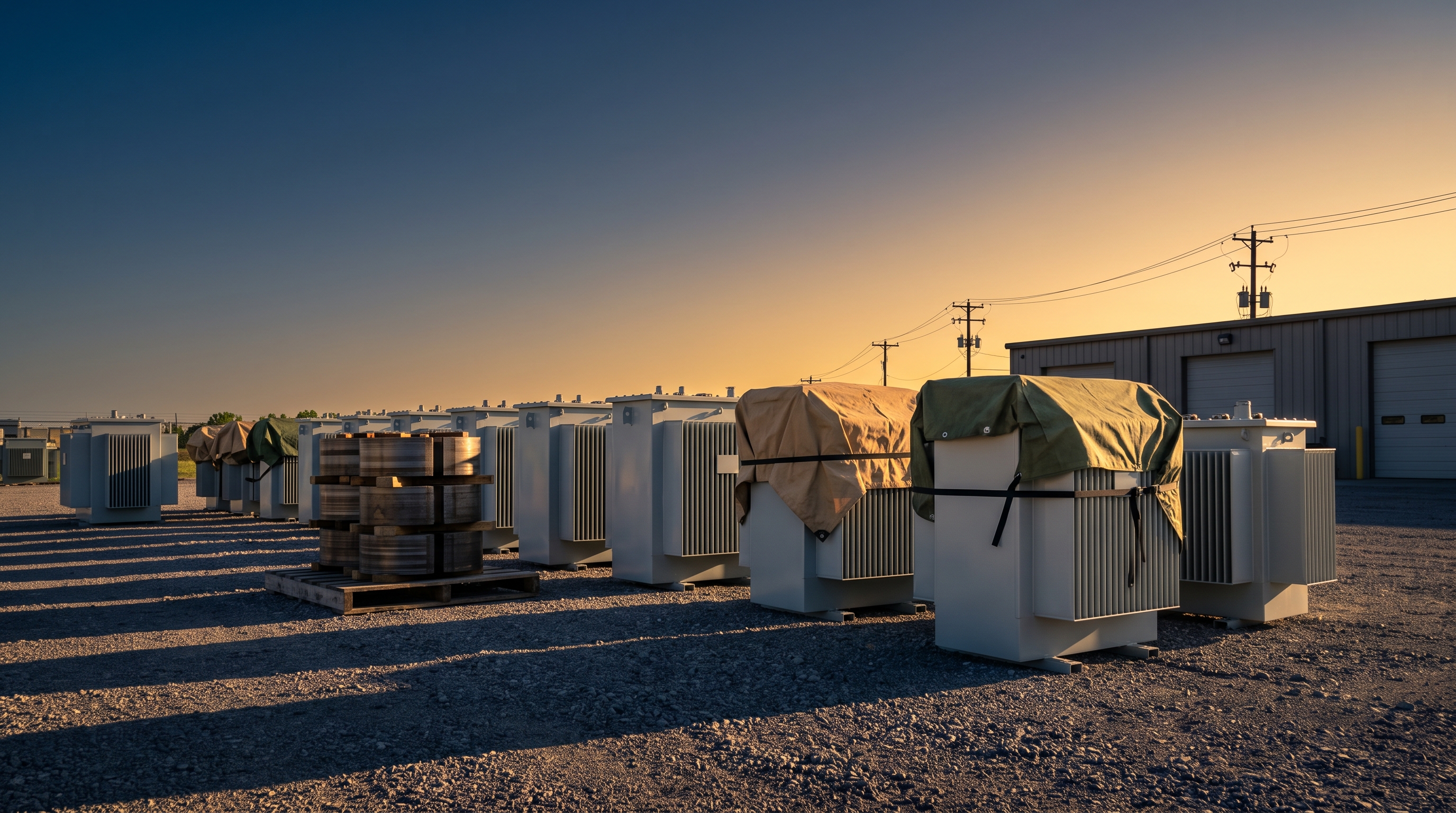
DOE Reopens the 2024 Transformer Efficiency Rule
DOE reopened the distribution transformer efficiency standards on national security grounds. The comment record says repeal is not the risk. The date is.
The Department of Energy has reopened the rule that settles what a distribution transformer core is made of. On June 15, 2026, DOE published a Request for Information in the Federal Register under docket EERE-2026-BT-STD-0133, asking whether its 2024 distribution transformer efficiency standards threaten national security, domestic manufacturing capacity, and the availability of key materials. Coverage has read this as the opening move toward a repeal. The comment record says something more useful and more specific, and it changes what a 2027 purchase order should say.
Two facts frame everything that follows. The comment period closed on July 15, 2026, so the window to influence the record is already shut and this is not a call to file anything. And the parties that fought DOE’s original 2023 proposal, won a compromise in 2024, and would be the obvious beneficiaries of a rollback are the ones now filing against repeal.
What the 2024 Transformer Efficiency Rule Actually Does
DOE issued the final rule on April 4, 2024, with compliance required for units manufactured on and after April 23, 2029. The stakes are narrower than the headlines suggest.
DOE’s 2023 proposal would have pushed roughly 95 percent of the distribution transformer market onto amorphous alloy cores, a material with a thin supplier base that several domestic plants were not tooled to run at volume. The final rule pulled that back. About 75 percent of the market can comply on grain-oriented electrical steel, which leaves up to a quarter of new units needing amorphous cores by 2029 (America’s Electric Cooperatives, April 2024). DOE also stretched the compliance runway from three years to five, and scored the standards at $824 million per year in electricity cost savings.
So the fight now open at DOE is not about whether efficiency standards exist. It is about that remaining quarter of the market: which ratings and which classes get pushed onto amorphous cores in April 2029. A revision most likely re-expands the share that can be built on the steel supply chain buyers already know. It does not cancel the floor.
The National Security Case Is a Determination We Have Already Covered
The most misread part of this proceeding is where the national security framing comes from. It is not a DOE finding. It traces to a Presidential Determination issued April 20, 2026 under Section 303 of the Defense Production Act, which found that grid infrastructure supply chains, naming distribution transformers and electrical core steel specifically, are essential to national defense.
That is the same determination we analyzed in April as a supply-side subsidy instrument (DPA wartime powers and the transformer shortage). At the time the procurement question was whether federal purchase commitments would shorten anyone’s place in line. The RFI is that determination producing a second and opposite kind of effect: the same national security finding used to justify loosening a standard rather than funding capacity to meet it.
Two things follow for anyone weighing how seriously to treat this. The security framing was set at the White House level, not invented by an agency, so it is durable and will not evaporate with a change of personnel at DOE. But a DPA determination is not authority to amend an efficiency standard. That authority sits in the Energy Policy and Conservation Act, and the RFI’s language tracks it closely by asking whether the standards impose “special hardship, inequity, or unfair distribution of burdens,” which is the statutory hook DOE would need to amend or delay. The determination supplies the reason. EPCA supplies the mechanism, and EPCA also bars DOE from making an existing standard less stringent.
The Manufacturers Are Split, and the Split Runs Along Who Already Spent the Money
This is the finding worth planning against. Read the filings by who wants what, and the usual regulator-against-industry split is inverted.
| Party | Position on reopening the rule |
|---|---|
| Edison Electric Institute | Opposes repeal. Asks for greater flexibility on the compliance timeline “and/or scope.” Names no duration anywhere in the filing |
| NRECA | The rule “strikes the right balance” |
| APPA | Seeks no changes. Recommends monitoring amorphous steel development |
| NEMA | DOE should “refrain from actions that would disrupt the certainty of the 2024 rulemaking” |
| Electric Research and Manufacturing Cooperative | A “reasonable, balanced, and achievable pathway” |
| Howard Industries (manufacturer) | Opposes delay. DOE “should preserve the May 2029 compliance date” |
| Forgent Power / MGM Transformers (manufacturer) | The record’s only concrete date ask: delay “until the later of 2032 or 36 months after adequate supply” of amorphous steel |
| Cleveland-Cliffs | The lone significant voice for revision |
Cleveland-Cliffs is the sole North American producer of grain-oriented electrical steel, and its filing is the national security argument in miniature. Cliffs says the 2024 standards will weaken domestic supply chains and discourage further investment in domestic steel capacity, and that amorphous metal is produced in very limited volumes and made from imported feedstock. Whatever else is true, that argument is internally consistent: a rule that shifts a quarter of the market off the only domestically produced core material is a rule that shrinks that producer’s market.
Set the filings side by side and the split is not regulator against industry. It is manufacturer against manufacturer, and it runs along who already spent the money. Howard Industries, which calls itself the largest domestic manufacturer of distribution transformers, opposed the 2024 rule during the rulemaking, accepted it once it was final, and now asks DOE to preserve the date. It puts its compliance spending at more than $180 million, including $100 million on amorphous capacity in Quitman, Mississippi, and argues that revising the rule now would strand that investment and reward the manufacturers who held off. Forgent Power, one of the largest domestic producers of the units actually in scope, says 2029 is too soon for the technology change and asks for the later of 2032 or 36 months after adequate amorphous supply. The utility bloc sits between them asking for flexibility without naming a number. Every one of them defends the efficiency levels. That still points at one outcome more strongly than the others: slippage or softening of the compliance date rather than repeal of the efficiency levels. Those are not variations on the same risk. They call for opposite procurement postures, and a buyer who prepares for a repeal that does not arrive has made the more expensive mistake.
The two manufacturers also disagree about what the rule physically requires, and that is the more useful disagreement for anyone writing a spec. Howard says nothing in the April 2024 final rule requires amorphous steel at all, and that the final standard was modified to allow more silicon steel than the 2023 proposal would have. Forgent names the boundary where that stops holding: 600V-class dry-type transformers and liquid-immersed transformers rated 300 kVA and below are the classes it says have to move off grain-oriented electrical steel and onto amorphous cores, and it argues the sole domestic amorphous supplier will not have the capacity by 2029 to serve even one large manufacturer. Two of the biggest domestic builders, filing in the same docket five days apart, do not agree on which units the standard forces onto a new core material. Forgent’s tables use three-phase ratings, and the single-phase column of 10 CFR 431.196 puts its heavier cut at 167 kVA and up instead, so check your ratings by phase as well as kVA before assuming this reaches your buy.
There is no EEI number to find, and that is worth more than the number would have been. We pulled the filing. EEI asks for greater flexibility “with the compliance timelines and/or scope” and never names a duration, framing the ask as “an extension, a phased implementation approach, a mechanism for individualized relief where warranted, or another appropriate structure.” Individualized relief is not a blanket slip. A spec written to one specific new date assumes a branch of the outcome tree that the largest utility bloc did not actually ask for. The only concrete date in the whole record belongs to a manufacturer, and it is conditioned on amorphous supply rather than on the calendar.
The Amorphous Core Transformer Requirement Is the Real Exposure
Strip out the politics and three outcomes remain, each with a different consequence for a 2027 or 2028 order.
If the RFI dies quietly and no proposed rule appears, April 23, 2029 holds and that quarter of the market genuinely needs amorphous cores. Amorphous ribbon supply becomes the binding constraint in 2028, well before the deadline, because the domestic supply base for it is narrow.
If the compliance date moves, which the record makes the most likely single outcome, anyone who committed early to amorphous-capable designs to de-risk 2029 has spent that effort ahead of a deadline that receded. Anyone who standardized on grain-oriented steel gets a reprieve.
If DOE revises the efficiency levels toward grain-oriented steel, the amorphous question largely leaves the spec, and the domestic steel investment case that Cliffs is arguing for gets stronger.
Notice what those three have in common. In every one of them, the core material named in a specification written today can turn out to be the wrong one, through no decision of the buyer. That is the exposure, and it is a contracting problem rather than an engineering one.
The Spec Clause That Survives All Three
The single change worth making this quarter costs nothing: stop hard-coding the outcome.
A specification that reads “meets 2024 DOE standards effective April 23, 2029” is a specification that can be overtaken by a proposed rule the buyer had no part in, on equipment already in a queue. At the lead times this market is running, a unit ordered in 2027 is built inside the compliance window (current transformer lead times). Naming a fixed core type makes it worse, because it converts a regulatory question into a sole-source one, the same failure mode that turns a bushing spec into a multi-year delivery (component spec traps).
Write a regulatory-change provision instead. Let the efficiency basis follow the rule as amended at the time of manufacture, require the manufacturer to certify as-built efficiency at delivery, and tie any cost adjustment to core material rather than to a named core technology. That language is correct under all three outcomes above, which is the only useful test for a clause written into a proceeding that has not resolved.
Keep speccing to the 2029 floor in the meantime. No delay has been proposed, and treating the date as soft before DOE says it is carries its own inventory risk. Our DOE 2029 Transformer Efficiency Standards Guide tracks the rule and now carries this proceeding, and the FY27 budget analysis covers the political pressure DOE is acting under.
What to Watch
The tripwire has half fired. When we wrote in June that the signal to watch was a DOE proposed rule touching 10 CFR Part 431 Subpart K, this RFI was four days from publication. An RFI is not that proposed rule, and the distinction is the whole analytic value here: most coverage of this proceeding blurs an evidence-gathering notice into a rulemaking, and they are separated by a decision DOE has not yet made.
Watch for a notice of proposed rulemaking in the Federal Register referencing the April 2024 final rule. That filing, and not the RFI, is what converts a compliance-date delay from the likeliest outcome into a scheduled one. Until it appears, the correct read is that the efficiency levels are probably safe, the date is probably not, and the spec should be written so that either way it holds.
Related Reading
- DOE 2029 Transformer Efficiency Standards Guide
- Trump’s DPA Wartime Powers and the Transformer Shortage
- DOE IIJA Budget Cuts and Grid Funding in FY27
Track This Proceeding Without Reading Dockets
Federal filings like EERE-2026-BT-STD-0133 move quietly and land on specs written years earlier. The Feeder is our free weekly read on what changed in federal grid equipment policy and what it does to a purchase order. One email a week, no charge. Subscribe to The Feeder.
Frequently Asked Questions
Is DOE repealing the distribution transformer efficiency standards?
Not yet, and the public record argues against it. DOE opened a Request for Information under docket EERE-2026-BT-STD-0133, published in the Federal Register on June 15, 2026. An RFI is the evidence-gathering step before a rulemaking and commits DOE to nothing. Every major utility and manufacturer association that filed asked DOE to keep the efficiency levels.
What is the DOE 2029 transformer compliance date?
April 23, 2029. The date applies to when a covered distribution transformer is manufactured or imported, not when the purchase order was signed. At current lead times, orders placed from 2027 onward are built inside the compliance window.
Does the 2024 rule force amorphous cores?
For most units, no. DOE's 2023 proposal would have pushed roughly 95 percent of the market toward amorphous alloy cores. The 2024 final rule pulled that back so about 75 percent of the market can comply on grain-oriented electrical steel, leaving up to a quarter of new distribution transformers needing amorphous cores by 2029.
What should buyers change in their specs right now?
Stop hard-coding a fixed core type or a fixed compliance date. Write a regulatory-change provision that lets the efficiency basis follow the rule as amended, and tie any cost adjustment to core material rather than to a named core technology.
Know what changed before your next quote
Free Member tier. Pick your topics. Get a weekly digest filtered to what you actually buy.