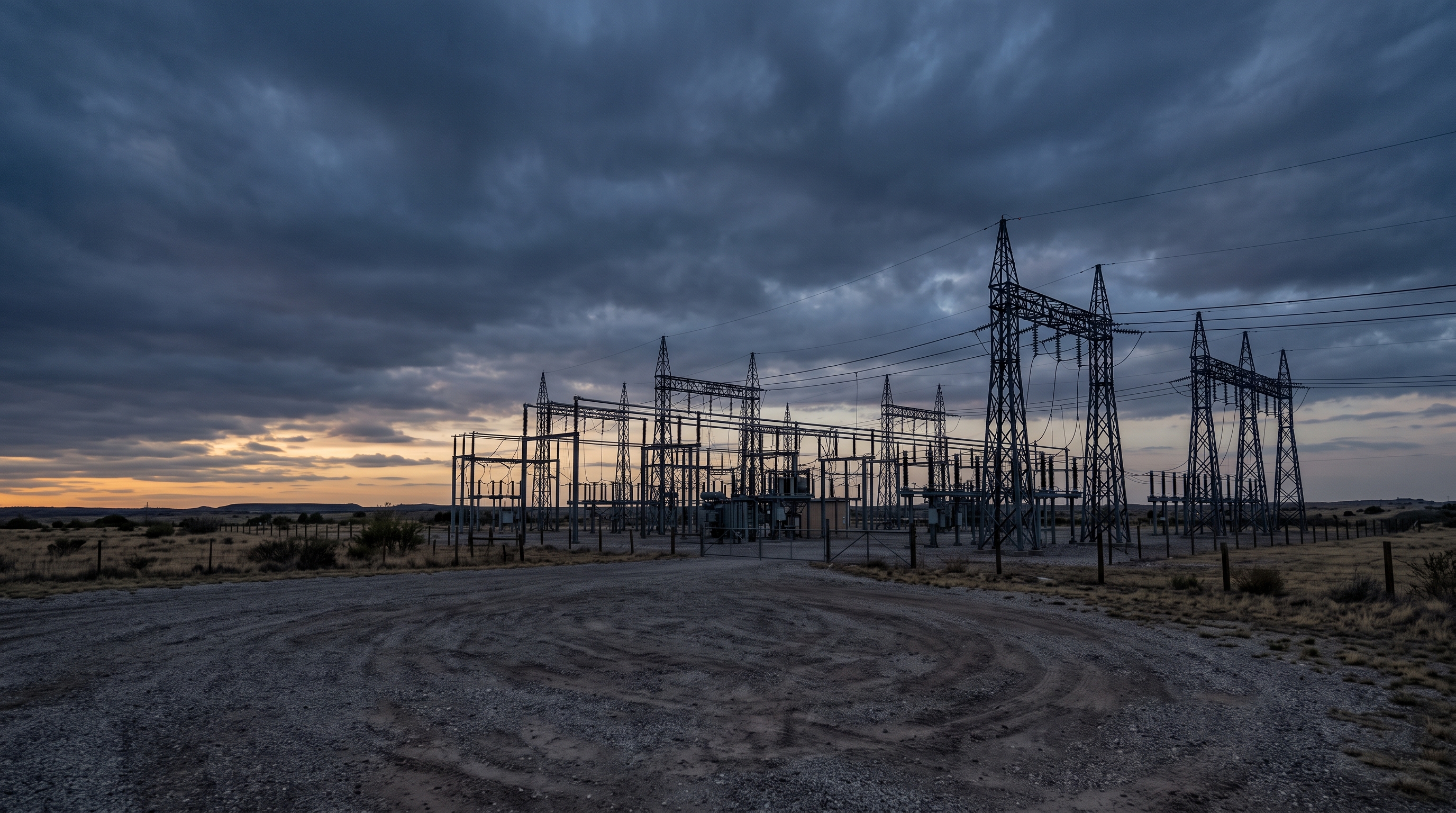
ERCOT Data Center Interconnection Pause: The Deposit Trap
The ERCOT data center interconnection pause froze Batch Zero with hundreds of millions in deposits posted. ERCOT now says the study slips past April 2027.
On August 3, Governor Greg Abbott directed the Public Utility Commission of Texas and ERCOT to audit every data center moving through the interconnection process, and to approve no new ones until that audit clears. The ERCOT data center interconnection pause that followed is not a ban and it is not a moratorium. It is a hold on a process, and the process it holds is two months old. The PUCT approved ERCOT’s Batch Zero large-load study in June. The state built the gate and froze it before running it once.
The coverage has settled on a number: 474 GW of interconnection requests sitting in the ERCOT queue, roughly five times the 91.3 GW record peak the Texas grid actually served last summer, about 90 percent of it data centers. That number is real and it is the wrong one to plan against. The number that matters to anyone who sells, specifies, or interconnects equipment is 9 GW, and the reason is worth more than the headline.
Underneath the pause sits a second story that has gotten almost no attention, and it is the one with money in it. Entry into Batch Zero required a deposit of $50,000 per megawatt. That money is already posted. The terms governing whether any of it comes back are being rewritten while the queue is frozen.
The ERCOT interconnection queue holds 474 GW. Only 9 GW is exposed
BloombergNEF tracks roughly 50 GW of Texas data center capacity and segments it by development stage: 36 GW early-stage, meaning newly announced or in preliminary planning; 9 GW committed, with land, power, and approvals confirmed; and 5 GW physically under construction. Roughly 72 percent of the tracked pipeline is speculative. BNEF’s own independent forecast, 17.2 GW installed by 2030, corroborates the segmentation from the other direction.
Read against that split, the question of what actually froze answers itself. The 5 GW under construction already has its gear ordered and, in most cases, an executed interconnection agreement. A hold on new approvals does not un-approve them. The 36 GW of early-stage announcements was never going to become a purchase order this decade. The 9 GW committed tranche is the genuinely exposed one: far enough along to have capital committed and long-lead equipment specified, not far enough along to be grandfathered.
This is a house pattern worth stating plainly, because it recurs in every RTO. Interconnection queue gigawatts are an option book, not a demand forecast, and the ratio between the two is routinely five to one or worse. A queue position costs a deposit and a form. Anyone sizing transformer, switchgear, or substation demand off a queue total is sizing off the wrong quantity. We made the same argument when PJM reopened its queue to 220 GW across 800 projects, and the discipline holds here.
Oncor supplies the cleanest confirmation. In its second-quarter materials the utility reported 298 GW of load in service requests, up from 289 GW in the first quarter, with 44 GW qualified for Batch Zero. It also told investors that Batch Zero capital will not enter its capital plans until at least 2027. Oncor has better information about these projects than any outside analyst, and it is declining to underwrite the load. Meanwhile the $5B of Permian Basin transmission inside its $47.5B capital plan proceeds on schedule, because oil and gas electrification load shows up. The distinction Oncor is drawing between those two categories is exactly the distinction a raw queue number erases, and it is the same discount every utility disclosure needs before it can be planned against. We set out how to apply it in data center load pipeline versus contracted.
ERCOT Batch Zero paused: the deposits are the part nobody is reading
Batch Zero entry costs $50,000 per megawatt in financial security. A 500 MW campus has therefore posted $25 million. Reuters reported that some individual companies have more than $100 million at stake and that hundreds of millions are affected in aggregate. The aggregate has not been disclosed, and nobody should invent one.
Today, 20 percent of that financial security is nonrefundable. A draft PUCT rule under consideration in September would raise the nonrefundable share to as much as 80 percent. That is an inversion, not an increase, and it is where most of the reporting goes wrong.
Two figures are circulating and they look contradictory. Some coverage says the current nonrefundable portion is 20 percent. Law firm analyses of the proposed large-load rules say a withdrawing project is eligible for a refund of only 20 percent of the remaining per-megawatt balance, with the other 80 percent retained to benefit ratepayers. Those describe different regimes, not a conflict. The first is current practice. The second is the proposal. If you are reading a summary that does not say which one it means, it is not a usable summary.
The proposed rules apply to loads of 75 MW and above, the threshold set by Senate Bill 6, which Abbott signed in June 2025 and which handed the PUCT the job of rebuilding large-load interconnection from the ground up. Under the proposal, a project that withdraws or misses milestones past a six-month grace period pays all incurred utility costs, forfeits 80 percent of the remaining security to the utility’s rate base, and recovers the balance in full only after sustaining operations at contracted peak demand for five years.
The retroactivity question nobody is asking cleanly
Deposits were posted under one set of terms. The September draft would rewrite those terms while the queue is frozen by a state action entirely outside the depositor’s control. Whether money already posted can be governed by rules written after the fact is a live question and it is unanswered.
The second-order effect is the part that should interest anyone watching this. A rule that makes withdrawal dramatically more expensive, announced a month before it takes effect, gives every depositor a reason to withdraw now. A measure designed to filter speculative requests could push out serious ones instead, during a pause that already prevents anyone from advancing. As John Crossley of K&L Gates put it, the rub is that nobody knows how long this will be delayed.
BNEF estimates the pause puts about 49.8 GW at risk of delay, close to 20 percent of the 253 GW US data center pipeline, with developer revenue losses potentially reaching $8B by the first quarter of 2027. That figure is derived from colocation and AI compute lease benchmarks and it measures foregone rental revenue for developers. It is not grid investment and it is not equipment spend. It will be misquoted as both within a week.
Texas now has two things in regulatory limbo at once
The ERCOT data center interconnection pause did not land in a vacuum. ERCOT’s $33B STEP transmission program, including the first 765-kV projects filed by Oncor and LCRA, is still awaiting full PUCT approval and is being contested in the legislature. Texas now has both its transmission buildout and its interconnection queue suspended pending regulatory action, at the same time, with no published end date for either.
For buyers who will never touch 765-kV equipment, that matters because the same OEMs and the same line crews serve the 345 kV, 138 kV, and distribution-class work. A schedule that slips at the top of the stack does not free capacity on a predictable timetable. It bunches it. The whipsaw is the risk here, not the freeze: near-term relief in competition for delivery slots, followed by a worse backlog when deferred projects release together.
A large load interconnection delay when you are the counterparty
Most municipal utilities and cooperatives are not posting ERCOT deposits. Many are, or soon will be, the counterparty to a large-load interconnection: a data center in a municipal service territory, a co-op fielding an AI or crypto load request. Four things transfer directly.
Read the forfeiture and refund terms before anyone posts, and confirm in writing whether they can be amended mid-queue. If the tariff or agreement permits unilateral amendment, the deposit is not the fixed cost it appears to be.
Ask explicitly whether a regulator-caused pause tolls the milestone clock. A six-month grace period is short when the delay is political and outside the customer’s control. In Texas that question is live and unanswered, which is precisely why it belongs in the agreement rather than in a footnote.
Know where forfeited security goes. Under the Texas proposal it flows to the utility’s rate base. For a municipal utility that is a real consideration and an unreliable one, and it should never be modeled as expected income.
Treat a five-year sustained-operation condition as a long-term encumbrance rather than a deposit. It is closer to a performance bond than to earnest money, and it should be underwritten that way.
The broader precedent is the durable takeaway. A governor unilaterally paused an interconnection process mid-cycle and the grid operator complied within days, missing a published deadline in the process. Any large-load interconnection commitment now carries political suspension risk that was not priced a month ago. That connects directly to the financial assurance and termination-tail provisions we covered in H.R. 9340 and the Ratepayer Protection Act, and to the cost-allocation approach Pennsylvania took with its large load tariff. Those are the contractual answers to the risk Texas just demonstrated.
The audit now has a target date. The queue restart still does not
ERCOT missed its August 7 deadline to notify transmission and distribution providers of Batch Zero classifications, and asked the PUCT for a good-cause exception on those timelines. The commission granted it at the August 20 open meeting. What that checkpoint settled is narrower than it looked in advance. The exception covers the August 7 classification deadline. It did not touch the April 9, 2027 deadline for Batch Zero study results, and ERCOT has not asked it to, because ERCOT does not yet know how the pause affects the study timeline. One deadline moved and the load-bearing one did not.
The audit itself now has a target. Chad Seely, ERCOT’s senior vice president of regulatory policy and general counsel, told the commission that “our goal is to head toward a December 10 filing,” with the eligibility verification and community impact reports delivered about a week before the December open meeting. Read that as an ERCOT intention rather than a rule, because no commission order adopts December 10 and nothing binds ERCOT to it. The nearer step is more informative: requests for information go to provisionally qualified Batch Zero loads starting at the end of August, and Seely allowed for “additional rounds of RFIs” through October and November. Rounds two and three are not how a process that closes in December usually behaves.
The date worth writing down is the one ERCOT ruled out. “We will not have the study done by April 9, 2027,” Seely said, adding that ERCOT is “still working on what that new timeline might be.” An audit filing target now exists. A restart date for the queue still does not, and the two are different events. Only the study gates energization.
That gap is the part worth acting on, because the most quoted estimate in this story sits on the wrong side of it. BNEF models a three month delay that shifts capacity additions from the third quarter of 2026 through the first quarter of 2027 into the second quarter of 2027. The second quarter of 2027 begins April 1. The study is an upstream prerequisite to energization and ERCOT has now said it will not be finished by April 9. Either BNEF is modeling projects that clear outside Batch Zero, or the estimate is low. For anyone buying equipment against this, three months is a floor and not a forecast.
The September rulemaking on the nonrefundable percentage is unaffected by any of it and remains the second date that matters. Together the two determine whether the ERCOT data center interconnection pause stays a regulatory delay or becomes litigation. What has changed since August is the shape of the interval rather than its length: it now has a floor and no ceiling, and BNEF’s warning that a long audit collides with the Texas Legislature’s 2027 session is the scenario in which the ceiling gets further away rather than closer. That is worse for equipment timing than a long but known pause, because the more of that 474 GW that releases at once, the less any of it can be staggered across factory slots. Anyone modeling a resumption date is still modeling an assumption.
Our earlier work on data center moratoriums argued that state-level bans relocate equipment demand rather than erasing it, because developers move to permissive states. Texas was the permissive state. When the largest permissive market freezes, the displacement has nowhere obvious to go, and the orders already placed against ERCOT slots do not get cancelled. They sit in OEM queues while the interconnection milestone slides. For a small buyer, that is the least useful configuration available: the queue stays full, the slots stay held, and nothing gets energized.
Deposit terms and milestone definitions are where the real exposure sits in a large-load interconnection, and they move faster than anyone reads them. The Feeder is our free weekly briefing on what changed in the rules and what it means for equipment timing. Sign up here.
Related Reading
- Data Center Moratoriums Relocate Equipment Demand, They Don’t Erase It
- Large Load Resource Adequacy: What Six RTOs Told FERC
- Pennsylvania Large Load Tariff: ‘But For’ Cost Allocation
- Data Center Load Pipeline vs Contracted: How to Discount It
Free RFQ templates. Weekly digest. Yours.
Free Member tier. Pick your topics. Get a weekly digest filtered to what you actually buy.