Federal Transformer Procurement: Policy vs. Reality
Federal transformer procurement in 2026 runs on domestic-sourcing rhetoric while the biggest federal rebuild imports its fleet. What the gap means for buyers.
Federal transformer policy in 2026 is loud in two directions at once. One voice says buy domestic. The other says the efficiency rule that shapes what you buy is on the chopping block. A procurement officer reading the headlines could be forgiven for freezing every order until the dust settles.
Do not freeze. Federal transformer procurement is one of those areas where the rhetoric and the reality have almost nothing to do with each other, and the buyers who do well over the next two years plan around what federal policy is actually doing, not what it is saying. The gap is wide, it is documented, and it points to a buy plan that is steadier than the news cycle suggests.
The Import Reality Nobody in Washington Is Talking About
Start with the clearest test of whether the country can build its own transformers: the biggest federally funded grid rebuild in it.
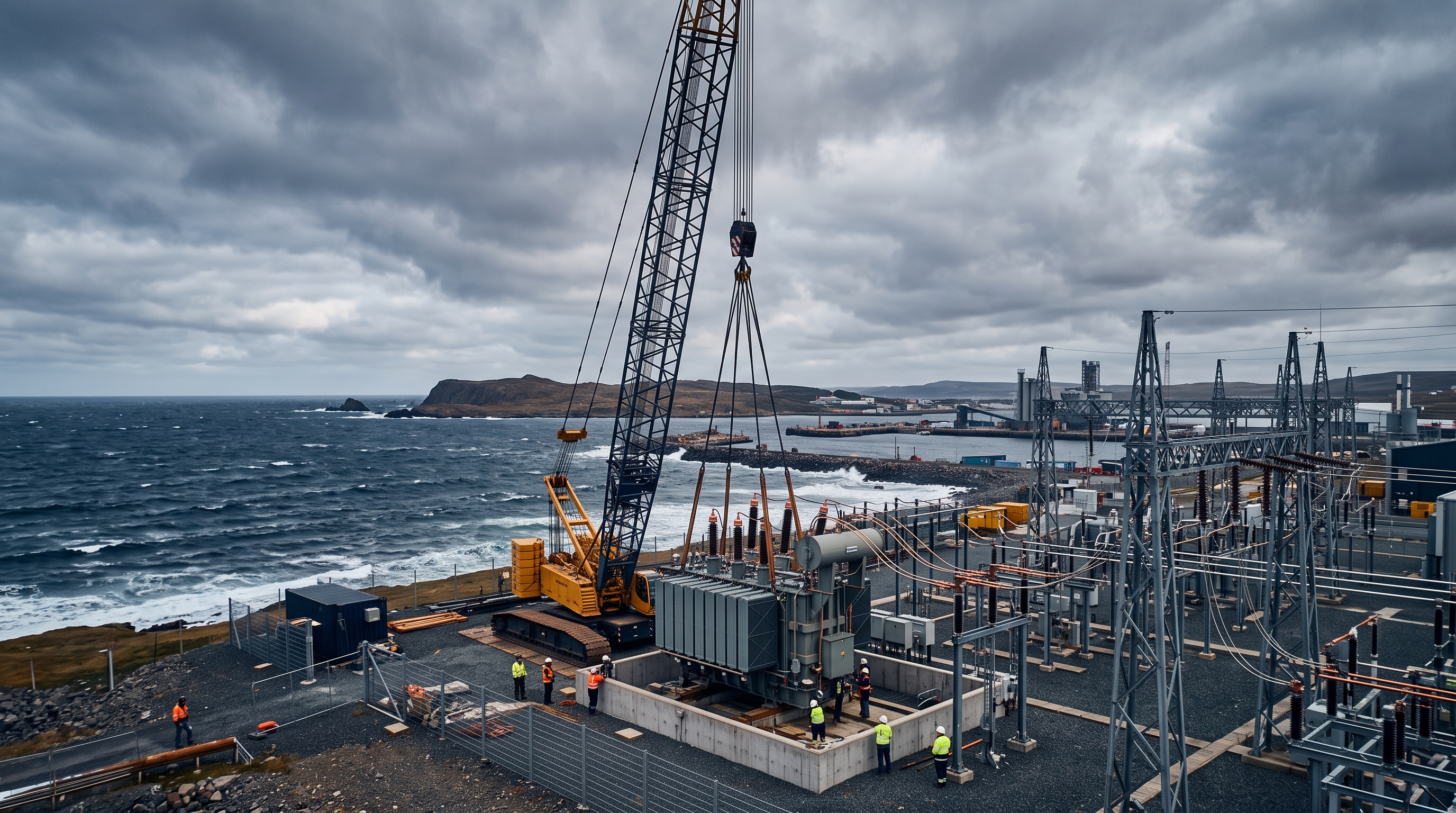
Puerto Rico’s grid operator, LUMA Energy, is installing 89 key substation transformers ordered under a rebuild backed by roughly $5 billion in obligated FEMA funds, with $630 million earmarked for substations and transmission specifically. This is about as high-priority as US grid work gets. Post-Maria, post-Fiona, post-Ernesto, federally funded, DOE-supported, 1.5 million customers waiting on it.
The fleet is coming from China, Turkey, and Brazil. No US manufacturer was named. And it still took roughly three years to land.
Sit with that. The one project that could command any domestic supplier’s full attention is importing its transformers, because at substation scale the domestic capacity to serve it on a workable timeline does not exist. The “buy domestic” mandate written into federal grant terms is colliding with a market where, for many ratings, the domestic option is not on the table.
That collision is the whole story for municipal and cooperative buyers. Build America, Buy America content rules attach to any project taking federal financial assistance, which sweeps in a large share of municipal and cooperative capital projects, and they assume a compliant domestic supplier exists to buy from. For transformers at many ratings, that assumption is generous. When no compliant unit can be sourced, the release valve is the funding agency’s waiver process, and that carries lead time of its own. We walk the certification and waiver mechanics in the BABA compliance guide.
Domestic Transformer Manufacturing: The Money Is Being Cut, Not Added
Here is the part that makes the rhetoric hard to take at face value. The same federal budget that pushes domestic sourcing is proposing to gut the programs meant to build domestic capacity.
The FY27 request would cut DOE’s energy efficiency and renewable arm by about two-thirds, from $3.1 billion to $1.1 billion, and leaves the fate of the $375 million transformer supply chain program (the one grid-manufacturing line that survived the first round of cuts) unstated. Roughly $7.56 billion in DOE awards were already terminated across the manufacturing and demonstration offices. We covered the funding mechanics and the September 30, 2026 authorization cliff in the FY27 budget breakdown.
Even the government’s own demand-pull tool is small against the problem. The April 2026 Defense Production Act Section 303 determination aimed at the transformer shortage carries roughly $323 million behind it, which NEMA has been careful to note does not clear a backlog measured in years. The read for distributors is in our DPA wartime-powers analysis.
The point for a buyer is simpler than the appropriations fight. Domestic transformer manufacturing is being asked to expand while its federal support is pulled back. The capacity bets from Hitachi Energy, Eaton, and ERMCO are real, but they are private wagers placed into policy uncertainty, and the timing means little relief on substation-class units before 2028. Treat “buy domestic” as a specification and certification exercise for now, not as a market you can actually shop at scale.
The 2029 Transformer Efficiency Rule Is Targeted but Insulated
The second loud signal is the threat to the efficiency rule. The FY27 budget states plainly that DOE’s efficiency office will “support work to repeal energy efficiency standards.” For our trade, the standard that matters is the April 2024 DOE distribution transformer efficiency rule, which requires compliant units for orders manufactured on or after April 23, 2029.
On June 8, 2026, the Supreme Court handed the administration a template. It vacated a lower-court ruling that had upheld DOE’s gas-furnace efficiency rules and sent the case back, after the Solicitor General told the Court that DOE now considers its own rules “factually and legally flawed” and plans to rewrite them. Confess error, get the favorable ruling erased, use the remand as a window to redo the rule. That is the playbook.
Does it reach the 2029 transformer rule? On the current record, no, and the reasons are worth knowing.
There is no live case to hijack. The transformer rule was never challenged in court. DOE had already conceded the core fight in the final rule, letting roughly 75 percent of cores stay grain-oriented electrical steel and stretching compliance from three years to five, which took the litigation incentive away from manufacturers and co-ops. The judicial review window closed in 2024.
The law itself resists a rollback. EPCA’s anti-backsliding provision bars DOE from making an existing standard less stringent, so weakening the 2029 rule means a fresh notice-and-comment rulemaking that has to survive that bar. A far heavier lift than abandoning a rule already stuck in litigation.
And it already dodged the purge. The 2025 Congressional Review Act rescission struck a separate set of October 2024 amendments, not the April 2024 efficiency standard, which was finalized too early to be eligible.
None of that makes the rule bulletproof. The realistic threat is not repeal. It is a DOE rulemaking to push the compliance date back, the way one is being floated for the furnace rules, from January 2028 to January 2030. A date slip arguably skirts anti-backsliding because the standard level does not change. The one signal that turns this from background noise into a live procurement variable is a DOE notice of proposed rulemaking touching 10 CFR Part 431 Subpart K. Until that appears, the 2029 date holds.
For what the standard actually requires and how to write it into a spec today, see our DOE 2029 transformer efficiency standards guide.
What Federal Transformer Procurement Actually Looks Like From Here
Strip out the noise and the buy plan is steadier than the policy is.
Keep speccing to the 2029 standard. Orders placed from late 2026 onward, given 30-plus-month lead times on many ratings, will be built after the compliance date and have to meet it. Nothing in the current record changes that, and manufacturers are retooling to it regardless of the political weather.
Expect high import content in substation-class units through 2027. If the highest-priority federal rebuild in the country is buying from China, Turkey, and Brazil, a mid-size municipal order is not going to find a domestic unit waiting on the shelf. Plan sourcing, tariff exposure, and certification around that fact. The five overlapping trade-policy regimes that now decide what is legal, credit-eligible, or cheaper to buy are mapped in our domestic content procurement guide.
Do not bank on a repeal or a delay. Neither has been opened for transformers. Building a pre-buy strategy on the assumption that 2029 will soften is the same inventory-stranding risk the aggressive pre-buy crowd already carries, just pointed the other way.
Watch the money, not the message. The federal signal that would actually change your procurement math is not a press release about domestic manufacturing. It is whether the $375 million transformer supply chain program survives FY27, and whether a DOE rulemaking touches the 2029 date. Those two are the tripwires. The rest is weather.
The supplier-level read, which named manufacturers can certify against which sourcing standard, how federal awards move by utility, and what the 2029 rule does to retooling schedules by supplier, is the work we build into DistroForge reports. That detail is where the policy noise turns into a buy decision.
Read the federal signal before it moves your calendar
Federal transformer policy will keep making noise through the rest of 2026. The Feeder is our free monthly rundown of the lead-time, sourcing, and regulatory shifts that actually move a procurement calendar, written for the people who place the orders. Subscribe to The Feeder.
Related Reading
- DOE FY27 Budget: $15B IIJA Cut Threatens Grid Funding: the money behind the domestic-manufacturing push, and what is already gone
- DOE 2029 Transformer Efficiency Standards Guide: what the rule requires and how to write it into a spec now
- Section 232 Grid Equipment Tariffs: Who Actually Gets 15%: the import-cost mechanic sitting on every foreign-sourced unit
Track this beat without paying per report
Free Member tier. Pick your topics. Get a weekly digest filtered to what you actually buy.