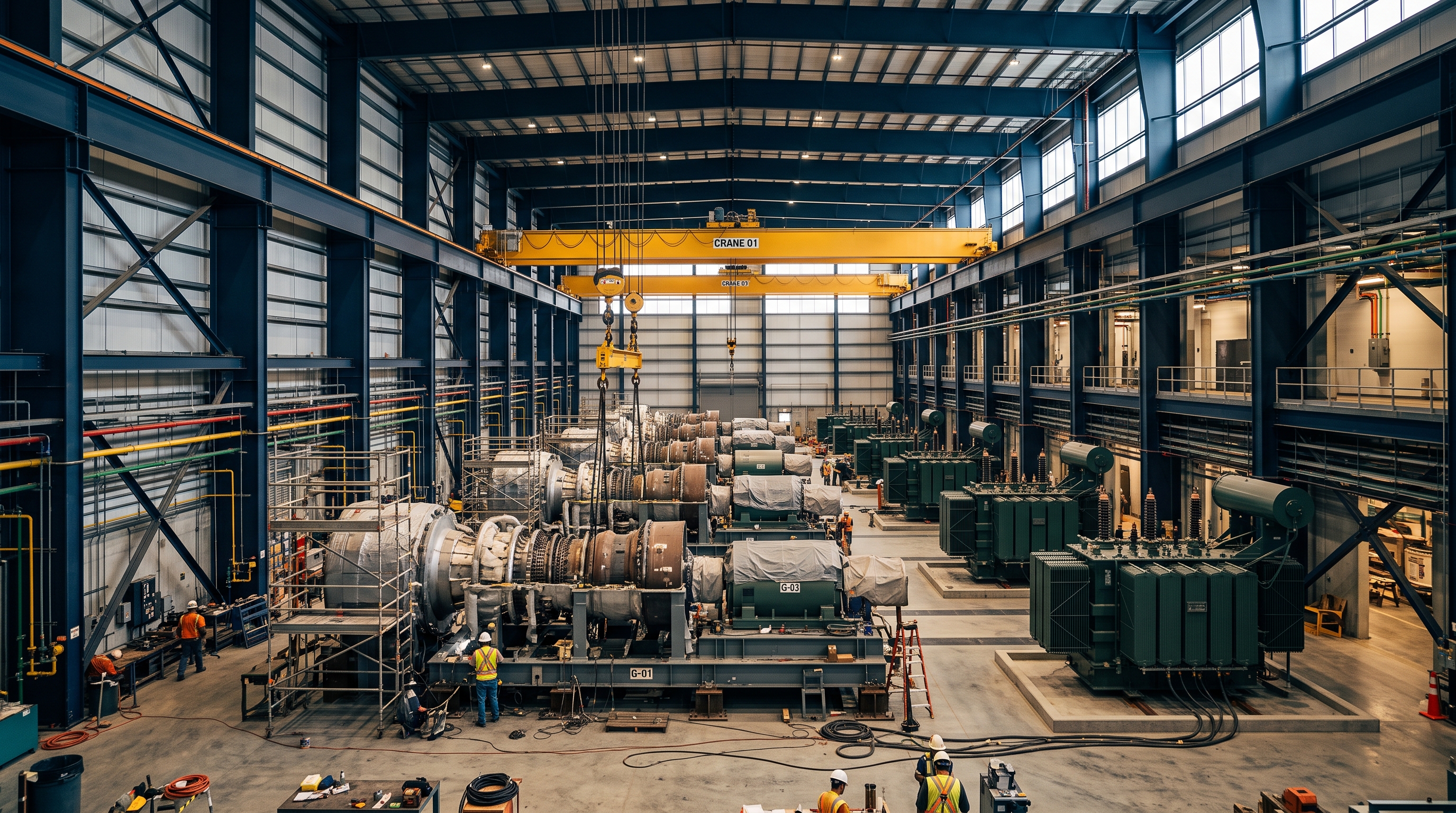
Gas Turbine Scarcity Is Tightening the Distribution Queue
Gas turbine scarcity just canceled a $2B PJM plant. With OEMs sold out to 2029, turbine backlogs are now a leading indicator for distribution equipment lead times.
On July 2, 2026, FERC denied a fast-track waiver for Advanced Power’s Chestnut Run, a roughly $2 billion, 1.3 GW combined-cycle plant in Carroll County, Ohio. The developer could not acquire the turbines it had planned, asked to swap models and trim output, and FERC ruled the reconfiguration would cause substantial delays and harm other projects in PJM’s queue. That single docket is the clearest evidence yet that gas turbine scarcity has crossed a line. It is no longer just slowing new firm capacity. It is canceling capacity that was already announced.
For a company owned by ArcLight to lose a $2 billion plant over turbine availability tells you the bottleneck is physical, not financial. And the same shortage that stopped Chestnut Run reaches directly into the queues that municipal utilities and cooperatives depend on for transformers and switchgear.
The turbine order book is sold out to 2029
The demand signal is loud. EIA nearly tripled its 2026 to 2030 new gas-plant forecast from 23 GW to 66 GW, driven by AI data-center load and the rollback of renewable incentives. The supply side cannot follow. Three manufacturers, GE Vernova, Siemens Energy, and Mitsubishi Power, build roughly three quarters of the world’s large gas turbines, and all three are effectively booked out for years.
RMI reports that lead times for a combined-cycle turbine have stretched from two or three years to five to seven, and as long as eight. GE Vernova closed 2025 with a gas-turbine backlog of about 83 GW reaching into 2029, and its CEO expects the book sold out through 2030 by the end of 2026. Siemens Energy’s backlog hit 146 billion euros. Mitsubishi Power says orders placed today will not deliver before 2028. Developers who want a slot are now paying nonrefundable multi-year reservations to hold a place in line, and some are pre-buying years ahead. Blue Energy has already reserved 2029 delivery of two GE Vernova 7HA.02 turbines for a Texas site built to bridge from gas to nuclear.
The practical message for a smaller buyer is blunt. Self-generation with a large-frame gas turbine is not a near-term option. If the projects with billion-dollar balance sheets cannot secure slots before 2029, a muni or co-op will not either.
Behind-the-meter buildout does not relieve the crunch
The reflex response is to assume data centers going off-grid takes pressure off utility equipment. It does the opposite. Behind-the-meter power is now its own market: 59 announced projects totaling roughly 90 GW, more than a quarter of all planned US data-center capacity, per Cleanview, with the vast majority announced since January 2025. xAI’s Colossus sites in Memphis already run close to 1,500 MW of on-site gas turbines. Meta’s Socrates South campus in Ohio is engineered never to touch the grid.
Every one of those sites still needs generator step-up transformers, medium-voltage and paralleling switchgear, breakers, protective relays, and step-down distribution transformers. An off-grid 200 MW plant is not less equipment, it is the same equipment on someone else’s site, competing for the same factory slots. POWER Magazine reports medium-voltage switchgear averaged 44 weeks in Q2 2025 and large power transformers 128 weeks, both on Wood Mackenzie’s Q2 2025 survey; by mid-2026 MV switchgear ran 52 to 72 weeks for 5/15 kV metal-enclosed, 60 to 80 weeks for 15/27 kV metal-clad, and 78 to 104 weeks at 38 kV (Terrapin Construction Group, June 2026). One AI developer, Crusoe, has started building its own switchgear to get around the wait.
Why turbine backlogs predict distribution equipment lead times
The link between a sold-out turbine book and a strained distribution queue is not a metaphor. It is a shared bill of materials. A gigawatt-scale gas plant pulls GSU transformers, high-voltage and medium-voltage switchgear, breakers, and protection from the same OEMs, the same electrical-steel supply, and the same manufacturing slots that feed pad-mount transformers and feeder switchgear. Section 232 tariffs on steel and aluminum doubled to 50 percent in mid-2025, and the April 2026 restructuring left most of that stack at 25 percent on full customs value, with a temporary reduction reaching only the largest transformers through the end of 2027.
That is why turbine scarcity is best read as a leading indicator. The multi-year backlogs and nonrefundable reservations now normal in turbines are the same pattern already visible in transformers and switchgear, and the demand behind both is not slowing. The 2026 OMS-MISO survey projects utilities across that footprint adding roughly 15 GW of accredited capacity every year through 2031, with load growth topping out near a 5.1 percent compound rate. MISO’s fast-track ERAS path is trying to compress interconnection to two or three years while the transformer that anchors each new substation still runs longer than that.
What muni and co-op buyers should do now
The buy-side posture is the same one that keeps recurring across this whole cycle, and turbine scarcity only sharpens it. Order earlier and forecast on longer horizons, because the queue position you take today is the delivery date you get. Use framework or blanket orders with call-off and cancellation rights instead of firm one-off POs against loads that may never commission. Standardize on stock R10 kVA ratings so you can inherit inventory queue positions rather than starting a bespoke order cold, and pool orders across neighboring utilities to reach batch-order lead-time tiers otherwise reserved for large buyers.
The one workaround a small utility can actually adopt is the modular substation, which moves civil work and testing into the factory and cuts on-site schedules 30 to 50 percent. It does not fix the transformer, which stays a 52 to 80 week gate in North America, but a pre-integrated package lets you absorb that gate through a supplier already batch-ordering long-lead parts. Qualify more than one vendor per equipment class, and validate BABA and domestic-content sourcing before you sign, because the same tariff and capacity pressure that tightens the queue also narrows the compliant supplier list.
None of this waits for normalization, because there is no normalization coming inside the planning horizon that matters. The turbine market is the early warning. The distribution queue is where it lands.
Related Reading
- May 2026 Gas Wave: 20 GW of CCGT Decided in 30 Days covers the demand surge feeding the turbine crunch.
- PJM’s Capacity Auction Backstop shows a record price summoning almost no new steel, which is the same scarcity from the market-design side.
- How to Evaluate Transformer Bids With Long Lead Times is the tactical companion for the buy-side moves above.
Watching the turbine market is now part of transformer and switchgear planning, not a separate story. The Feeder tracks lead times, backlog signals, and capacity moves across the equipment classes muni and co-op buyers actually purchase, and sends the read to your inbox every month. It is free.
Free RFQ templates. Weekly digest. Yours.
Free Member tier. Pick your topics. Get a weekly digest filtered to what you actually buy.