Sodium-Ion Grid Storage Goes Domestic: A Procurement Read
Peak Energy and GM are scaling domestic sodium-ion grid storage. What the deal means for BESS procurement, domestic content, and project siting.
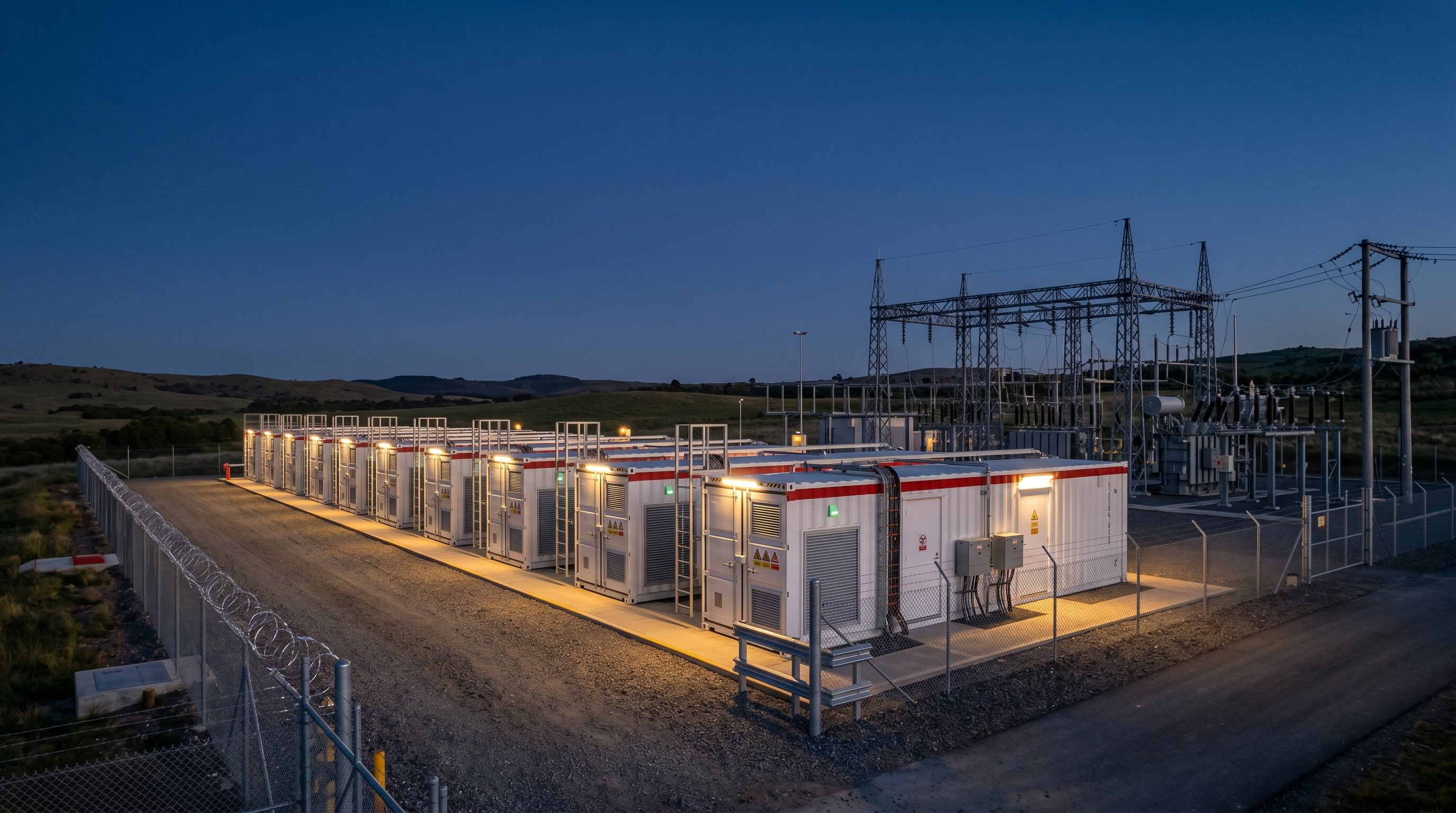
On June 9, 2026, a battery startup and the largest US automaker put their names on the same announcement. Peak Energy, a Broomfield, Colorado company that builds sodium-ion grid storage, signed a partnership with General Motors to develop and manufacture sodium-ion cells at scale. GM builds the cell in its Michigan battery labs and holds exclusive manufacturing rights. Peak integrates it into finished, passively cooled storage systems. GM Ventures took an equity stake.
That is the headline. The part that matters for anyone writing a storage RFP in the next two years sits underneath it.
Peak is not starting from a standing position. The company reports 6.5 GWh already booked. Jupiter Power, a merchant-storage developer, reserved up to 4.75 GWh through 2030, with 720 MWh landing in 2027. Energy Vault signed for 1.5 GWh aimed at data centers. Peak ran its first US grid-tied system, a 3.5 MWh install near Denver, in the fall of 2025, and has a sodium-ion unit slated for MISO with RWE. A domestic factory rated at 4 GWh per year gets a location announcement this summer. Systems built on the GM cell are targeted for 2028.
So US-made sodium-ion grid storage is moving from pilot to scale. Here is why a procurement officer should care, and where the change actually lands.
Domestic content and the FEOC math
Lithium iron phosphate, the default chemistry for US grid-scale batteries, comes overwhelmingly from Chinese cells. That was a price advantage for years. Under the One Big Beautiful Bill Act, it is now a tax-credit liability. The foreign-entity-of-concern rules restrict 45X and 48E eligibility for projects built with prohibited foreign material, and the non-FEOC content threshold for battery components starts at 60 percent in 2026 and climbs five points a year to 85 percent by 2030.
A cell built mine to grid in the United States is positioned to clear those thresholds and the domestic-content adder. A project leaning on imported LFP is not, and it carries tariff exposure on top. For a municipal utility or a cooperative working a fixed capital budget, domestic sodium-ion is a unit-cost lever, not a talking point. The same storage project can qualify for credits with a domestic cell that it forfeits with an imported one.
This is the same domestic-manufacturing pull that is reshaping other equipment classes. We saw it when Prysmian opened a million-square-foot wire plant in Texas, and again when the federal government invoked wartime production powers on transformers. Cells are now joining wire and steel core on the list of components where origin decides eligibility.
Siting got simpler for non-wires alternative storage
Sodium-ion tolerates a wider temperature range than LFP and is far less prone to thermal runaway. Peak uses that headroom to eliminate active cooling and fire-suppression hardware from its systems. Less HVAC. Less parasitic load draining the asset. Fewer subsystems to permit and maintain.
For a buyer, the interesting part is the fire code. NFPA 855 and the local fire marshal are often the gating items on storage sited at a substation or a constrained feeder, which is precisely where non-wires alternative storage earns its keep. A passively cooled, lower-flammability system clears that review faster than a liquid-cooled LFP enclosure with a suppression package. The chemistry shift in battery safety code is already moving in this direction, and sodium-ion sits on the easy side of it.
That siting advantage is what makes the technology relevant to our readers right now. Munis and co-ops are the buyers adopting storage to defer feeder upgrades and hedge capacity prices, the same shift driving the state-mandated VPP and distributed storage wave. Peak targets 4 to 12 hour discharge durations, which covers the bulk of what a distribution-level deferral project needs.
The gear underneath the battery still gets bought
Here is the point that survives every chemistry argument. The balance of plant does not care what is in the cell.
LFP or sodium-ion, a grid-scale BESS still needs medium-voltage step-up and collector transformers, MV switchgear, protective relaying, a ring-bus or breaker arrangement, grounding, and revenue metering behind the power conversion system. None of that changes with the anode material. If anything, sodium-ion’s lower energy density means more footprint and more enclosures per MWh, which can raise the count of medium-voltage interconnection equipment per delivered megawatt-hour.
For a distributor, that is the read. The chemistry headlines are upstream noise. The interconnection bill of material is the order, and a domestic sodium-ion grid storage buildout is a steady pull on the exact gear our customers stock and quote.
What this means for sodium-ion BESS procurement
Sodium-ion is not a default spec yet, and nobody should pretend otherwise. Peak has not published delivered cost per kilowatt-hour or cycle-life warranty terms, and 2028 commercialization is two years out. Treat it as an option, not a plan.
But the option is now real enough to write into a document. A buyer issuing a grid-scale or substation storage RFP for 2027 and beyond has a reason to request a sodium-ion alternate alongside the LFP base case, then weigh three things against LFP’s higher energy density: domestic-content and FEOC eligibility, fire-code and siting simplicity, and footprint. GM itself is hedging across three chemistries, with sodium-ion through Peak, repurposed EV packs through Redwood Materials, and LFP through LG Energy Solution. The buyer who keeps a second chemistry in the evaluation is hedging the same way.
The region-by-region tradeoff, where domestic-content adders, land cost, and feeder constraints actually net out, is the kind of analysis we build into our intelligence reports. The free read is below.
The Feeder is our free monthly digest of the procurement signals that move utility and distribution equipment buyers. Chemistry shifts, FEOC rule changes, lead-time data, and the RFP language that follows. No noise. Subscribe at distroforge.com/feeder.
Related Reading
- The VPP Procurement Wave: State Mandates and Falling Battery Prices
- NFPA 800 Battery Safety Code: What BESS Teams Need to Know
- Prysmian-Encore Wire Opens 1M Sq Ft Texas Plant
Know what changed before your next quote
Free Member tier. Pick your topics. Get a weekly digest filtered to what you actually buy.