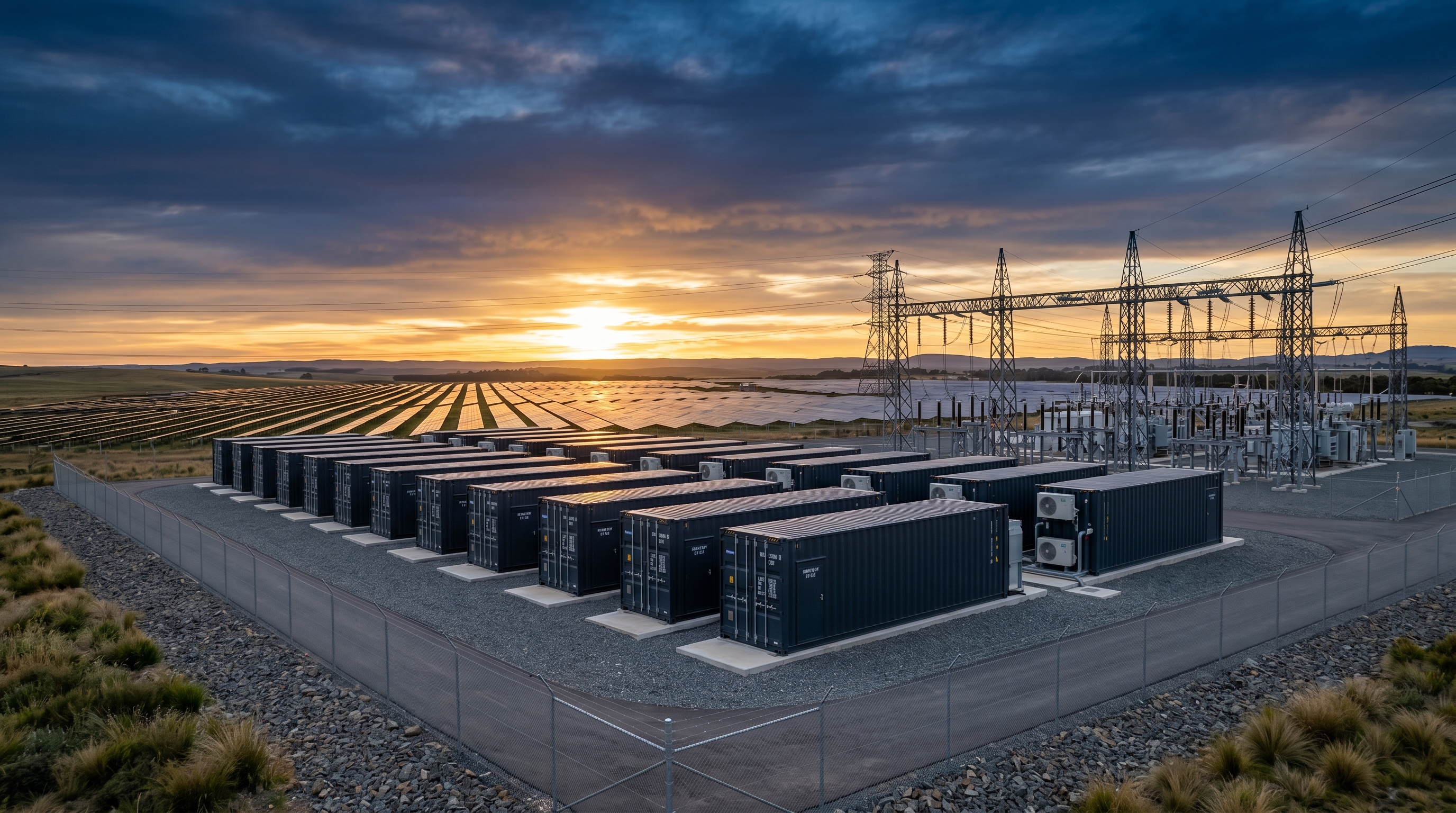
The VPP Procurement Wave Is Here
Virtual power plant procurement is accelerating as state mandates and falling battery prices push utilities from pilot programs to real equipment orders.
Virtual power plant procurement in the United States passed a threshold in the first quarter of 2026 that separates academic interest from real spending. Two state-level actions landed within a week of each other: Minnesota approved a $430 million utility-owned battery VPP, and Virginia enrolled a law that forces its two largest utilities to evaluate VPPs as alternatives to new capital projects. These are not pilot announcements. They are equipment orders and regulatory deadlines.
At the same time, battery storage costs crossed a line that makes the economics nearly automatic. BloombergNEF reported in February 2026 that the levelized cost of a 4-hour battery system fell 27% year-over-year to $78/MWh, while combined-cycle gas rose 16% to $102/MWh. Batteries are now cheaper than gas peakers on a pure cost basis.
But the story is more complicated than “batteries got cheap, so utilities bought them.” A pricing fracture between utility-scale and distribution-scale systems means smaller utilities and cooperatives are not seeing the same savings. And the equipment bill of materials for a VPP extends well beyond batteries. This is an equipment pipeline story, and it starts with what just happened in two states.
Minnesota’s $430 Million Bet on Utility-Owned Batteries
On April 2, 2026, the Minnesota Public Utilities Commission approved Phase 2 of Xcel Energy’s Capacity*Connect program. The numbers: up to 200 MW of distributed battery energy storage, deployed in 1-3 MW units across Xcel’s distribution grid, with full buildout by 2028 (Utility Dive, April 2026).
Total program cost: $430 million. That puts the implied installed cost at roughly $2,150 per kilowatt, a premium over utility-scale pricing but competitive for distributed applications that provide multiple grid services.
Sparkfund is handling deployment. The model is utility-owned, meaning Xcel retains ownership and dispatch control of every battery. This is the detail that drew opposition. Vote Solar and a coalition of clean energy advocates argued the decision shuts out third-party developers and concentrates market power with the incumbent utility (Vote Solar, April 2026).
The PUC attached conditions: battery placement in underserved communities, an apprenticeship partnership, and an independent program evaluation. Regulators see the equity implications of VPP siting decisions, not just the capacity math.
The procurement signal is the scale. Two hundred megawatts of 1-3 MW distributed battery systems means dozens of individual installations. Each one needs interconnection equipment, protection relays, a communication backbone, and in many cases, a transformer or switchgear upgrade. The equipment supply constraints we covered in the Triple Squeeze apply directly here.
Xcel is also building a separate 600 MW utility-scale BESS at its Sherco site. Both projects address MISO capacity shortfalls as coal plants retire across the Upper Midwest.
Virginia Forces the VPP Question Into Every Rate Case
Virginia took a different route. Instead of approving a single program, the state passed a law that rewires how utilities justify capital spending.
HB 434, which passed the Virginia House unanimously in February 2026 and enrolled on March 5, requires Dominion Energy and Appalachian Power to file grid utilization metrics with the State Corporation Commission by November 1, 2026 (Utility Dive, April 2026). The SCC must then issue a final order by July 1, 2027 establishing improvement timelines and incorporating utilization metrics into future capital investment cost recovery decisions.
Translation: before a utility can build a new substation or run a new feeder, it has to prove the existing grid is running at capacity. And the SCC must specifically evaluate whether energy storage, VPPs, distributed generation, and flexible transmission could do the same job at lower cost.
The bill names the alternatives explicitly. Energy storage. Customer-owned capacity. Utility-owned distributed generation. Virtual power plants. Flexible transmission and TSTATCOMs. Synchronous condensers. Power quality monitoring equipment. This is not a vague directive to “consider alternatives.” It is a checklist.
The AMI connection matters for procurement teams. The legislation identifies AMI 2.0 as a critical enabler of utilization measurement. Dominion’s smart meter rollout, which had previously stalled, becomes compliance-required infrastructure. AMI 2.0 meters can collect up to 50 million times more data than first-generation advanced meters (PV Magazine, February 2026). That data requirement drives demand for communications infrastructure, SCADA/DMS upgrades, and the grid sensors needed to measure what the SCC will now require utilities to report.
Dominion serves about 2.7 million customers. Appalachian Power covers roughly 530,000 (LegiScan, March 2026). When these utilities start filing their November 2026 petitions, equipment RFPs for sensors, voltage regulators, reclosers, and monitoring systems will follow.
37.5 GW and Counting, but Most Programs Are Still Small
The IEEE published a technical assessment in April 2026 (PES-TR139) that puts VPP capacity at 37.5 GW across North America. That number sounds large. The report’s own characterization tempers the enthusiasm: the market is “broadening faster than it is deepening” (TD World, April 2026).
Broadening means more programs. Deepening means bigger programs. California leads with 42 GW enrolled and a track record of real dispatch. During a July 2025 grid stress event, California VPPs delivered 535 MW of capacity. Tesla Powerwall households provided roughly 500 MW of that total (TD World, April 2026).
Outside California, the numbers tell a different story. The Texas ADER pilot supports 160 MW. Dominion’s mandated Virginia VPP sits at 450 MW. Minnesota just added 200 MW. These are meaningful for their respective regions but small relative to the 37.5 GW headline.
The IEEE report recommended that regulators require utilities to consider VPPs in all procurement decisions as alternatives to traditional infrastructure upgrades. Virginia’s HB 434 does exactly this. If other states follow Virginia’s template, virtual power plant procurement will become a standing item in every integrated resource plan and rate case filing.
Growth is real: 33% or more increase in active VPP deployments in 2025 (TD World, April 2026). But capacity growth lagged program growth, confirming most new entries are pilots. The 2026 question is whether procurement teams treat VPPs as a research topic or a line item.
Battery Storage Procurement Prices: Two Markets, Not One
The cost story matters, but it is not uniform.
Anza Renewables pricing data, corroborated by Wood Mackenzie analysis, shows a clear fracture in U.S. battery storage pricing as of Q1 2026 (Utility Dive, April 2026). Utility-scale AC systems dropped 20.9% since May 2025. Distribution-scale AC systems sit at roughly $203/kWh and have barely moved since November 2025.
The cause: battery suppliers are prioritizing data center and independent power producer clients. Distribution-scale orders are, in Anza’s framing, an “afterthought.”
This pricing gap hits municipal utilities and cooperatives hardest. A co-op buying a 2 MW battery for a VPP program pays $203/kWh while a large IOU procuring a 100 MW utility-scale system gets 20% cheaper pricing. The math that makes VPPs attractive at utility-scale does not automatically transfer to smaller buyers.
And there is a compliance layer. Of 79 products in Anza’s tracking dataset, 51% carry “high” or “highest” Foreign Entity of Concern (FEOC) risk (Utility Dive, April 2026). FEOC-compliant products cost more. For utilities subject to federal funding requirements or Buy America provisions, the pricing floor is even higher than the headline $203/kWh. We covered related compliance requirements in our piece on NFPA 800 battery safety standards, which add another layer to the procurement equation.
The 2026 deployment forecast remains enormous regardless: 70 GWh and 35 GW of BESS installations across the U.S., per SEIA (SEIA, Q1 2026). That volume is real. But smaller utilities need to know that the prices in the headline forecasts may not match what shows up on their quotes.
The Equipment BOM Goes Far Beyond Batteries
VPP utility programs get talked about as battery programs. They are not. Every VPP installation connects to a distribution circuit designed for one-way power flow. Bidirectional current changes the equipment requirements at every point between the battery and the substation.
Here is what procurement teams are actually buying when they build out a VPP program:
DERMS platforms. The distributed energy resource management system is the software layer that turns a collection of batteries into a single dispatchable resource. No DERMS, no VPP. DERMS procurement is growing alongside every program approval.
Smart inverters. Grid-interactive inverters with IEEE 1547-2018 compliance are required for any DER that feeds back to the grid. Spec requirements are tighter than what was standard three years ago.
AMI 2.0 meters and communications. Virginia’s HB 434 made this explicit. The meter is just the endpoint; backhaul communications, data management, and SCADA/DMS integration are separate procurement lines.
Grid-edge protection equipment. Reclosers, sectionalizers, and voltage regulators need to be rated for bidirectional power flow. A recloser specified for radial feed may not trip correctly when power reverses direction. These upgrades get missed in early-stage VPP planning and show up as change orders later.
Transformers and switchgear. Battery systems in the 1-3 MW range typically require a dedicated pad-mount transformer and medium-voltage switchgear. The data center demand wave is already stretching transformer lead times. VPP programs compete for the same manufacturing slots.
A 200 MW distributed battery program like Capacity*Connect is not a single purchase order. It is a multi-year, multi-category procurement pipeline that touches nearly every product line in a distribution equipment catalog.
What This Means for Procurement Teams
If you are a municipal utility or cooperative considering a VPP program: The economics work, but the pricing fracture means you are not getting the same deal as large IOUs. Explore aggregated procurement, either through your buying group (APPA, NRECA, PowerXchange) or by pooling orders with neighboring utilities. A joint 20 MW order gets better pricing than ten separate 2 MW orders.
If you are already planning a battery storage RFP: Check FEOC compliance on every product in your bid evaluation. Half the market carries high FEOC risk, and compliant products cost more. Build the compliance premium into your budget now rather than discovering it at bid evaluation.
If you serve Virginia or Minnesota utilities: Equipment RFPs are coming. Virginia’s November 2026 SCC filing deadline will trigger demand for AMI, grid sensors, voltage regulators, and SCADA/DMS upgrades. Minnesota’s 200 MW distributed buildout needs interconnection equipment, protection systems, and pad-mount transformers through 2028.
If VPPs are still a “someday” item in your planning: The IEEE report’s recommendation that regulators require VPP consideration in all procurement may become standard practice. Virginia already did it. The affordability pressures squeezing distribution equipment budgets make non-wires alternatives increasingly attractive to regulators looking for cost discipline. The question is when your state follows, not whether.
The monthly read on where this is heading
Minnesota and Virginia turned VPP procurement from a pilot conversation into equipment orders and regulatory deadlines in the same week, and the bill of materials runs well past batteries. The Feeder is our free monthly digest of the procurement signals that move utility and distribution equipment buyers: lead-time shifts, supplier capacity, federal funding, and the RFP language that follows. One email a month, no filler.
Related Reading
- NFPA 800 Battery Safety Code: Procurement Impact
- The Triple Squeeze Hitting Utility Equipment in 2026
- 50 GW of Data Centers Are Rewriting Grid Procurement
Know what changed before your next quote
Free Member tier. Pick your topics. Get a weekly digest filtered to what you actually buy.